With the flow of energy through the Middle East still mostly blocked and oil prices well above $100 a barrel, policymakers in Europe are confronting the immediate impact of already higher costs while trying to decipher the potential economic damage of a prolonged conflict.
On Thursday, the Bank of England held interest rates steady at 3.75 percent, as expected, but warned of a risk that higher inflation could spread through the economy. Officials at the European Central Bank also held rates, at 2 percent, adding that the affect depended on the “intensity and duration of the energy price shock.”
Investors are betting that each central bank will raise rates several times later this year.
For the policymakers, hanging over the debates is the danger of stagflation: that in raising rates to fight inflation they move too fast or too hard and stymie economic growth.
The effective closing of the Strait of Hormuz, a vital waterway for fuel and other commodities off Iran’s southern coast, has sharply increased energy prices. Brent crude, the international benchmark, jumped on Thursday to its wartime level, while European natural gas prices are nearly 40 percent higher since the United States and Israel attacked Iran at the end of February.
“There is nothing monetary policy can do to prevent these cost increases from affecting U.K. businesses and households,” Andrew Bailey, the governor of the Bank of England, said on Thursday. “The longer the conflict in the Middle East continues, the worse the impact will become.”
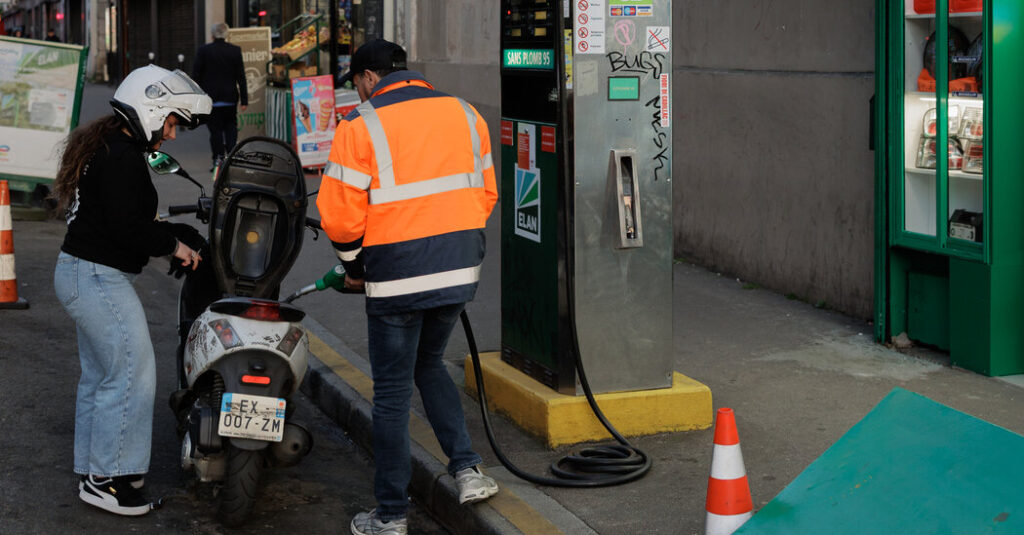
The war had an almost immediate impact on European inflation, increasing gasoline prices at the pump, airfares and other fuel-intensive activities.
In Britain, the annual inflation rate climbed to 3.3 percent in March and is expected to be around 3.5 percent at the end of the year, well above the central bank’s 2 percent target. For the 21 countries that use the euro, inflation averaged 3 percent in April, up from 1.9 percent in February, before the war, data published Thursday showed.
But for the central banks, the question is whether higher prices will ripple through the economy and eventually push up wages, potentially setting off a spiral of escalating prices that would warrant aggressive rate increases like those in 2022. For now, analysts say there isn’t enough information on how the war, seemingly in a holding pattern, will affect the economy. While President Trump has extended a cease-fire in the region, traffic through the strait remains sparse.
At the same time, the concern about inflation is being weighed against the possibility that the war damages economic growth. In that scenario, policymakers wouldn’t want to tighten financial conditions. Consumer sentiment in Germany, the eurozone’s largest economy, dropped to its lowest level in three years, data this week showed. Signs of strain in the region’s economy are starting to emerge. While there were differences among countries, the eurozone’s overall economic growth slowed at the start of the year. The bloc grew just 0.1 percent, compared with 0.2 percent at the end of last year, data published Thursday showed.
This month, the International Monetary Fund said the bloc’s economy would grow 1.1 percent this year, but that assumed a relatively quick resolution to the war and the recovery of global energy markets.
If the Strait of Hormuz stays closed for longer and oil prices climb to around $140 a barrel, Britain would face the risk of a recession and inflation of around 5 percent later this year, the National Institute of Economic and Social Research, a think tank, said this week.
It’s a dilemma facing central banks farther afield as well. This week, the Bank of Japan voted to hold interest rates steady, but it was a split decision with several officials preferring an increase in rates. The central bank raised its inflation forecast while warning that economic growth is likely to slow this year.
On Wednesday, the Federal Reserve also held interest rates steady. It acknowledged the war’s effect on the economy, saying inflation had ticked up because of the “recent increase in global energy prices.”
The economic uncertainty sowed by the conflict has left policymakers grasping to explain the range of possibilities of what could happen next, and what that might mean for interest rates. Both the Bank of England and the European Central Bank have recently published several projections laying out different scenarios for energy prices and their potential impact on inflation for other goods and services.
On Thursday, Mr. Bailey at the Bank of England said the policymakers would have to make “a difficult judgment call” in setting rates, because changes to policy can take awhile to have their desired effect on the economy. There were risks to waiting too long to act and, if the shock passes, moving too quickly.
Central bankers can’t afford to wait for “conclusive evidence” one way or another, he said.
Eshe Nelson is a Times reporter based in London, covering economics and business news.
The post Rising Fuel Prices Force Policymakers to Weigh Excruciating Choices appeared first on New York Times.