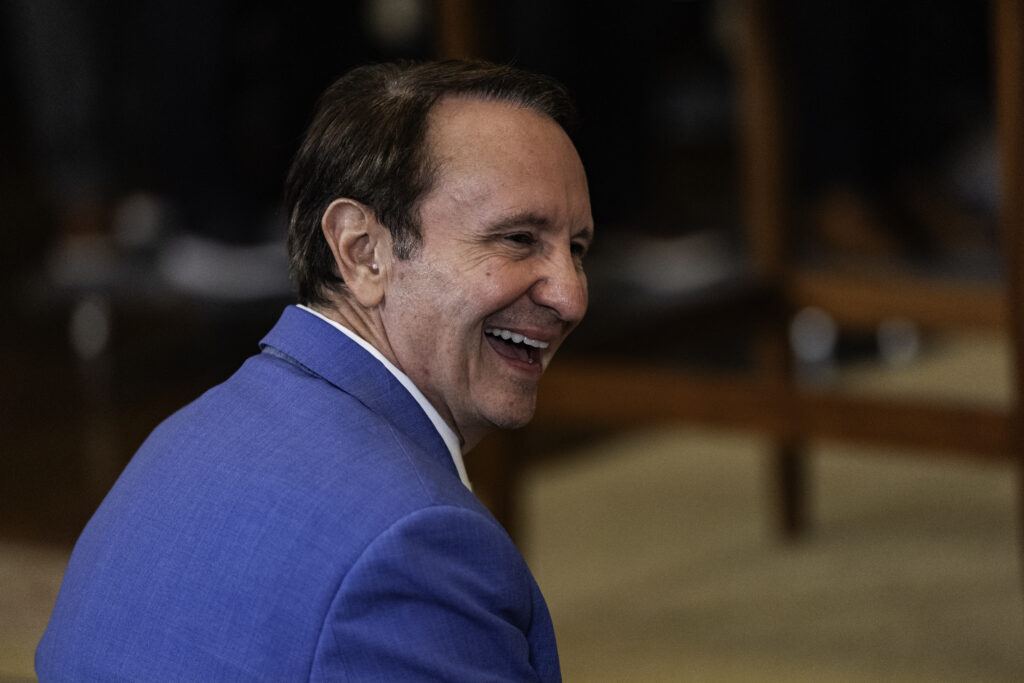
Louisiana Gov. Jeff Landry (R) told Republican House candidates Wednesday that he plans to suspend next month’s primary elections so state lawmakers can pass a new congressional map first, according to two people with knowledge of the calls.
The move follows a Supreme Court decision earlier in the day that found Louisiana had unlawfully discriminated by race when it created a second majority Black congressional district under legal pressure. The ruling positions Republicans to gain one or two seats in the midterms as they fight to hold their narrow majority in the House.
The 6-3 decision limited a key provision of the landmark Voting Rights Act and could lead to other Black Democrats across the South losing their House seats. Most states are unlikely to be able to redraw districts in time for the November midterm elections, but Louisiana could be one of the exceptions.
Landry’s announcement to suspend the May 16 primary could come as early as Friday — one day before early voting is to begin, according to people familiar with his plans who spoke on the condition of anonymity to discuss private conversations.
Election officials sent ballots to overseas voters weeks ago. It’s unclear whether the governor’s suspension would apply only to primaries for the six House seats, or include other elections, including the heated Senate primary that pits incumbent Sen. Bill Cassidy (R) against Rep. Julia Letlow (R). Louisiana has six House seats, two of which are held by Democrats.
A spokesperson for Landry declined to comment on his plans for the primary. Earlier in the day, Landry said the Supreme Court “affirmed what we have said for years: drawing districts for political reasons is the States’ prerogative, not a federal civil rights violation.”
If Landry suspends the House primaries but not other contests, primary voters would have to go to the polls twice, just weeks or months apart from each other.
Richard Hasen, a law professor at UCLA and director of the school’s Safeguarding Democracy Project, said Landry’s unusual plan did not appear to conflict with federal voting laws.
“It’s naked partisanship, but under the Supreme Court’s approach to voting now, naked partisanship is more of a defense than an indictment,” Hasen said.
Hasen said critics of the plan may seek to challenge it under state laws.
The Supreme Court decision comes amid a broader fight over redrawing congressional lines for partisan gain that has been raging since last summer. President Donald Trump urged Republican-led states to carve up their states to capture more districts. Democrats responded in kind by redrawing the maps of states they control and filing lawsuits.
So far, Republicans have drawn 13 districts in five states in their favor, and Democrats have secured more favorable lines in nine districts in three states.
The timing of the redrawing is extremely unusual. Normally, states draw new lines once every 10 years, at the beginning of the decade when they receive census data showing how populations have shifted.
The post Louisiana governor prepares to suspend House primaries after court ruling appeared first on Washington Post.