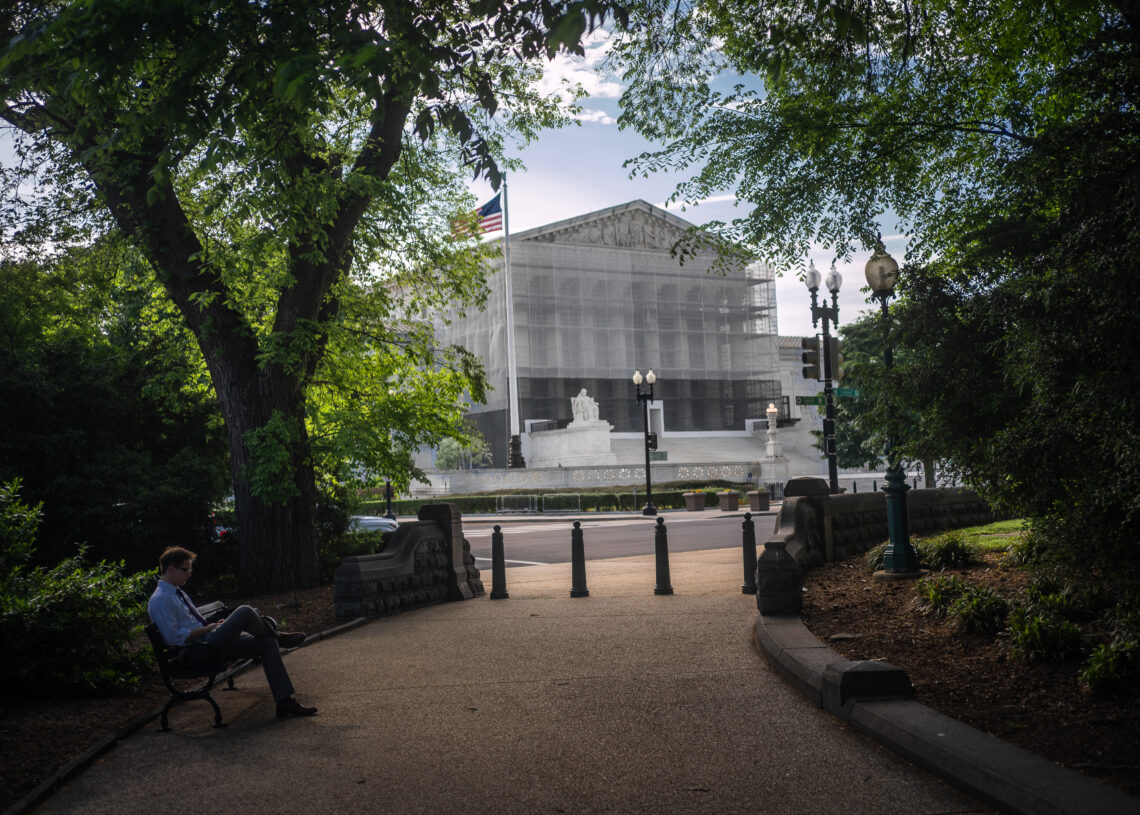
The Supreme Court on Wednesday limited a major piece of civil rights legislation that for decades has allowed legislative districts to be drawn in a way to boost minority voters’ representation.
Now, Republican lawmakers in the South can draw maps to break up Black and other minority voters, diluting their voting power and limiting minority representation in Congress and state legislatures. Some Southern Black Democrats could lose their seats in Congress and legislatures as soon as November.
It’s just one of several ways a conservative Supreme Court remade by President Donald Trump has rolled back decades-old civil rights protections for voters.
Here’s what’s going on.
You’re reading The 5-Minute Fix newsletter, contextualizing the day’s biggest political news. Get it in your inbox for free, every weekday.
What the court did
The justices were considering a case about whether Louisiana lawmakers violated White voters’ rights when they drew a majority-Black congressional district. Lawmakers created the district as part of a years-long court battle to comply with the Voting Rights Act.
The justices agreed that White voters were discriminated against, and they made it harder for minority voters to prove they have been drawn into electoral districts that weaken their voting power.
The measure that bans racial gerrymandering is known as Section 2 of the Voting Rights Act. It was seen by many voting rights experts as the last major pillar of the 60-year-old law, adopted in the heart of the civil rights era, alongside a ban on discriminatory voting practices such as literacy tests and poll taxes.
The justices didn’t get rid of Section 2, but they made it much harder to enforce.
The arguments for such a change
The court’s six conservative justices all supported this change, with the three liberal justices dissenting.
The conservative justices were sympathetic to the argument that because the Constitution says all people must be treated equally, politicians can’t take race into account to draw electoral districts — even if the goal is to boost minority representation.
The law “forces States to engage in the very race-based discrimination that the Constitution forbids,” said Justice Samuel Alito, writing for the majority.
During arguments in October, Louisiana Solicitor General Benjamin Aguiñaga told the justices that the law as it stands diminishes White voting power. “It requires striking enough members of the majority race to sufficiently diminish their voting strength, and it requires drawing in enough members of a minority race to sufficiently augment their voting strength,” Aguiñaga said. “Embedded within these express targets are racial stereotypes that this court has long criticized.”
Why this is such a controversial decision
The conservative justices framed their decision as a tweak to the law, but that is not how it will play out in practice, critics argue.
After Wednesday, minority voters who lose their representation in Congress because of gerrymandering will have to prove that racial discrimination against them was intentional, a bar they previously didn’t have to meet.
The Supreme Court has said that drawing districts to group people by political party is legal.
“The Supreme Court has provided a clear road map for any legislature that wants to racially gerrymander, that wants to minimize the influence of its minority residents,” David Becker, a former Justice Department voting rights lawyer and head of the nonpartisan Center for Election Innovation & Research, said in a briefing with reporters. “All it has to do is be very careful not to talk about intent, to only talk about partisanship, and the racial effects won’t be enough to establish a violation of the Voting Rights Act, even if the racial effects are stark.”
Justice Elena Kagan read her dissent from the bench to signal her strong disapproval: “The court’s decision will set back the foundational right Congress granted of racial equality in electoral opportunity,” she said.
The impacts of this ruling are unclear
It’s hard to game out exactly what could happen.
A report last year by the advocacy groups Black Voters Matter Fund and Fair Fight Action estimated that four states — Alabama, Mississippi, South Carolina and Tennessee — could lose all their Democratic representatives in Congress, while Republicans could gain 19 House seats overall.
But the immediate impact depends on whether Republican lawmakers in Southern states will redraw their maps now, and whether those maps could be done in time for the November elections.
The decision also lands in the middle of a nationwide redistricting war started by Trump. Florida Republicans are moving to redraw their maps right now and could take this ruling into account.
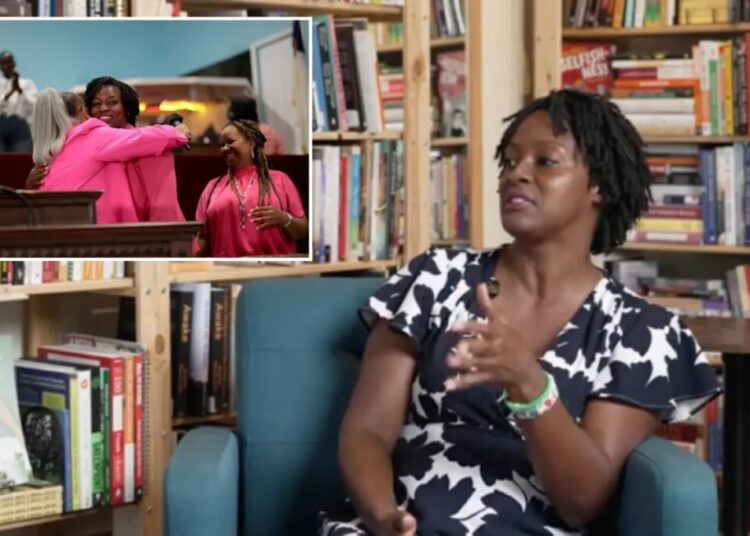
Rep. Cleo Fields (D) represents the new, majority-Black district in Louisiana that the court said was improperly drawn. He and other Black members of Congress could lose their seats if Louisiana Republicans race to draw new maps that break up Black voters and place them in other, Whiter districts. “Minority voters not only in Louisiana but across the nation — particularly in the southern part of our country — they are in my view left without real protections from the Voting Rights Act,” Fields told my Washington Post colleagues.
The post What the Supreme Court just did appeared first on Washington Post.