I remember when, as a presidential candidate, Donald Trump lambasted Barack Obama for bailing out automakers after the financial crisis, an effort President Obama asked me to lead. The auto industry should have gone bankrupt and “rebuilt itself, through the free enterprise system,” Mr. Trump said then.
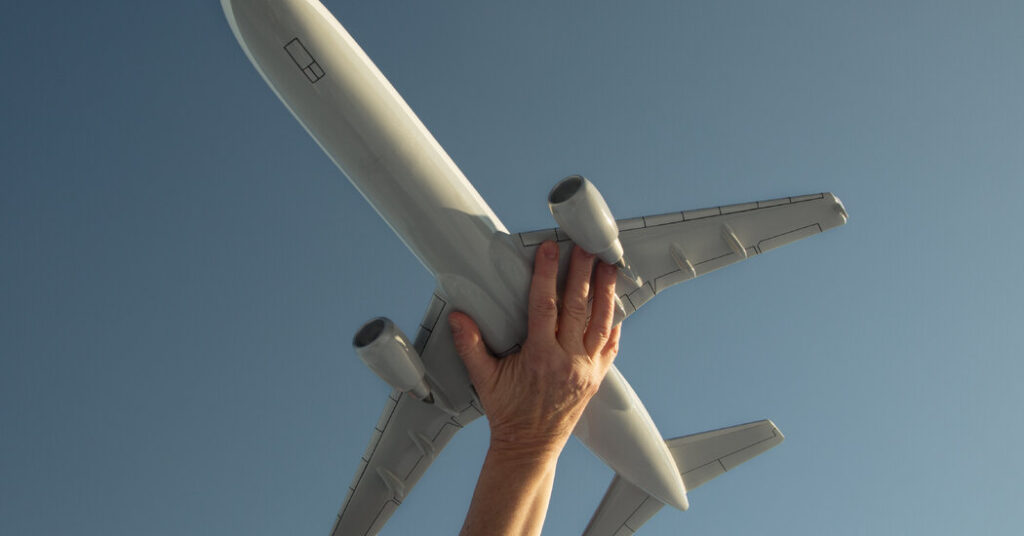
So I couldn’t help being struck by the casual suggestion by Mr. Trump, sitting in the Oval Office last week, that the government bail out Spirit Airlines, the long-ailing air carrier that is on the brink of collapse. And not merely helping it: “I think we’d just buy it,” he said.
I’d be OK with Mr. Trump’s hypocrisy if it made any sense for the government to rescue Spirit. Unfortunately, it doesn’t. While Mr. Obama was saving an enormous industry crucial to the economic health of the Midwest, Mr. Trump is talking about propping up a single airline that has been a terrible business for years and should be allowed to die. Mr. Trump may have run for president on free market principles, but he’s intervened over and over again in the private sector in ways that would make a moderate Democrat shudder.
To understand just how nonsensical it would be for the government to purchase Spirit, let’s start by understanding the automaker bailout. I began by recruiting a group of more than a dozen professionals, mostly experienced financiers, to develop recommendations for Mr. Obama. We spent weeks conducting detailed analysis and due diligence before coming to two conclusions.
First, the auto industry was critically important to the American economy. And second, a one-time infusion of support and a significant restructuring of operations could get the manufacturers back on their feet and operating profitably. Only then did the president make the tough decision to save General Motors and Chrysler and provide limited aid to other parts of the automobile industry.
Consistent with his measured approach and that of his advisers to government intervention, Mr. Obama repeatedly emphasized the importance of minimizing government intrusion into the private sector. As a result, we took no board seats at General Motors and exerted no special influence in how the company was run after its restructuring. And while the government received ownership, particularly in General Motors, to compensate taxpayers for the use of public funds, we sold off that stake as quickly as we could. By late 2013, General Motors was free of all government ownership.
Compare that with how Mr. Trump is considering having our government inject as much as $500 million (from exactly where remains a mystery) in Spirit and receive the right to own up to 90 percent of it. His process has no apparent analysis, no deliberation, just a typically off-the-cuff move. And in contrast to the way Mr. Obama handled the automakers, Mr. Trump has publicly offered no conditions upon which Spirit gets its money, no plan for how the government would exercise its rights as the major shareholder and no hint as to how or when Washington would exit the company.
Now consider the industry Spirit operates in. The airline business is notoriously tough, and the corporate graveyard is well populated with onetime household names like Pan American, Trans World Airlines and Eastern Air Lines. Warren Buffett said that if a farsighted capitalist had been present at Kitty Hawk when the Wright brothers’ plane first took off, “he would have done his successors a huge favor by shooting Orville down.”
Mr. Trump should be all too aware of the problems of this sector. He bought Eastern’s shuttle business in 1989, financed it almost entirely with debt, tried to recast it as a luxury product and lost it to creditors in 1991.
Spirit’s troubles begin with its business model of operating as an ultra-budget airline. It would roll out extremely low fares — only to have larger rivals like Delta and United cut their fares to match. Then travelers’ interest in “no frills” service ebbed, leading Spirit to pivot, unsuccessfully, by offering perks like free Wi-Fi and premium cabins.
Spirit wound up filing for bankruptcy twice within 10 months. It emerged from its first bankruptcy in March 2025 slimmed down with fewer debts but operated for only a few months before exhausting its resources and declaring bankruptcy yet again. As Spirit tried once more to emerge from Chapter 11, the war against Iran broke out, causing fuel prices — one of the biggest costs of running an airline — to soar. With the company headed for liquidation, Mr. Trump began to consider intervening.
In fairness, the Biden administration helped create the mess. In 2023, its overzealous antitrust regulators sued to stop Spirit from merging with JetBlue. The resulting combination would have yielded proceeds to shareholders of $3.8 billion and another $3.8 billion to lenders. And it would have led to a stronger competitor to the four large U.S. airlines. Instead, Spirit filed for bankruptcy the first time, and JetBlue reported a $602 million loss for 2025, its sixth consecutive losing year.
Still, the Biden administration’s suit pales in comparison to Mr. Trump’s extraordinary meddling in his second term. He has repeatedly intruded into the corporate world in ways that if initiated by a Democrat would have spawned outrage in conservative circles. His administration has taken equity stakes in companies from Intel to rare earth mining businesses. Nvidia and AMD were forced to pay 15 percent of their China-related revenues to the government as a condition for being allowed to export their less powerful chips to China.
Their free market beliefs notwithstanding, Republicans who were quick to denounce the Obama administration’s rescue of the auto industry have been mostly silent when it has come to Mr. Trump’s more numerous adventures.
Not surprisingly, Mr. Trump is now confronting another request for a handout. A group of budget airlines including Spirit has just asked for $2.5 billion in loans in return for equity stakes. Mr. Trump would be well advised to follow the model of the auto rescue and set up a thoughtful, deliberative process.
I’d like to remind Washington that capitalism, for the most part, works. Our economy is the envy of the world, and that’s due in no small part because it allows bad businesses to go south. Spirit’s 17,000 jobs would be lost, but the economy is far more able to absorb them now than it would have been in 2009, when over a million jobs were at risk in the auto sector.
Let Spirit liquidate and add its tombstone to the airline graveyard.
The Times is committed to publishing a diversity of letters to the editor. We’d like to hear what you think about this or any of our articles. Here are some tips. And here’s our email: [email protected].
Follow the New York Times Opinion section on Facebook, Instagram, TikTok, Bluesky, WhatsApp and Threads.
The post Let Spirit Airlines Die appeared first on New York Times.