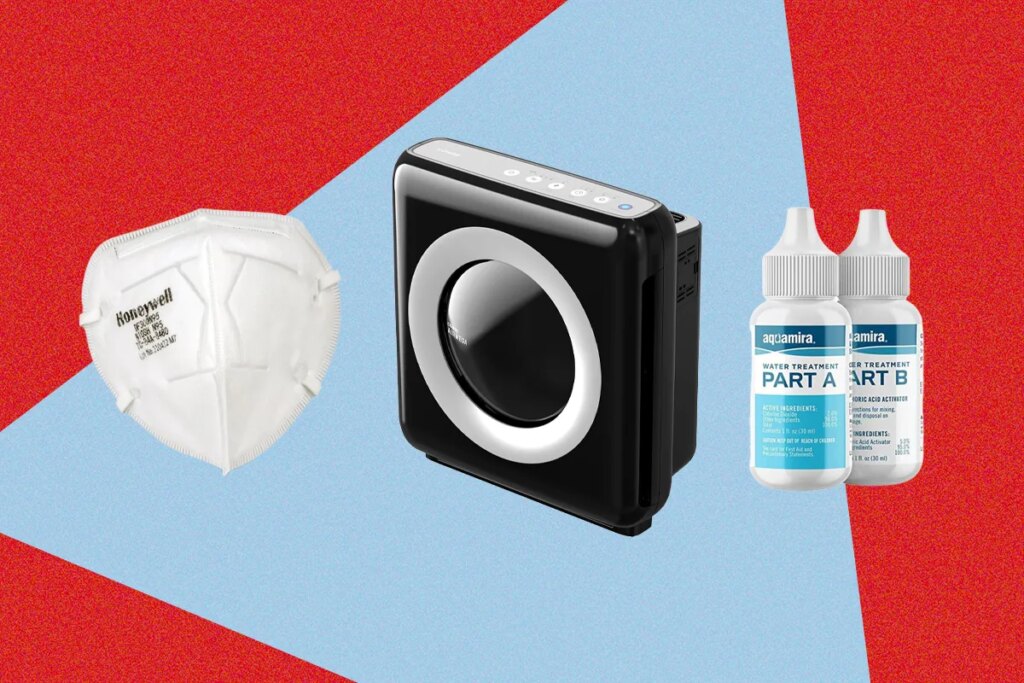
You never know when you’re going to have to bug out on short notice. The politics of the moment are less than predictable. Disasters never strike on schedule, and few stores stay open for a wildfire or an insurrection. As of early 2026, wildfires and the resulting chaos look especially likely in the American West after record-low snowpack levels in the winter, which will also mean less water in the spring and summer.
That’s why it’s important to make plans well in advance and put together gear for an emergency kit, say experts on disaster preparedness—and to stock up on the essentials that can keep your family healthy and safe in the event of hurricane, flood, earthquake, blizzard, wildfire, or all-too-human failures.
But not every disaster is the same. There are two main scenarios you should keep your family prepared for, says Jonathan Sury, a senior staff associate at Columbia University’s National Center for Disaster Preparedness.
In some cases, you may have to jump into a car with a go bag, or a bug-out bag, outfitted with the barest essentials, such as a three-day supply of water, purification tablets or water filters, a good flashlight, and batteries. A fast-moving wildfire might be a good example of this scenario. In others, like a severe snowstorm, you may be left sheltering in place, possibly without tap water or access to the power grid—and in serious need of a good power bank or two. Regional wildfires may also require long-term emergency prep, when taking into account smoke inhalation and potential public safety power shutoffs.
“You have to think in that mindset of, ‘We could have power out,’” said National Weather Service preparedness lead Charlie Woodrum. “‘We could lose it for a couple days, or up to even a week, and we also could lose water’ … You have to plan for both power outages and for loss of water.” At that time, in January, he was speaking ahead of a historic winter storm season across much of the United States. But the same assumptions can apply to other disasters, from earthquakes to wind and fire.
Here’s how to prepare for a shorter-term emergency—and what to stock up on in advance. This isn’t a survival guide to civil war or the apocalypse, of course. But the advice and gear here should help you and your family safely weather a natural disaster such as a storm, a flood, an earthquake, or a wildfire–not to mention a systemic failure in your water system or power grid.
Also take note of my colleague Adrienne So’s advice that the best form of emergency prep involves getting to know your neighbors, and WIRED’s Guide to Surviving Extreme Weather, as well as WIRED’s guide to finding reliable emergency information amid much-diminished federal resources. More worried about losing your job? Check out WIRED’s guide to a digital go bag for when you’re forced to bug out from work.
Update April 2026: I incorporated advice from University of Oregon wildfire experts Heidi Huber-Stearns and Amanda Stasiewicz, and added additional context on wildfire preparedness. I added multiple power banks, including one from Nimble and one from Ridge, as well as the Watch Duty wildfire awareness app. I also added the MERV 13 air filters and a box fan needed for making a DIY air purifier in a pinch. Pricing and descriptions have also been updated, with unavailable products swapped out where necessary.
Jump to SectionLargeChevron
- What Should You Put in Your Emergency Go Bag?
- Food, Water and Water Purification
- Air Purifiers and Face Masks for Wildfire Smoke or Disease
- Power Banks and Other Sources of Electricity
- Portable Light Sources
- First-Aid Kits, Sanitizers and Medical Supplies
- Digital Document Backups
- A Burner Phone, a Passport, and a Faraday Bag
- Radio and Emergency Phone Apps
- A Log-Splitting Wedge
- Games for the Kids
- An Action Plan for Pets
- Additional Useful Items
- Paper Maps of Your Region
What Should You Put in Your Emergency Go Bag?
Often, you have a bit of warning before an emergency lands on your doorstep. But an evacuation order can arrive with unsettling suddenness—and by the time everyone in your area is raiding the local supermarkets for water and purification tablets, it may be too late to secure your own. This is especially true in case of a sudden boil-water notice.
Your list of essential items for your emergency preparedness kit will depend on your circumstances, your family, and your needs. As of October 2025, the Federal Emergency Management Agency keeps an emergency kit checklist on its website. Columbia University also maintains online resources on how to prepare or respond to specific disasters and emergencies, including an online preparedness wizard to help each family understand their own emergency needs.
For wildfire preparedness specifically, University of Oregon wildfire expert Amanda Stasiewicz recommends protecting your home in advance of any sudden bug-outs by following home preparation advice from the nonprofit Institute for Business and Home Safety. This includes creating a defensible zone by removing all flammable materials within a 5-foot radius of the home, including doormats, and potted plants.
But it’s also good to maintain a baseline emergency kit so you and your family are ready for … whatever. Here’s a good starter kit of essential items to put in your go bag and keep ready at home or in the car.
Food, Water, and Water Purification
Sury and other emergency preparedness experts recommend keeping a gallon of water per person per day, not just for hydration but for food preparation, sanitation, and all the other nice things we need water for. Sury keeps a week’s supply of water at the ready at home, which can be purified with simple household bleach in emergency situations. (Be careful if doing so, and follow the Environmental Protection Agency’s advice on dosing.) Woodrum at the National Weather Service notes that you can also fill a bathtub with usable water in advance of a storm—but don’t drink any standing water without purifying it first.
But practically speaking, you’re not likely to have room for a full week’s supply of water in your car’s trunk if you’re on the move. This is where water filters come in for refills, especially if you won’t have guaranteed access to a water supply you can trust. For easy-to-carry chemical purifiers, WIRED reviewer Scott Gilbertson favors Aquamira’s water treatment drops ($15), which fit easily into any emergency bug-out kit. Sury says Aqua Tabs ($12) are an excellent, broadly available brand. For simplicity and ease in filtering out microorganisms and particulate matter, you might also consider a water bottle with an attached filter like the Katadyn BeFree ($45), though I tend to prefer the stainless-steel filtered bottle from Clearly Filtered ($75) for durability and repeat use. For an inexpensive filtration option for the whole family, Lifestraw makes an affordable personal water filter ($18) that you can suck through like a straw.
FEMA recommends keeping at least a few days’ worth of nonperishable food ready at hand. In practice, you’re likely to grab whatever Snickers bars, granola, ramen packets, and other dry goods you’ve got in the house on your way out the door. Sury says nutrient-dense canned foods like beans or sardines are also a great option, with the caveat that cans tend to be a bit heavy and often require a can opener.
Nothing is quite as portable and durable as dehydrated food, including the backup crate of ramen I always somehow have. One of the oldest makers of dehydrated food kits in the country, with roots in military rations, is Oregon brand Mountain House, which offers portable, three-day emergency meal kits ($70). Nutrient Survival also offers a 14-day emergency food kit ($179) that includes lasagna and mac and cheese. Just don’t expect rehydrated food to taste quite like the original.
Even if you don’t camp, you may nonetheless want to pick up a good camping stove for emergency use—or another means of cooking without need of electricity. Note that most emergency experts don’t recommend using gas-fueled equipment indoors due to the risk of fire and carbon monoxide. But if you’ve got a garage you can ventilate, this is not much of a concern with a little Coleman. As an added benefit, it’s portable, lest you need to bug out fast.
A less obvious food need in an outage is a good cooler. It’s helpful to keep food fresh, of course. But also, a lot of medications need to be temperature-controlled, notes Columbia disaster preparedness expert Sury. And so if this applies to someone in your family, a small cooler can also be a piece of emergency equipment, when combined with an ice pack or two from the freezer.
Air Purifiers and Face Masks for Wildfire Smoke or Disease
Do you live in the West? In 2026? You will want an air purifier. The smoke is (probably) coming. As the past half-decade has proved, the East Coast is also not immune. And the more we learn about wildfire smoke, the worse it looks for everything from strokes to cardiovascular risk, early deaths, mental health, fertility, you name it. An air purifier will be good for peace of mind, especially if you buy one before a major wildfire causes stores to go out of stock. The Airmega Mighty from Coway is our favorite affordable purifier. The bigger ProX is a beast for large spaces and high ceilings. Or you can just check out WIRED’s full guide to the best air purifiers. Try to create at least one “clean air” room in your home during a lasting air quality incident, notes University of Oregon’s Huber-Stearns, who has studied the effects of smoke on health outcomes and cautions that children with developing lungs should always be considered a vulnerable population.
A good air purifier isn’t in every budget—especially not if you’re trying to create a clean space for multiple rooms. But that doesn’t mean you’re out of luck when trying to create safe air for your family. University of Oregon’s Heidi Huber-Stearns recommends following the Environmental Protection Agency’s easy instructions for building your own DIY box fan purifier with duct tape, cardboard, MERV 13 certified air filters, and a good old-fashioned box fan. My colleague Kat Merck recommends this classic Lasko 20-inch fan as both low-cost and reliable. Filter King filters are a reliable, broadly available choice for air filtration. Studies have shown comparable effectiveness between DIY air purifiers and the commercial models. But note you have to make sure to replace filters for them to remain effective. They get dirty fast when there’s a smoke event.
Sometimes what you’re worried about is disease. Sometimes it’s wildfire smoke. Or particulate matter from lord knows what else. But have you ever regretted having some nice filtration face masks lying around? Huber-Stearns recommends staying indoors in filtered air whenever possible if PM 2.5 particulate matter is at elevated levels. But using masks when you’re on the go can also help avoid negative health outcomes.
Power Banks and Other Sources of Electricity
The world runs on electricity. The electrical grid can be fragile. Lithium-ion power packs are the modern answer—but it can be a volatile technology, so you don’t want to just resort to the cheapest ones. Among portable power banks and larger-capacity power stations, WIRED testers have long recommended portable devices from Jackery—ranging from the 8-pound, 288-watt-hour 300 model that also includes solar options to a 62-pound behemoth with about seven times that capacity.
If you’re bunkering in and don’t have a built-in generator, you may want to consider a fuel-based generator like a 4,000-watt, gas-powered Westinghouse ($729) for your power needs. But Woodrum at the NWS recommends caution if this is your path. Fuel-based generators spit out carbon monoxide, which can be fatal if it builds up. Fuel-based generators are not safe indoors, and not recommended within 20 feet of an indoor space. So plan accordingly.
In addition to basic power banks, you’ll probably want to make sure you can jump your own car without need of (overwhelmed) emergency personnel. After testing jump starters from a number of the most well-regarded brands, the model that proved itself best as an unstoppable tank is the Wolfbox 4000A Jump Starter ($170), which can jumpstart a V6 literally dozens of times without falling below effective levels, and doubles as a power pack. But when space is at a premium, the NOCO Boost X GB45 ($125) is also a powerful but compact option.
The small devices are important too, whether phones or handheld game consoles to keep your mental health in order. This Nimble is WIRED’s top pick among smaller portable power banks. WIRED Gear team director Martin Cizmar also recommends this magnetic power bank from Ridge to keep all your Apple devices topped up—including an Apple watch with a proprietary magnetic charging port and older model devices that still use Lightning cables. “The Ridge is compact, durable, and, in addition to its two built-in cables, has MagSafe, so it’ll hang on the back of your most important device (your phone),” he writes. The 10,000mAh charge is enough to recharge any iPhone twice and smaller iPhones three times, and a small LED screen will display the charge that’s left. What differentiates this Ridge in a situation that requires haste is that the MagSafe is powerful enough it’ll actually stay put on your phone while on the go.
This may go without saying, but: Whatever portable battery-operated devices you own? Have extra batteries for them.
Portable Light Sources
You will want light when the power goes out. Candles and matches are nice, too. But for walking or for focused light, dare we suggest … the absolute best flashlight? One that you can drown in water—and thereafter purify water by the light thereof?
For ambient light when holding still, you want a lantern. There are plenty of fuel-based options available, of course, but a long-lasting, battery-powered Coleman LED lantern ($22) is a tried-and-true, no-frills option that promises 175 hours of life before you have to change the batteries.
First-Aid Kits, Sanitizers, and Medical Supplies
You can, of course, buy a ready-made emergency medical kit from the American Red Cross ($43), or this one meant to stay in your car. Adventure Medical Kits also makes a more extravagant Mountain Series Explorer Medical Kit ($87). but for the frugal, see this guide to putting together a better emergency kit yourself for less money.
In addition to all needed prescription medications, over-the counter painkillers and antacid tablets are helpful additions to any emergency kit. So are feminine hygiene products, toothbrushes, and toothpaste.
Prevention is most of the battle, however. Nitrile gloves are helpful to avoid all sorts of contaminants. Hand sanitizers end up being … a big deal. As do good ol’ disinfecting wipes. This will also be important in the case of burns, which have a nasty tendency to seep. “Anything to maintain hygiene, that’s so important,” Sury says. “Especially if we don’t have water running, we just don’t want to get any kind of virus transmission, or fecal, orally transmitted bacterial infections.”
Digital Document Backups
The biggest category people tend to neglect when thinking about emergency preparedness, says Sury, is intangibles. This can be as simple as having a family communication plan and prearranged meeting points, so you know what to do if members of your family are separated. But also, it’s important to have digital backups of key documents, Sury said, “anything that is high value that may potentially get damaged in a disaster.” This may include insurance documents, titles to homes and cars, medical information such as prescription drug lists and instructions, doctor contact information, and photographs of passports and state identification.
Likely you have access to one form or another of cloud storage. See WIRED’s guide to the best cloud storage services for each need and type of device, and make sure you use a good password manager to keep any sensitive data secure. But especially if internet access is not assured—or you’d prefer not to store some documents on the cloud—another secure option is a portable external storage drive that can easily be slipped into a waterproof pouch. WIRED reviewer Scott Gilbertson recommends OWC’s Envoy Pro Elektron SSD ($300) as a portable storage drive that’ll stand up to the elements and can get wet—and travel with you anywhere. Or just store the essentials on a USB flash drive like WIRED’s top compact pick, the dramatically named Patriot Supersonic Rage Prime ($67).
A Burner Phone, a Passport, and a Faraday Bag
Wait, does this seem dramatic? Well, maybe—but being safe is better than being sorry. Disaster takes many forms, and some of it is human. Here’s WIRED’s guide to how to procure and set up a burner phone in a way that can’t be tracked. But to avoid trackers on phones, you’ll also want a Faraday bag to block tracking signals, like an SLNT Faraday bag from Silent Pocket. True burner phones are not bought online. But if all you need is a search-safe phone to cross a border with, what you actually want is an affordable altphone severed from incriminating data: The Moto G Stylus 5G will serve your needs here.
Radio and Emergency Phone Apps
Whatever’s going on with the internet or the satellites, a radio is a good source of emergency information. Have one. The classic prepper advice is a handcrank radio. But for shorter-term emergencies, a battery-powered one is also an option.
Another thing people forget to do until the internet is already down? Download emergency phone apps. As of October 2025, FEMA has an app. Your local municipal or state government likely also has opt-in emergency push-notifications. Consider opting in. WIRED has also cataloged a number of other personal safety apps, including a subscription service called Rescu that can connect you directly to first responders.
For wildfires, University of Oregon wildfire expert Stasewicz strongly recommends that you download independent wildfire awareness app Watch Duty, which offers up-to-date information on wildfires all over the country and became an important lifeline especially during the 2025 Los Angeles fires. The app will most likely deliver evacuation information faster than your local sheriff, Stasewicz notes, giving your family a lot more lead time in an emergency. The app is free for emergency information in a single county, but there are subscription tiers for those who want to donate or monitor broader regional wildfires and receive more detailed disaster information.
A Log-Splitting Wedge
I know, I know, an axe seems cooler. But in an emergency, you don’t actually want an axe wound. And if you’re not the sort of person who regularly uses one, an emergency is not the time to learn that an axe can slide quite easily off the side of an unstable log, and toward your waiting foot. Use this wedge. It’ll be helpful if you need firewood, for fires.
Entertainment for the Kids (or You)
This is another neglected item that’s recommended by everyone from emergency experts to everyone who’s ever met a child. In stressful or protracted situations, trust in distraction. This can be as simple as a book of puzzles, a good building kit, or the foresight on the way out the door to grab the Nintendo Switch 2 and a small power bank like WIRED’s top-pick Nimble.
An Action Plan for Pets
Do you plan on leaving Fido or Meowser behind, when the rains come to wash these streets clean? Assuming not, maybe keep a pet carrier with portable food and water dishes handy. If you have horses, you’ll need to own a trailer and something that can tow it. If you have a pet boa constrictor, I don’t have good advice. [I do have a pet boa constrictor, and I recommend putting it in a pillowcase. —Ed.]
Additional Useful Items
A can opener, to open cans. A pair of scissors for all sorts of things. Duct tape and sheeting to build temporary shelters or provide cover from rain. A box of matches in a ziplock baggie. A notepad and a pen. Non-shatter plates and cups, whether paper or metal. A shovel. I really hope you have a good shovel.
Paper Maps of Your Region
Yes, they still exist. Yes, they’re a good idea.
A Short List of What Matters
At University of Oregon, much of Stasiewicz’s research focuses on the human impacts of wildfire. And so when I asked which aspect of emergency preparation that victims of wildfires often regret neglecting, she had one word: “Memories.”
“Our checklists talk about how to survive a fire,” she said. “They say, ‘Bring your meds, bring your IDs, bring your important documents, grab your computer and your wallet’…. But they don’t mention anything about what’s going to help you rebuild if you do lose everything. For some folks, that’s the art they bought on their honeymoon. It’s the recipe book that is great grandma’s from Germany. It’s the photo albums of the photos you didn’t get to digitize.”
For children, the thing that helps them feel better after an evacuation might be a favorite stuffed animal. It’s good to make a little list of what matters, notes Stasewicz, because when the stress of the fire hits, it’s really hard to remember them. You will, however, remember them later.
Power up with unlimited access to WIRED. Get best-in-class reporting and exclusive subscriber content that’s too important to ignore. Subscribe Today.
The post Essential Gear for an Emergency Kit—for Cars or Go-Bags appeared first on Wired.