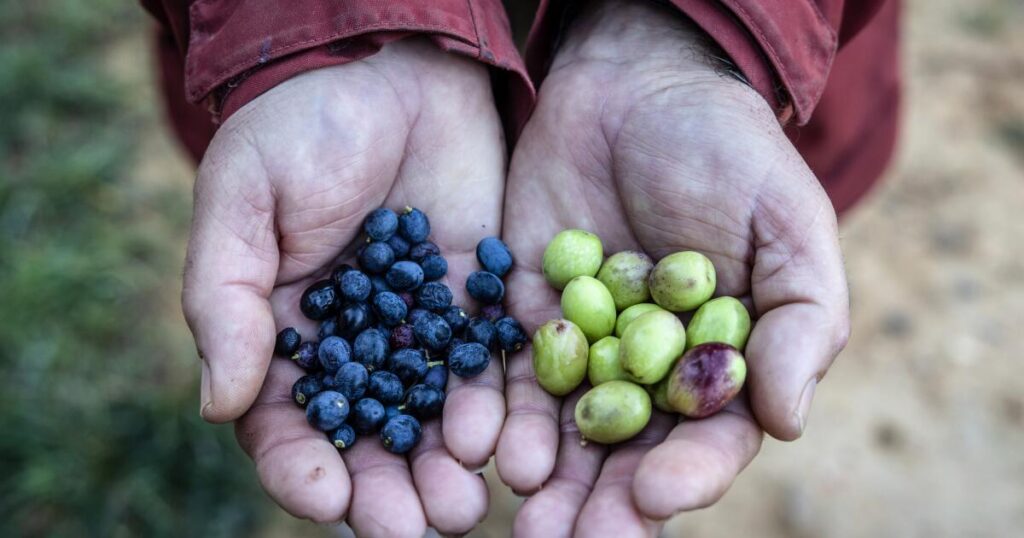
In the summer of 2022, a heat wave in Europe drove temperatures to a record-breaking 115 degrees in Spain, scorching its olive-growing regions. In the U.K., chickens wilted in the heat, leading to a 9% drop in chicken-meat production from the year before. Northern Italy, meanwhile, endured its worst drought in 70 years, slashing harvests of risotto rice.
Researchers calculated that climate change increased summer temperatures in Europe by 2.25 degrees Fahrenheit on average — and by as much as 10 degrees F in some places. The extreme heat raised European food prices by an estimated 0.7% that year, nudging overall inflation up by about 0.3% and adding to the pain of spikes related to the COVID-19 pandemic recovery and Russia’s full-scale invasion of Ukraine.
This was a rare instance in which researchers were able to estimate the direct effects of climate change on prices, a phenomenon known as “climateflation” that’s only beginning to be understood. But if you look around, you’ll see that the rise of extreme weather and natural disasters is already making life more expensive. As summers get hotter, whirring air conditioners are straining grids and pushing up utility bills. Roads are buckling in the heat. Rail lines are warping, raising transportation costs that companies can then pass on to consumers. More hurricanes, wildfires and other extreme weather are wreaking havoc on insurance markets, resulting in soaring premiums.
Of course, droughts and storms have long affected prices. But as extreme weather becomes more common, the price spikes once written off as temporary may be turning into something more lasting — a powerful new force that could further disrupt household and national budgets already beset by an affordability crisis.
Now a cadre of economists, climate scientists and central bankers are studying climate inflation’s effects, trying to piece together how it moves through the economy.
It’s far from straightforward. Disentangling how much a jump in, say, coffee prices or water bills stems from human-induced global warming rather than myriad other reasons is messy. Researchers have to pore over inflation and weather data to tease out how shifting climate patterns affect prices while accounting for other factors such as recessions and differences between countries — consumers spend more on food in low-income countries than in rich countries, for instance. The fallout is uneven. A coastal hurricane might have far less effect on national inflation than a continentwide heat wave, and it’s hard to pinpoint the effect of a complex chain of events within a consumer price index that tracks tens of thousands of products.
“If you pick up a textbook and you look up the bit on inflation, inflation is too much money chasing too few goods. There’s no textbook that says, ‘The climate’s cooking and we’re running out of stuff,’” says Mark Blyth, who runs Brown University’s Rhodes Center for International Economics and Finance. “It isn’t taught that way. It generally isn’t thought about that way. Now people may be beginning to realize this.”
Scientists have gotten better at quickly analyzing the role of climate change in extreme weather events. Researchers are now trying something similar in the field of economics. They can, for example, estimate how much of a hurricane’s damage can be pinned on carbon emissions.
Tracking the ups and downs of individual product prices across different geographies is far more complicated, though. Detailed local price data are often patchy or unavailable. And climate inflation takes many forms. Lower crop yields is a pretty direct effect, but damaged infrastructure and upended supply chains can also lead to price changes. Those are tougher to follow.
Central banks have been spearheading climate inflation research, motivated by their intense focus on keeping prices stable. In the past, weather-related price spikes have often proved temporary, allowing central banks to avoid raising interest rates. But as extreme weather events increase, intensify and hit important sectors such as food, that might have to change.
So far, researchers have been most successful at drawing a line between the effects of a hotter planet and your grocery bill — but not so much in terms of, say, your rent or the price of a ski vacation. “We will eventually see some models for taking that into account, just as we have models that help us understand the impact of different levels of government spending on employment,” says David Super, a professor of law and economics at Georgetown University. “But it’s going to take awhile.”
Hotter and Pricier
One early study suggests that elevated temperatures alone could hike consumer prices globally by as much as 1.2% each year by 2035, though it assumes no monetary policy addressing it by central banks. The study estimates an increase of up to 0.76% a year in Europe, meaning climate inflation alone would eat up a portion of the European Central Bank’s 2% inflation target, says Maximilian Kotz, a researcher at the Barcelona Supercomputing Center and co-author of the study with the central bank’s staff.
Much of the effect comes from higher food prices, which the research estimated could rise by as much as 3% around the world each year, the result of hotter weather spreading across large areas and slashing harvests. Researchers have found that as temperatures climb above 77 degrees, crop yields begin to fall, harvests suffer and food prices can spike for at least a year. Storms make staples such as beans and fish more expensive, and drought can cause some of the biggest price increases, including for meat, thanks to widespread crop failures and livestock losses. But the inflationary effect of extreme weather events appears to be contained to about two years on average. “We do know that extreme events are causing a temporary spike in inflation,” says Ilan Noy, chair in the economics of disasters and climate change at Victoria University of Wellington in New Zealand. But “there’s a lot of devil in the details — what kind of extreme weather event and where it is hitting.”
Climate inflation is set to play out differently by location and season. In general, the hotter it was to begin with — whether due to geography or summer weather — the more prices are expected to rise as temperatures increase. That means the effects are likely to be especially pronounced in the Global South, where temperatures are already high and poor families struggle with bills. In developing economies, each 1.8 F increase in temperature anomalies leads to about a 1% increase in inflation around three months later, according to Fulvia Marotta, a researcher on the economics of climate change at the University of Oxford and a senior economist at the Dutch central bank. (The paper has not yet been published.)
During the winter months, and in some cooler places such as Canada and Norway, prices may actually fall as warmer weather expands growing seasons, or lowers demand for heating. But in most of the world, prices are expected to rise more than they fall. “We have enough data to understand that this is an important macroeconomic risk,” Marotta says. “The mandate is to monitor it.” Experts say these spikes could make food unaffordable for the poor — and drive political change. Consumers buy groceries so regularly that large price changes can quickly become a source of political dissatisfaction, sparking unrest such as the 2010-11 Arab Spring or the political fallout after a 2024 “rice crisis” in Japan.
Climate prices increases can become longer lasting if they change consumer expectations — and research has suggested they might. Consumers who are already concerned about future global warming also have higher expectations of price growth. These kinds of beliefs can become a self-fulfilling prophecy, with implications for the broader economy, says Marcus Molbak Ingholt, senior lead climate economist at the Danish central bank.
When people expect more inflation, they may ask for raises at work, further driving inflation. “The best way to avoid the damages from climate change is to have a global green transition,” Ingholt says. Absent that, a hotter world will also probably be a pricier one.
Court writes for Bloomberg.
The post Climate change is already showing up in the cost of living appeared first on Los Angeles Times.