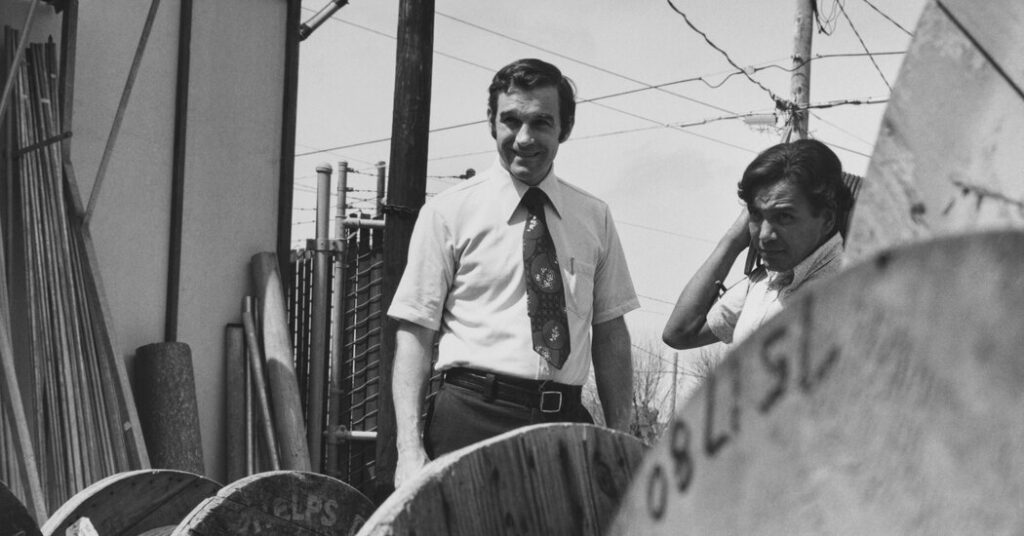
Long before he became a hero of the Republican Party’s libertarian wing, Ron Paul was a little-known Texas congressman with a fringe idea: He wanted to re-tether the dollar to gold.
In 1981, Mr. Paul saw a chance to take what he called a “first step.” He joined a new federal gold commission and proposed that the U.S. Mint start making and selling gold coins.
That, it turned out, was the right idea for the political moment. South Africa dominated the world’s gold-coin market and many in Congress were eager to punish the apartheid government there. American gold, the thinking went, could provide competition free from human rights abuses.
President Ronald Reagan signed the Gold Bullion Coin Act of 1985, authorizing the Mint to sell gold coins as long as they were made exclusively from gold mined in the United States.
Ever the believer in free markets, Mr. Paul thought the “Made in the U.S.A.” provision was needlessly protectionist and, given what he knew about the gold industry, probably unrealistic. With so many intermediaries in the supply chain, Mr. Paul figured that, sooner or later, gold from all over would end up in the American pipeline.
“I thought they couldn’t ever tell where the gold was coming from,” he recalled in a recent interview.
But Mr. Paul was temporarily out of Congress when the president signed the bill, and he was mostly just happy that it had passed. “What was important was that the Mint was getting back into selling gold,” Mr. Paul said.
It didn’t take long before Mint administrators realized their problem. Their suppliers typically melted together gold from many sources. Creating a bespoke American product would come with a premium. And Congress prohibited the Mint from paying more than the worldwide average price for gold.
So, records show that under its director at the time, Donna Pope, the Mint simply redefined the “American gold” requirement. Refiners could sell the Mint foreign gold, as long as they certified that they had bought an equal amount of American gold at some point during the year.
The law made no allowance for such a workaround. But coin sales were healthy and, with the exception of a few lawmakers and watchdogs who groused, everyone seemed to pretend that things were working as intended.
Besides, the stakes of violating the law seemed low. The U.S. produced plenty of gold — 294 metric tons in 1990, according to the U.S. Geological Survey. Buyers didn’t need to rely on foreign purchases. And with gold selling at about $390 an ounce in the program’s early years, the most environmentally devastating practices weren’t profitable. It made little financial sense to chop down tens of thousands of acres of Amazon rainforest, for example, or pollute Ghanaian rivers with mercury.
The system unraveled after the Sept. 11, 2001, terrorist attacks. Gold prices jumped as investors worried that war would devalue stocks and the dollar. Amid that price surge, the Mint stopped asking refiners to prove that they were buying American gold.
In the ensuing two decades, gold production in the United States fell precipitously. Imports rose. And nobody at the Mint asked where its gold was coming from. Mint officials decided instead to check the websites of refiners to make sure that they had ethical-sourcing policies, a federal audit found in 2024.
As a result, The New York Times found this week, the Mint ended up buying gold that originated with a Colombian drug cartel or passed through the hands of Mexican pawn shops and Peruvian payday lenders.
In response, the Trump administration said it had opened an investigation into the Mint’s sourcing practices. A Mint spokeswoman said that it had already taken steps to better track the gold. She said that the U.S. is the “primary” source of its gold.
When the Treasury Department’s inspector general raised similar questions in 2024, the Mint said that it would reveal a new system to monitor its gold supplies within a matter of months. It never did.
That refusal to track supplies for decades is an example of how, as gold prices skyrocketed, the industry’s guardrails failed — even with the biggest players in the marketplace. The result is that the Mint has helped support activities, like narco-terrorism, that the government is simultaneously trying fight.
It’s the very problem that Congress tried to avoid when it ordered the Mint to buy only U.S. gold.
While the Mint’s purchases of illegal foreign gold might seem to undermine the coin program’s original intentions, there’s one person who’s not terribly disturbed: Ron Paul.
He never liked the rule that the gold had to originate in America. Any law dictating how the government or anyone else buys gold is unethical, he said.
He did not directly express a view on the Mint’s purchase of drug cartel gold, but he said that, generally speaking, people rarely gave honest answers about where their gold came from.
When it comes to gold, Mr. Paul said, “Nobody tells the truth.”
Robert Gebeloff contributed research.
Justin Scheck is a London-based reporter for The Times.
The post U.S. Mint’s Gold Program Is a Longtime Mess. Ron Paul Saw That Coming. appeared first on New York Times.