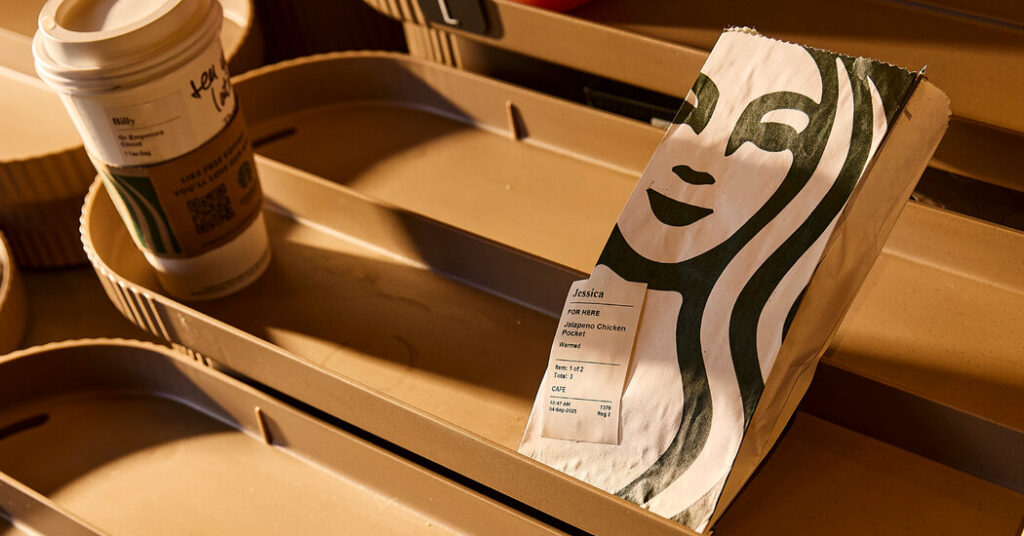
Despite growing concerns that the war with Iran and the surge in gas prices could cool consumer spending, Starbucks said on Tuesday that so far it had not seen any signs of that happening.
“We haven’t seen a lot of the macro effects trickle into consumer behavior as it relates to Starbucks,” Brian Niccol, the chief executive, said on a call with Wall Street analysts and investors after the company reported robust quarterly earnings. “But I think we want to be cautious going forward, because we’re not sure how this will play out,” he added, referring to higher gas prices or utility costs for consumers and the company.
Driven by high customer traffic, global sales for stores open at least a year rose 6.2 percent in the quarter that ended March 29, compared with a year earlier. Same-store sales jumped 7.1 percent in the United States and 2.6 percent internationally, the company said.
Mr. Niccol and other executives credited the operational turnaround put in place a few months ago for the bulk of the improvement in the company’s performance. Since taking over in late 2024, Mr. Niccol has focused on addressing a litany of customer complaints, from long waits for drinks to a lack of seating.
Revenues rose 9 percent from a year earlier to $9.5 billion. Net earnings, which have been under pressure as labor costs increased and Starbucks began renovating its cafes as part of its turnaround plan, rose 33 percent to $510.8 million in the quarter.
In aftermarket trading, the company’s stock was up 5.4 percent, at $102.10.
While some analysts have been concerned about belt-tightening by lower-income consumers, Mr. Niccol said Starbucks saw gains in customer visits across all incomes in the quarter.
As part of the turnaround, “we have to demonstrate for people that it’s worth it,” Mr. Niccol said. “If it’s on the low-income side, where it is seen as a bit of a splurge or a little bit of indulgence, then, by all means, we need to have those drinks that they want, and then we need to give them the experience where they feel like, you know, their hard-earned dollar, it was well worth spending.”
Still, while the company raised its full-year outlook to a 5 percent increase in same-store sales, and said it believed high coffee prices and tariffs on coffee would abate in the second half of the year, its forecasts were tempered by the uncertainty from the war and rising fuel prices.
“Customer demand trends in our business remain strong today,” Cathy Smith, the company’s chief financial officer, said on the call, “and while history demonstrates the resilience of our brand through periods of high gas prices, the current macroenvironment brings heightened uncertainty to our operating landscape and consumer behavior more broadly.”
The company’s report followed strong quarterly results by some other well-known U.S. brands, including PepsiCo, which noted that spending on its snacks and beverages had not fallen despite inflation and consumers’ uncertainty about the economy.
Julie Creswell is a business reporter covering the food industry for The Times, writing about all aspects of food, including farming, food inflation, supply-chain disruptions and climate change.
The post Starbucks Reports Strong Store Traffic and Rise in Quarterly Sales appeared first on New York Times.