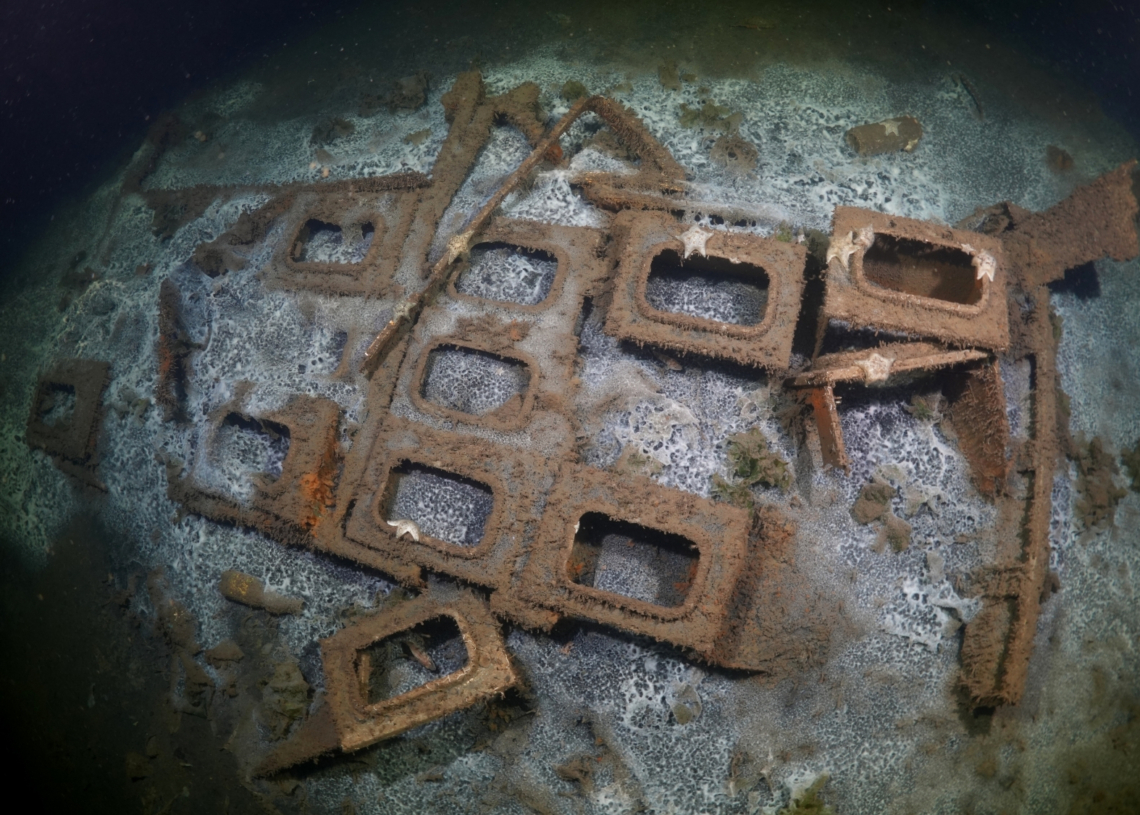
Spanish archaeologists have identified 134 shipwreck remains dating back centuries along the coastal stretch between the Bay of Algeciras and the Rock of Gibraltar, the Strait that separates Europe from Africa. Altogether, the archaeologists found 151 separate archaeological sites containing shipwrecks ranging from ancient Punic vessels to World War II-era military technology, according to research published on ResearchGate.
The Rock of Gibraltar is one of the more pivotal stretches of ocean. It’s always served as a chokepoint that ships from, say, England or Lisbon had to travel if they had business or some light conquering to do in the Mediterranean or Middle East. Ships hauling Roman fish sauce or dodging Napoleonic cannon fire or, in the modern day, shipping oil, all had to pass through this bottleneck, which logically made it a hotspot for wrecks and battles.
There are Roman cargo ships, medieval vessels from the Islamic period in southern Spain, and early modern warships from competing European empires. One standout is an 18th-century Spanish gunboat designed for stealth attacks. It would disguise itself as a sleepy fishing vessel before revealing its cannons that it would unload on unsuspecting enemies.
Archaeologists Found a Graveyard of 134 Shipwrecks Near Gibraltar
It’s not all dramatic shipwrecks tied to battles long forgotten. There were plenty of smaller, more intimate finds, like a box that was initially thought to hold secret documents but was actually filled with combs, because one must maintain one’s looks in between bouts of cannon fire.
It’s a significant find, yes, because of the volume of wrecks discovered, but also because, since 2019, only four underwater sites have been documented. Now, researchers have hit the motherlode, and yet, they’ve still only just scratched the surface, and that’s quite literal. They only explored depths of just 10 meters in a bay that plunges to 400 meters. There’s likely much more buried below, maybe even prehistoric remains from when ocean coastlines were where the water now resides.
Unfortunately, climate change is the ultimate killer of most everything now and in the immediate future. It, along with dredging and port expansion, is threatening these precious archaeological sites that offer a tactile sense of our distant past. Archaeologists are working as fast as they can to digitally document what they can, turning shipwrecks into 3D models and virtual experiences before they’re gone forever.
The post Archaeologists Discovered a Lost Underwater Graveyard in a Tiny Stretch of Sea appeared first on VICE.