The Department of Defense has picked a dozen companies to develop space-based interceptors for Golden Dome, moving forward amid concerns the technology might be too expensive to field.
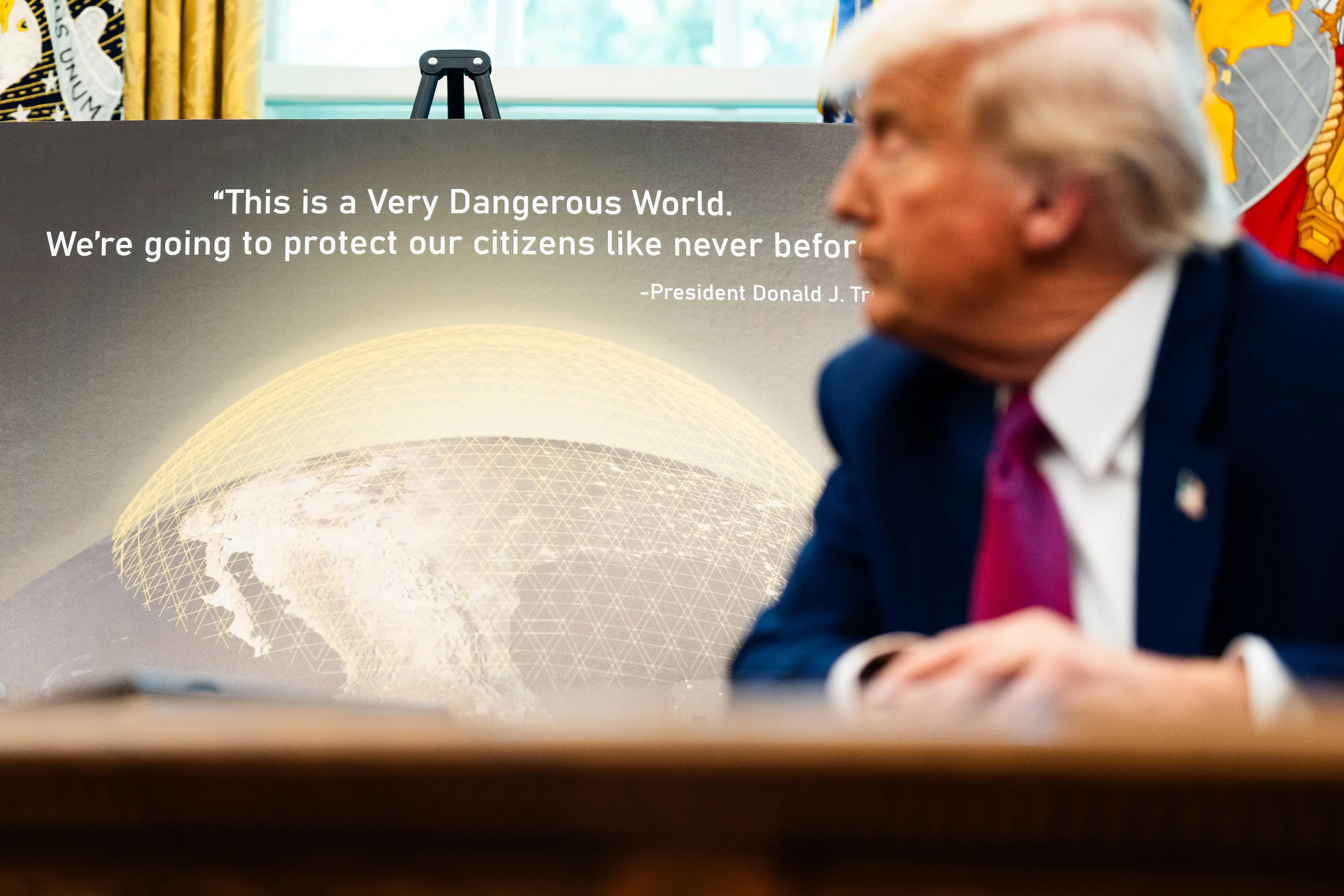
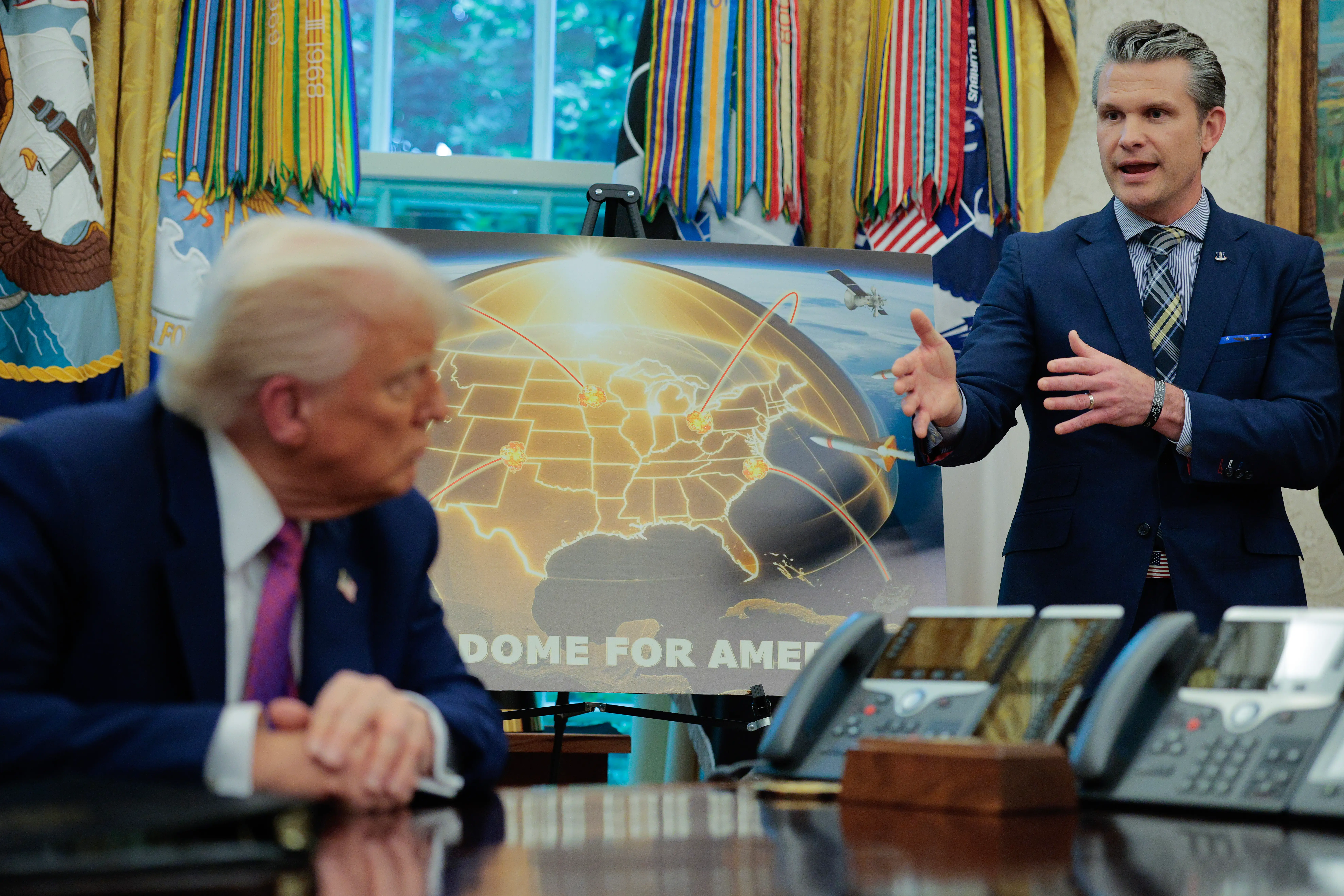
Golden Dome is the Trump administration’s proposed missile defense system to counter threats from foes like Russia and China. The design includes space-based missile interceptors, but military leaders and analysts have raised concerns about the cost.
Last week, Space Force’s Space Systems Command said 12 defense companies had been selected in late 2025 and earlier this year for Other Transaction Authority agreements, early-stage research and prototype work with fewer regulatory constraints.
The combined award value is up to $3.2 billion, and the industry partners selected include big names like Anduril, General Dynamics, Lockheed Martin, Raytheon, and Northrop Grumman, along with firms such as Booz Allen Hamilton and Turion Space Corp.
These companies will work on prototypes for Golden Dome’s space-based missile interceptors, armed low-Earth orbit satellites designed to counter ballistic, cruise, and hypersonic missiles across multiple phases of flight, the Space Force said.
Col. Bryon McClain, the Space Force program executive officer for space combat power, said in a release on the selection that “adversary capabilities are advancing rapidly, and our acquisition strategies must move even faster to counter the growing speed and maneuverability of modern missile threats.”
“With the commitment and collaboration of these industry partners, the Space Force will demonstrate an initial capability in 2028.”
But other officials have questioned whether these capabilities will be affordable. Earlier this month, Space Force Gen. Michael Guetlein, director for the Golden Dome program, acknowledged that satellites built to shoot down enemy missiles might never be feasible.
“What we do not know today is: ‘Can I do it at scale and can I do it affordably? That’s going to be the huge challenge for boost-phase intercept,” Guetlein told the House Armed Services Strategic Forces committee.
“I will tell you because we are so focused on affordability. If we cannot do it affordably, we will not go into production,” the head of Space Force added.
Space-based interceptors aren’t necessarily the only game in town though, he indicated, telling Congress that “if boost-phase intercept from space is not affordable and scalable, we will not produce it because we have other options to get after it.”
Golden Dome’s current estimated price tag sits at $185 billion, about $10 billion more than President Donald Trump first estimated when discussing Golden Dome’s total cost last May.
The Congressional Budget Office has put the projected total at anywhere between $161 billion and half a trillion dollars for launching and operating a full constellation of space-based interceptors for 20 years.
The cost projections vary depending on the number of interceptors the US deploys. Analysts have suggested that space-based interceptors may not fit within the program’s cost and requirements given the mission. When Trump issued an executive order to build Golden Dome in January 2025, the order said it must counter “ballistic, hypersonic, advanced cruise missiles, and other next-generation aerial attacks from peer, near-peer, and rogue adversaries.”
Per an American Enterprise Institute paper from September 2025 by senior fellow Todd Harrison, a simulated Golden Dome architecture that best fits those requirements is estimated to cost $3.6 trillion over 20 years. In contrast, AEI’s simulated designs that better fit the Trump administration’s budget don’t provide the defensive capabilities being promised, “creating a multi-trillion-dollar gap between rhetoric and reality,” the paper said.
“The more threats Golden Dome is designed to counter, and the broader its coverage, capacity, and resilience, the higher the cost. Even small shifts in objectives can produce outsized changes in cost, and the largest cost driver by far is space-based interceptors,” Harrison wrote.
Golden Dome also presents a shift toward further weaponizing space. Experts say that while the US sees Golden Dome as necessary, it could accelerate an arms race. That could include systems designed to target the interceptors, missiles that evade defenses, or larger missile arsenals to overwhelm the system.
Some US officials have pointed to China and Russia’s existing counterspace capabilities as evidence that space is already contested. China and Russia have both criticized the Golden Dome plan as a potential catalyst for a space arms race while simultaneously advancing their respective missile and anti-space programs.
Read the original article on Business Insider
The post The Pentagon is putting industry on a key ‘Golden Dome’ weapon that military leaders have said might ultimately be too expensive appeared first on Business Insider.