Anthony Bouyer has been on a suing spree around the San Fernando Valley.
On Sept. 24, the 55-year-old internet marketer confronted a counter at a hole-in-the-wall Mexican spot that was difficult to reach over in his wheelchair. He sued the business for violating the Americans with Disabilities Act. In L.A. County, it was at least his 231st case of the year.
At the convenience store next door, he found a produce scale out of arm’s length. He sued them too.
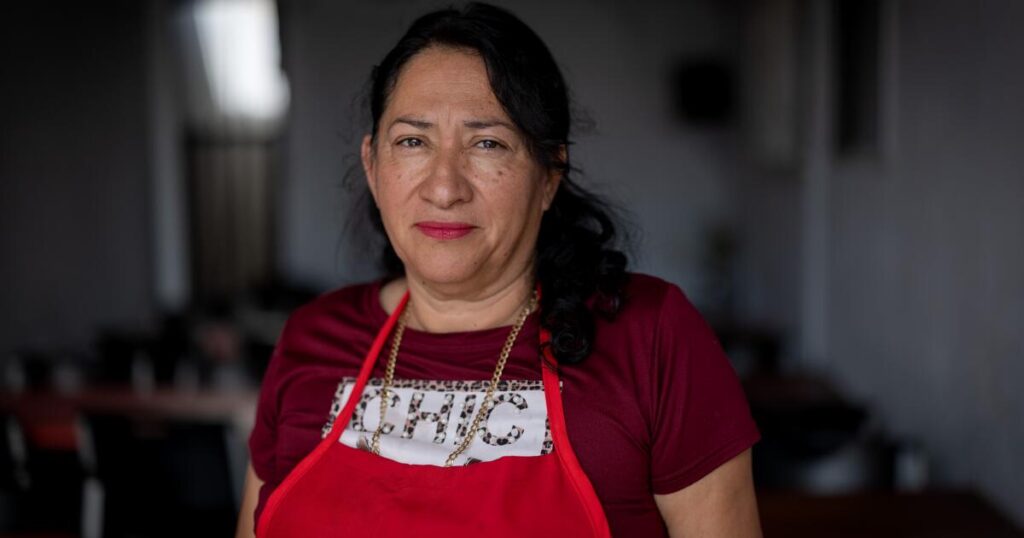
Two shops over at another Mexican spot, he noticed a cracked parking lot and cumbersome door hardware. Owner Elia Barraza was served a day before her 53rd birthday.
“This person is just suing anyone,” said her still-fuming son, Steven Barraza. “It’s just for nitpicking things.”
Lawsuits under the Americans with Disabilities Act — a federal civil rights law widely known as the ADA — have long flourished in California, where a unique state law enables payouts over various infractions. The money, advocates say, is one of the few surefire ways to get businesses to make their stores accessible and abide by the landmark law that has transformed the lives of disabled Americans.
But small businesses settling the claims say they’ve reached a breaking point under a barrage of lawsuits from a handful of plaintiffs — all represented by one firm.
Manning Law, based in Orange County, has become the go-to for serial ADA plaintiffs, including Bouyer. Last year, seven of the firm’s regular clients sued more than 1,000 businesses in Southern California, court filings show.
The filings have attracted scrutiny from authorities. The firm’s owner, Joseph Manning, recently had his license suspended by the State Bar for allegedly making false statements about billable hours involving dozens of ADA lawsuits. The firm denied all wrongdoing and said its billing practice has been “modified” to the bar’s satisfaction.
The Barraza family said a lawyer representing Bouyer asked them for $25,000. That’s several months of profit for El Huarachito Casero, they say, where margins from a lunchtime crowd of construction workers have been thinned out by recent immigration raids. The family said they negotiated it down to $10,000.
Bouyer could not be reached for comment and did not respond to a letter left at his home. In depositions, he has cast himself as a disability advocate in legal filings, determined to make California more navigable for those in wheelchairs.
He explained he was paralyzed after a surgery to remove a spinal cord tumor about a decade ago. Since then, he says, he has been trying to “improve the lives of disabled people.”
To that end, he says he traverses the county armed with a 12-inch level gauge to measure the slopes of store aisles and parking spaces.
“Everywhere I go, if I see something that doesn’t look correct, I measure it,” Bouyer said in a 2023 deposition.
California is one of the few states where people with disabilities can receive $4,000 or more if they visit a business where they see something that runs afoul of the strict requirements of the ADA — a slope too steep, an aisle too narrow, a parking lot too bumpy. The state’s Unruh Civil Rights Act, which allows the financial penalty, is meant to force businesses to proactively think about the needs of their disabled clientele.
But some business owners say a tiny number of professional plaintiffs are converting minor violations into a deluge of lawsuits and a steady flow of cash.
Zuheir Nakkoud, the manager of a Sylmar liquor store, said he watched Bouyer measure the width of his handicapped parking space this October before coming inside to buy a bottle of water.
Nakkoud said patients in wheelchairs from the nearby dialysis center navigated his aisles just fine. But fighting the lawsuit, he figured, would only cost more. He said the store agreed to pay $14,000. It was lawsuit #232 of the year in L.A. County for Bouyer.
“This money’s for my kids, not for him,” said Nakkoud.
Bouyer visited the liquor store and produce market down the block the same day. Both were later sued by Manning Law.
This fall, the State Bar suspended the firm’s founder, Joseph Manning, for one year after a federal judge accused the firm of submitting “fraudulent billing statements” across dozens of cases. Manning said at the time all billing was “true and correct.”
In 2019, the Riverside County district attorney sued Manning and three other lawyers for allegedly filing more than a hundred ADA suits with false information on behalf of a man who prosecutors said exaggerated the severity of his disability. The case was dismissed with prejudice after the judge ruled the communications at the crux of the lawsuit were privileged.
Mike Manning, an attorney with the firm, called the Riverside D.A.’s lawsuit “misguided” and said every case they take on undergoes a rigorous vetting and inspection process.
“Unfortunately, the most common practice today is to wait to get sued and only then take action,” he wrote in an email, adding no court has ever deemed one of the firm’s disability cases frivolous.
Brian Whitaker, one of Manning’s most active plaintiffs, was previously represented in hundreds of suits by law firm Potter Handy. The firm was sued in 2022 by the district attorneys in Los Angeles and San Francisco for filing a flurry of ADA lawsuits with alleged fake claims.
The suit was dismissed after a judge ruled the litigation privilege protected the firm. Rene Potter, who was a lead attorney at the firm, now represents more than 700 plaintiffs in the latest round of sex abuse claims against L.A. County.
Lawmakers on both sides of the political aisle in Sacramento agree something has gone awry in the legal landscape, but the effort to fix the problem appears to have stalled. A bipartisan bill sponsored by Sen. Roger Niello (R-Fair Oaks) last year that would have given businesses more time to fix the violations before penalties kicked in was never called for a hearing in the Assembly.
Niello said his bill is being “held hostage” by Assemblyman Ash Kalra (D-San José), who he said prefers a competing bill. A spokesperson for Kalra, who chairs the California Assembly Judiciary Committee, responded to an inquiry from The Times by pointing to a statement from last year in which the lawmaker said he wanted a “more balanced” bill, with buy-in from more disability and civil rights organizations.
Most business owners facing ADA claims opt to settle out of court. Those who choose to fight often end up with Ara Sahelian, a defense attorney who estimates he has litigated more than a hundred cases against Manning Law. His passion, he says, is taking them to trial.
“Four years ago, I had a fuse trip, and I said I’m not settling these cases anymore,” he said.
At his home office, Sahelian, 69, who has been unable to walk since he contracted polio at 6 months old, keeps thick black binders devoted to each serial plaintiff. Bouyer gets three. So does Perla Mageno, a Manning Law plaintiff who has sued hundreds of businesses under the ADA over websites she claims don’t work with her screen-reading software.
The Supreme Court paved the way for this kind of ADA lawsuit against websites in 2019 after Manning Law sued Domino’s Pizza on behalf of a blind client unable to order pizza online. Since the decision, websites must be coded so the site features can be converted to audio for the visually impaired.
On April 7, Sahelian faced off in a Pasadena courthouse against Mageno for the fourth time as she testified to the judge she was frustrated that a picture on the website of a Tustin burger shop had not told her “this is an amazing burger” and “this is a graphic of a cheese burger that has lettuce, tomato sauce coming out of the side.”
Mageno sued the shop for failing to make the website navigable for a screen reader. The case remains pending, with a jury set to eventually decide if Peter’s Gourmade Grill violated her civil rights.
“Why are we here?“ Sahelian asked the judge. “I’m just asking for common sense.”
It’s basic logic, he argued, that has been thrown out the window in so many of these cases.
He rattled off businesses with features that could make them legitimate targets of ADA lawsuits: The tuxedo store he represented with a staircase to enter and a French bistro in Newport Beach where the fold-out tables are too low to fit his wheelchair. Most restaurants he ventured into in Paris fit the bill.
A small burger joint that has tried to make their website compliant with screen reading software, he argued, does not.
The website lawsuits, he figures, might soon disappear with AI chatbots, which can easily read aloud the text of any website. During an interview, he asked Chat GPT about the menu on a $30 budget for Taix, a storied French restaurant that recently closed. The bot breezed through the options.
But lawsuits targeting a business’s physical flaws, he predicts, generate too much money for both plaintiffs and lawyers on both sides. Some defense attorneys closely track court dockets to see who Manning Law is suing, then send letters to business owners offering to help them beat the lawsuits before they’ve even been served.
“BEWARE OF LOW PRICED LAWYERS,” read one such letter sent to a Sylmar laundromat after the building owner was sued by Bouyer in November. Their services, they claimed, were far better — albeit pricier.
The laundromat, which had risen to local acclaim as the filming site for “Everything Everywhere All At Once,” has been sued twice for ADA violations, according to owner Kenny Majers. Maybe A24 could help, patrons joked.
Instead, Majers said, he picked up a side job as handyman at neighboring laundromats.
“All the money’s going to lawyers,” he said. “It’s not fair.”
The post One man has filed 1,800 disability lawsuits against SoCal shops. Store owners are fed up appeared first on Los Angeles Times.