Iranian negotiators were expected to head back to Pakistan on Sunday as the on-and-off talks with the United States to end the war in the Middle East remained up in the air.
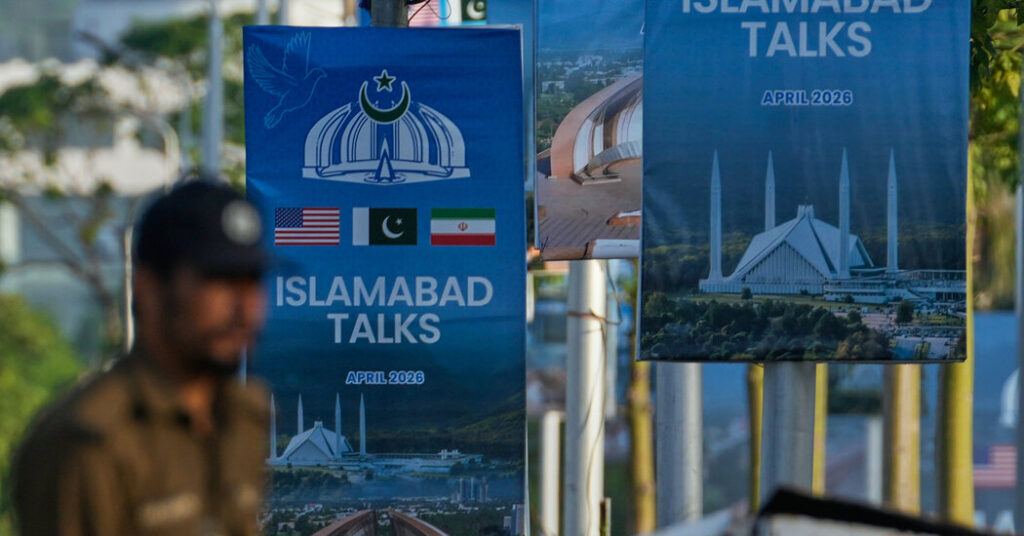
Abbas Araghchi, the Iranian foreign minister, will return to the Pakistani capital, Islamabad, according to Iranian state media reports. Pakistan is the lead intermediary in U.S.-Iran cease-fire negotiations.
The talks hit a snag on Saturday as Mr. Araghchi was wrapping up his last round of meetings with the Pakistani mediators. President Trump then abruptly announced that some of his top aides — including Steve Witkoff, Mr. Trump’s special envoy, and Jared Kushner, the president’s son-in-law — would not travel to Pakistan as planned for a new round of talks.
Mr. Trump argued that the Iranians would be wasting the Americans’ time, though he later said Iran had subsequently offered a better proposal to discuss. It was not immediately clear when, or if, the American negotiators might return to Islamabad.
Analysts say that while neither the United States nor Iran appears eager to prolong the war, it is uncertain whether they can agree on terms for a durable peace deal.
Mr. Trump has threatened multiple times to attack civilian infrastructure in Iran in an effort to force its leaders to accept American terms for an agreement. But he has pulled back from the brink each time, offering the Iranian leadership more time to negotiate.
Mr. Trump has also repeatedly insisted that Iran has agreed to most U.S. demands to end to the war, which began with a joint U.S.-Israeli assault on Iran in late February. Iranian officials have denied that, however, instead insisting on their own conditions for a truce.
Now, the two countries cannot even agree to meet face to face, although they could keep the diplomacy alive by passing messages to each other via their Pakistani interlocutors.
Iran says it will not sit down with U.S. officials until Washington ends its naval blockade of Iranian ports. The Trump administration imposed a cordon in response to Iran’s stranglehold on the Strait of Hormuz, the Persian Gulf waterway that is critical to the shipping of oil. The turmoil has sent oil and gas prices skyrocketing.
This month, American negotiators led by Vice President JD Vance met with Mohammad Bagher Ghalibaf, the speaker of Iran’s parliament, in the highest-level face-to-face encounter between the two adversaries in decades.
But some two weeks later, the talks appear to be at a stalemate.
Aaron Boxerman is a Times reporter covering Israel and Gaza. He is based in Jerusalem.
The post Iranian Negotiators Set to Return to Pakistan to Try to Revive Truce Talks appeared first on New York Times.