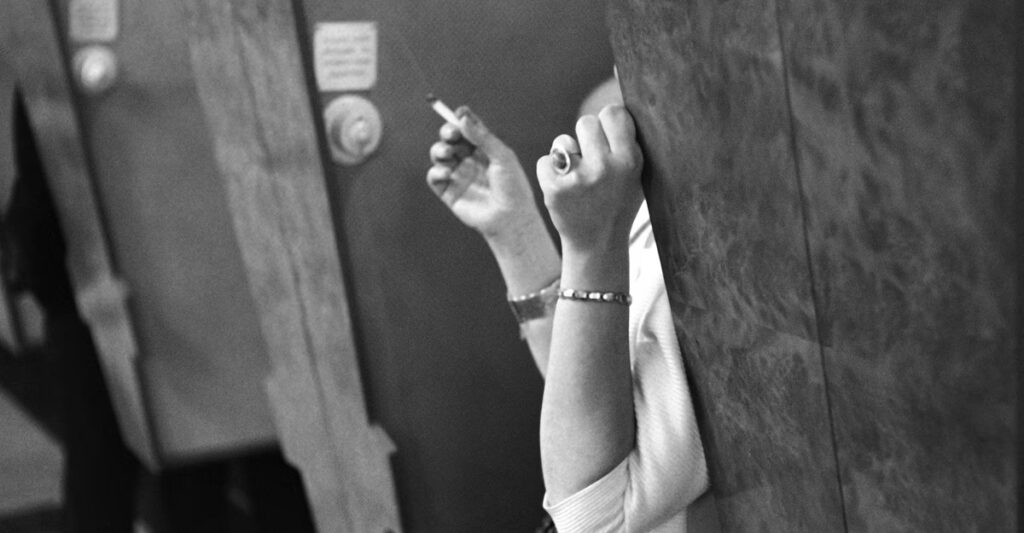
Cigarettes have always been noxious to me: As a kid, I stole my grandpa’s Marlboros and hid them deep in a trash bin. In college, Chesterfields made the kisses of a woman I loved taste carcinogenic. When I lived in Spain, smoky air in my favorite bar made my lungs burn. And no law has spared me more irritation than California’s trailblazing 1990s bans on indoor smoking. Yet I vehemently insist on the right of my fellow humans to smoke.
Distaste for cigarettes is no reason to cede bedrock liberties to the state. The sweeping ban on smoking that the U.K. Parliament passed earlier this week, which will permanently prohibit the sale of tobacco products to anyone born in 2009 or thereafter, flagrantly violates the natural human right to bodily autonomy. And its illiberal logic portends more paternalism to come.
Proponents of the bill, which is expected to become law once it gets approved by King Charles III, seem to have good intentions: By gradually increasing the age limit for smoking as this group gets older, they hope to create a rising generation that never starts smoking, and suffers fewer premature deaths. “Children in the U.K. will be part of the first smoke-free generation, protected from a lifetime of addiction and harm,” Health Secretary Wes Streeting stated. Of course, although the law may reduce smoking, it won’t actually yield a smoke-free generation any more than Prohibition yielded a gin-free generation. Black markets for cigarettes will expand. Many people will buy them, even if they’re unregulated and potentially more dangerous than legal cigarettes (and end up enriching criminals).
The law’s design raises equal-protection concerns too. At first, it will affect only people ages 17 and younger. But as people born in 2009 become adults, the law will effectively increase the legal smoking age: They’ll always be just too young to buy cigarettes. This is age discrimination. Twenty years out, if a 47-year-old MI6 agent wants to smoke while playing baccarat or kicking his Vesper-martini addiction, selling him tobacco will be illegal, though selling it to his 48-year-old friends will be legal. Pity the shop clerks who’ll be burdened with carding the old.
Even if all of these objections were somehow resolved, the law’s most pernicious flaw would remain: It will violate the liberal principle that although the state may initiate force to stop an adult from harming others, it should not do so to stop an adult from harming themselves. Limits on state power protect all citizens from the dangers of authoritarians and despots. The idea that adults have autonomy over their body, and a natural right to pursue happiness in ways that don’t harm others, is an indispensable check on state authority that conserves something core to a good life: using free will to choose our own path.
There is inherent dignity in making choices and living with the consequences, rather than being treated as the inferior of arrogant politicians who purport to know how a person ought to live. Agency and liberty mean nothing absent the ability to make decisions that others judge unwise. Even the decision to try something that may be addictive should belong to the individual—and often does. Consider sex, caffeine, video games, shopping, gambling, and pornography.
Nearly all of us value something that public-health authorities declare is bad for our health. We drink soda, or eat french fries, or tan our skin, or cook on gas stoves, or spend years at high-stress jobs, or sit more than is good for our cardiovascular health, or stay up late bingeing TV. Think of your favorite guilty pleasure. Now imagine politicians pushing to ban it. How would you contest their right to take it from you absent the premise that the state shouldn’t overrule an adult about their own interests?
As I see it, the conviviality that cocktails, wine, and beer add to meals and social life is worth the health risks, whereas the costs of smoking cigarettes far outweigh the benefits. But my personal preference for legal alcohol is no safer than the preferences of British smokers without a general ethos of pluralistic tolerance. And even guaranteed that the busybodies of the Anti-Saloon League will never again impose their judgments, I’d still respect the autonomy of people who wish to smoke, because there is no other way to respect their personhood.
Take the British painter David Hockney, who wrote several years ago, at 83, that he has smoked since age 16. Many times when he stops painting to check his work, he lights a cigarette. The people who believe he has made bad choices his whole life have wrongheaded priorities and values, Hockney, who is a public opponent of smoking bans, has argued. “Their obsession with health is unhealthy,” he wrote. “Longevity shouldn’t be an aim in life; that to me seems to be life-denying.” The relationship between length and quality of life is so deeply personal a matter that reasonable people will always disagree about it. But substituting my judgment for Hockney’s would imply that he’s better off being ruled as my subject, against his will, than left to his own reason.
Although a majority of U.K. citizens support the smoking ban, more may come around to Hockney’s position if, as I suspect, the paternalists in Parliament are emboldened rather than satiated by their ban on cigarettes, and expand their ambitions to a broader array of unhealthy behavior. I’d hate to bet on what exactly they might attempt to control next. Who can predict the logic of a House of Commons that denies the right to unintentionally kill oneself slowly with cigarettes, but favors a limited right to kill oneself quickly and deliberately in the case of assisted dying?
One needn’t share a strict libertarian’s view on the proper remit of state power to worry about a legislature that could have, for example, raised the smoking age to 25, or required would-be smokers to take a daylong course on the dangers of smoking, but instead chose to impose a maximalist tobacco ban on the rising generation and all future generations.
That choice is clarifying. Parliament recognizes no problem with coercive health measures that treat the state’s judgments as more legitimate than the choices of informed adults. All who value liberty should see the danger in that arrogant stance.
The post The U.K. Smoking Ban Is Illiberal appeared first on The Atlantic.