Go with your gut.
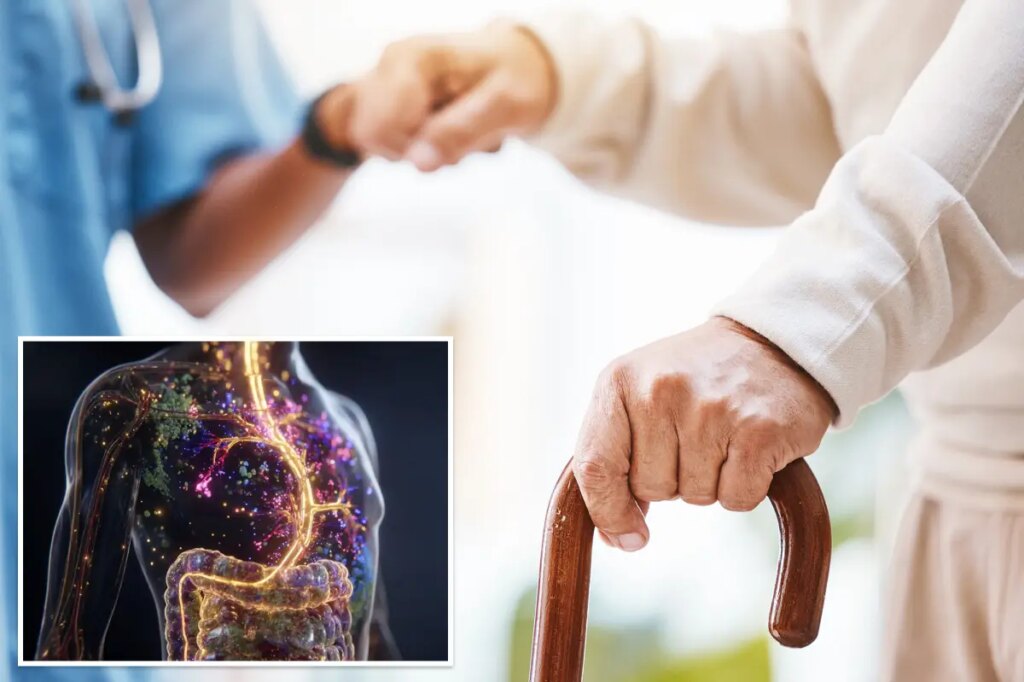
Researchers at University College London have isolated a “microbial signature” in the gut that could help predict Parkinson’s disease in patients who aren’t yet showing symptoms.
The potential breakthrough can’t come fast enough, as global cases of this neurodegenerative disease continue to ramp up at record speed.

Up to 1.5 million Americans live with Parkinson’s, a nervous system disorder that leads to a loss of brain cells, leaving patients with movement problems, tremors and stiffness. And there’s no known cure.
But these findings could put health researchers on the path to eventually developing one.
With funding from the Michael J. Fox Foundation for Parkinson’s Research and the Medical Research Council, the team analyzed the gut microbiomes of healthy people who have the GBA1 genetic variant for Parkinson’s, which indicates that they’re likely to develop the disease at some point down the line.
Though the participants weren’t presenting outward physical symptoms, their guts already mirrored the “intermediate” stage of Parkinson’s, researchers said, “suggesting the gut is an early battlefield for the disease,” per Neuroscience News.
This could mean that at some point, the best warning sign of Parkinson’s could be found in a standard stool sample — well before patients start experiencing tremors.
Professor Anthony Schapira, of the UCL Queen Square Institute of Neurology, said that Parkinson’s — “a major cause of disability worldwide, and the fastest growing neurodegenerative disease in terms of prevalence and mortality” — requires “urgent” development of medical interventions.
Schapira, also a lead author of the study, added that early detection of the disease was a major priority, and that these new findings potentially highlight a path to preventing Parkinson’s by better supporting gut health.
“In recent years, there has been a growing recognition of the links between Parkinson’s disease — a brain disorder — and gut health,” he said. “Here, we have strengthened that evidence and shown that microbes in the gut can reveal signs of Parkinson’s and may be an early warning signal of Parkinson’s risk years before symptom onset.”
Interestingly, because the findings included consistent data from close to 1,400 participants based in the UK, Korea and Turkey, the microbial signature wasn’t tied to a particular diet or cuisine intake.
The researchers still analyzed participants’ dietary habits and found that people who ate a greater variety of foods and practiced more nutritional balance were less likely to show the microbial signature — indicating that diet could be an important modifiable risk factor for the disease.
A significant body of previous research shows strong connections between the gut and cognitive health more broadly, too.
Erica Salamida, director of community outreach for the Coalition of New York State Alzheimer’s Association Chapters, recently told The Post that “eating healthier foods can help reduce your risk of cognitive decline.”
Probiotic supplements and fermented foods have shown promise in supporting gut health. But, generally, when it comes to eating for your brain, you don’t have to overthink it.
It’s the obvious stuff — more vegetables, leaner meats, fewer processed foods — that will do the most good for your gut and brain.
In particular, the DASH diet, or Dietary Approaches to Stop Hypertension, has shown impressive potential for cognitive health, though it was originally designed to be heart healthy.
The diet is nothing novel — it prioritizes vegetables, fruits, whole grains, low-fat dairy and low-sodium foods that are rich in minerals like potassium, calcium and magnesium — but the advantages are vast.
Stephanie Schiff, a registered dietitian and nutritionist at Northwell Health, recently told The Post about its brain-boosting benefits.
“We might all know somebody who has had a heart transplant, but nobody has a brain transplant,” she said. “So, we really need to protect our brain, and this is a phenomenal way to do it.”
The post The hidden signs in your gut that may indicate Parkinson’s disease before symptoms emerge appeared first on New York Post.