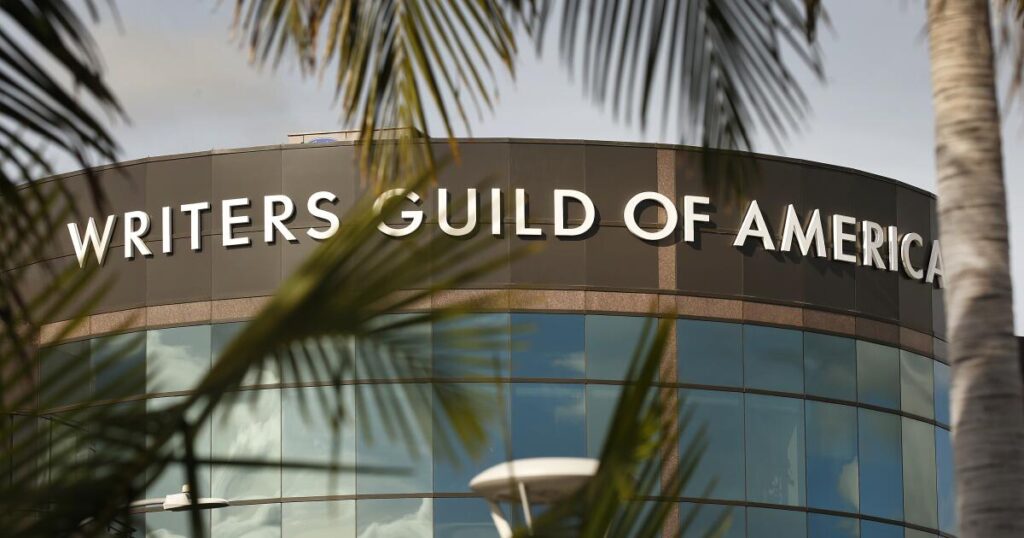
Members of the Writers Guild of America have officially ratified their newest contract with the Alliance of Motion Picture and Television Producers.
More than 90% of the 11,000 voting members in both WGA East and West registered their support of the new agreement. The voting period closed Friday at noon, after the union first struck a tentative deal earlier this month. The new contract includes a robust healthcare plan in which studios pay over $320 million to sustain the health fund, higher residual rates — including a provision for a “success bonus” for the most popular streaming shows from 50% of the base residual to 75% — and language on the licensing of work for AI training.
“The first reaction [from members] was relief that we were not going to be going into a period of labor strife or strike authorization vote, in the midst of this contraction,” said John August, the co-chair of WGA’s negotiating committee, referring to the ongoing challenges in the industry. “Members want to work, and they want to get back to doing their job.”
Negotiations between the union and film and TV studios began in March, as the union’s current contract expires May 1. August said that, at the beginning of the negotiations, expanding the healthcare plan was a top priority. The union was able to secure increases that would raise the cap that companies pay to as high as $400,000 by 2028. Union officials say the current cap has remained unchanged for two decades as healthcare contributions have steadily declined because there are fewer working writers.
But under the new contract, members would, for the first time, have to start contributing to their healthcare costs to the tune of $75 per month. The earnings threshold to get coverage would increase by about $7,000 to $53,773, leaving many members concerned about the higher cost.
“This is all difficult. Healthcare in America is not a good situation. But we were really mindful, as we always are, of trying to make sure the career of writing is sustainable,” negotiating committee co-chair Danielle Sanchez-Witzel said.
Additionally, the contract terms have been extended from the WGA’s usual three years to four — though it is not the first time the guild has added more time to its deal with the studios. Sanchez-Witzel clarified that the four-year period for the new contract ”is, by no means, a standard. This is just what we needed this year and what we agreed to for this cycle.”
“We were here in 2026 trying to get some things that we didn’t get earlier [in previous negotiation cycles] and happy for the progress we made,” she said.
The WGA is the first of the Hollywood unions to strike a deal with the studios. AMPTP congratulated the WGA on the ratification in a statement released shortly after the vote totals were announced.
“This deal reflects a collaborative approach that supports both writers and the industry’s long-term stability,” AMPTP said.
SAG-AFTRA and the Directors Guild of America still need to negotiate new contracts.
The actors’ union began its negotiations in February and extended those talks in March, but paused to allow AMPTP to finish its deal with the writers’ union. SAG-AFTRA’s and the DGA’s contracts expire June 30.
The post Writers Guild members ratify new contract with studios appeared first on Los Angeles Times.