The Justice Department’s criminal investigation of the Federal Reserve and its chair, Jerome H. Powell, appears to be over. But the ramifications for the central bank are likely to prove much longer lasting.
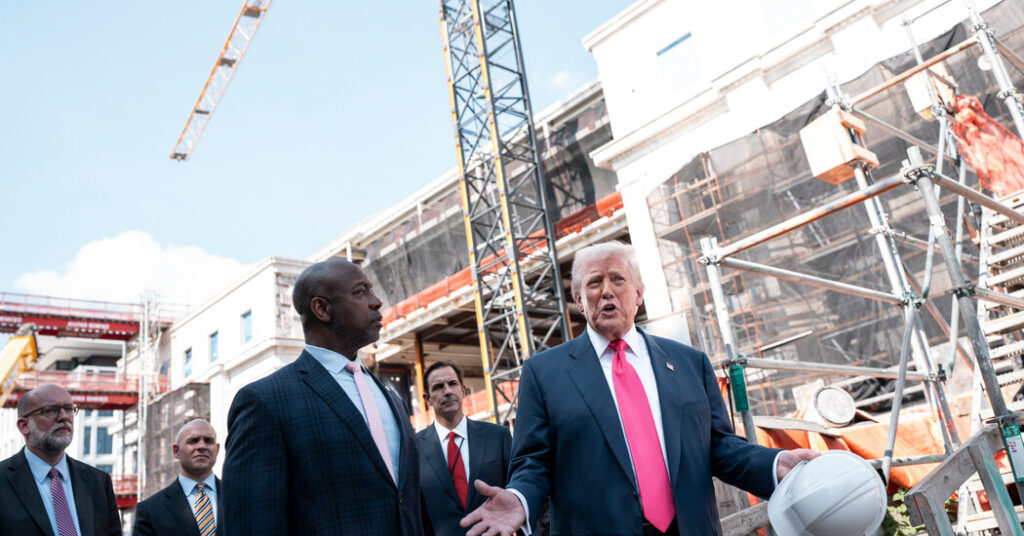
Nine months after President Trump made a hasty visit to the Fed’s Washington headquarters and promised to “take a look” at a costly renovation, the administration has concluded its inquiry with seemingly nothing to show. Far from the criminal charges that they once pursued, prosecutors left in their wake a dark cloud over the institution and the person Mr. Trump has chosen to next lead the central bank.
The about-face has removed, for now, the immediate threat of a further escalation against the Fed. It has also potentially cleared a path for Mr. Trump’s nominee for Fed chair, Kevin M. Warsh, to succeed Mr. Powell, whose term ends on May 15.
What will be far harder to recoup is confidence in the Fed’s ability to operate independently from a White House that has shown little restraint in its efforts to bully the central bank into slashing interest rates.
Even as Jeanine Pirro, the U.S. attorney for the District of Columbia, announced that the investigation was shutting down, she warned that she would “not hesitate” to reopen the inquiry if warranted. Ms. Pirro added that she had asked the Fed’s inspector general to take over the investigation, even though the internal watchdog had been looking into the matter since July.
Karoline Leavitt, the White House press secretary, said on Friday that the investigation “still continues” and was simply being taken up “under a different authority.”
Kathryn Judge, a Columbia Law School professor who was a Supreme Court law clerk for Justice Stephen G. Breyer, said she feared “lasting damage” from the investigation into Mr. Powell — not only for the Fed but for policymakers across government.
Until now, she said, officials did not have to worry about repercussions from “taking a strong stance on policy issues in ways that are inconsistent with the president’s agenda.” But that was the sort of pressure that Mr. Powell faced as Mr. Trump sought to force rates down.
Although the Fed cut rates last year, it did not deliver the kind of relief that Mr. Trump wanted. Since January, it has also turned cautious on subsequent reductions, a sentiment that has only grown amid the war in Iran, which has caused an acute energy shock.
“The Fed, so far, has proved resilient in ways that have proved quite helpful for the broader economy,” Ms. Judge said. She added that the country “cannot take for granted” that the Fed “will continue to prove resilient as it takes hit after hit from this administration.”
Since returning to the White House for a second term, Mr. Trump has been consistent in his desire to have more sway over the Fed, which has long set rates free from political meddling. That ability is critical, given the powerful role the central bank plays guiding the economy and ensuring low, stable inflation and a healthy labor market.
For a time, the president’s attacks had largely played out in news conferences and on social media. At one point, he flirted with firing Mr. Powell, but never took that step.
Yet Mr. Trump’s decision in August to try to oust Lisa D. Cook from the Fed’s Board of Governors over unsubstantiated allegations of mortgage fraud was a serious escalation, one now in the hands of the Supreme Court. The investigation by the Justice Department, which specifically targeted Mr. Powell and became public in January, crossed yet another threshold, quickly touching off widespread outrage.
In a rare video, Mr. Powell called out the administration for trying to leverage legal threats to coerce the Fed into lowering rates and warned about the institution’s ability to carry out its duties independently. Democrats and Republicans on Capitol Hill echoed those concerns, with many demanding that Mr. Trump back off.
Mr. Trump’s actions proved especially unpalatable to Senator Thom Tillis of North Carolina, a Republican on the Senate Banking Committee. Mr. Tillis coupled his criticism with a threat to block any future nominee to the Fed until the investigation into Mr. Powell was resolved. Republicans have a slim 13-to-11 majority on the Banking Committee, giving Mr. Tillis the ability to throw a wrench into confirming Mr. Trump’s pick.
The investigation, therefore, created an immediate problem for Mr. Trump. In his quest to oust Mr. Powell, his administration had essentially complicated the very work to replace the chair with Mr. Warsh.
Since clinching the nomination, Mr. Warsh has faced intense scrutiny about how he would lead the Fed if confirmed by the Senate and whether he would defend its independence. At his confirmation hearing on Tuesday, Mr. Warsh had to repeatedly dispel doubts that he would operate as Mr. Trump’s “sock puppet,” given the president’s insistence during the selection process that he would choose only someone who supported lower rates.
Mr. Tillis had made it clear that he backed Mr. Warsh and would vote for him to be confirmed if prosecutors dropped what he called the “bogus” charges. As of late Friday, Mr. Tillis had not indicated if Ms. Pirro’s announcement — with its caveat that she could reopen the case — was sufficient.
Mr. Powell has said he will remain chair until the Senate confirms his replacement. A bigger question is whether he will serve out his term as governor, which runs through January 2028. That would give him a vote at every policy meeting while denying Mr. Trump a vacancy to fill with someone he believes will cut rates.
Mr. Powell previously said he would not leave the Fed “until the investigation is well and truly over, with transparency and finality,” but Ms. Pirro’s announcement on Friday may have fallen short of that threshold.
Peter Conti-Brown, an expert on Fed governance at the University of Pennsylvania, said Mr. Powell’s insistence on a clear, certain end to the investigation was about “not just about protecting himself but about protecting the Federal Reserve.”
“If this becomes a tried-and-true path to bully a central banker out of office, then we will see its invocation again,” said Mr. Conti-Brown, who added that the investigation had already proved damaging in other ways.
“I think it’s shaken to the core central bankers’ willingness to experiment,” he explained. He added that continued pressure would leave Fed policymakers inclined toward “fighting whatever comes their way using the tools that strike them not as best suited” but rather as “least controversial.”
Colby Smith covers the Federal Reserve and the U.S. economy for The Times.
The post The ‘Lasting Damage’ of Pirro’s Abandoned Fed Investigation appeared first on New York Times.