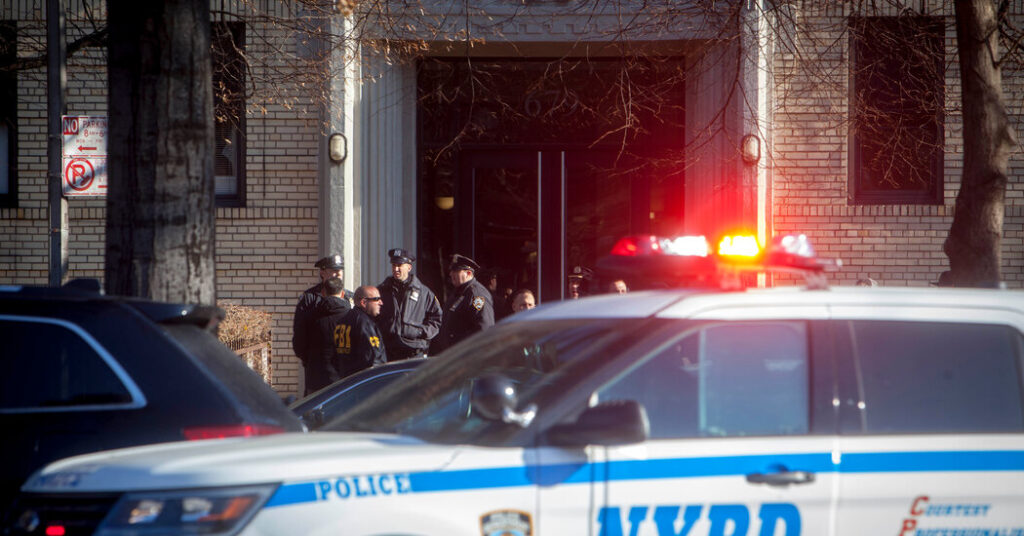
On a December morning in 2017, a man left his Brooklyn apartment, entered a New York City subway station and detonated the pipe bomb strapped to his chest in a passageway, terrifying commuters during the early rush hour.
Nobody was killed by the attacker, Akayed Ullah, who later told law enforcement that he carried out the attack “on behalf of the Islamic State.” He had consumed ISIS propaganda on YouTube and scribbled a popular slogan on his visa, passport and a box of bomb-making materials.
Despite that evidence, Mr. Ullah did not provide “material support” to ISIS that morning, according to the federal appellate court that on Tuesday reversed one of his convictions. The court upheld the other convictions he was appealing, which included committing a terrorist attack against mass transportation systems.
While Mr. Ullah will still spend the rest of his life in prison, the decision takes aim at a tool federal prosecutors have used for decades to crack down on terrorism. Some experts say the ruling could affect longstanding convictions and change the prosecution of so-called lone wolf terrorists, including those who have carried out ISIS-inspired attacks.
In cases where a defendant is inspired by but does not directly communicate with terrorists, prosecutors “are going to be concerned that an important tool will be taken off the table,” said Matthew Levitt, a fellow at the Washington Institute for Near East Policy, a think tank. “It could make it harder for some of these charges to stick.”
It was clear Mr. Ullah’s attack was inspired by ISIS, Judge Myrna Pérez wrote in Tuesday’s ruling, and that ISIS wanted men like him to carry out attacks around the world. But that alone, she wrote, was not enough to prove he was acting at the direction of the group.
The panel’s ruling was by a 2-1 vote, with Judge Pérez writing the majority opinion for herself and another judge, Jed S. Rakoff. The judges writing in the majority were both appointed by Democrats. Judge Steven J. Menashi, who was appointed by President Trump, wrote in a sharp dissent that Mr. Ullah had acted in service of ISIS, and that the decision would impact future cases.
A lawyer for Mr. Ullah declined to comment. It is unclear whether the U.S. attorney’s office in Manhattan will appeal the ruling or ask the full appeals court to review the decision. A spokesman for the prosecutors’ office declined to comment.
Since the 1990s, the material support statute has been used by prosecutors to charge people believed to be working to aid foreign terrorist organizations in a variety of ways, including by sending money.
Over time, as ISIS emerged, the way prosecutors used the statute changed, said John Carlin, Assistant Attorney General for National Security under former President Barack Obama.
Compared to Al Qaeda, the terrorist group that launched the Sept. 11 attacks, the Islamic State used a more decentralized approach, Mr. Carlin said.
“They encouraged people to kill where they lived,” he said.
A number of so-called “traveler” cases, where a person attempted to board a plane from the United States to Syria to fight for ISIS, became a hallmark of material support prosecutions. In combination with other evidence, buying a ticket represented a substantial step toward aiding a foreign terror group.
Critics of the material support law have said it impedes efforts by peaceful organizations to provide aid to people in unstable countries, where they say interacting with violent groups is necessary to help protect human rights.
For lawyers defending clients accused of providing material support, the ruling creates a potential runway to challenging prior convictions. Joshua Dratel, a lawyer who has represented defendants accused of the charge, said some people traveling to Syria or Turkey never had real plans to join a terror group.
“I think it leaves open the possibility of affecting cases where that intention was not properly manifested,” Mr. Dratel said.
Unlike Mr. Ullah, who committed a violent act, the material support charge is more frequently used to prosecute defendants who have not yet done so, said Dennis M. Fitzpatrick, a former federal prosecutor who led a number of cases against ISIS terrorists.
“It’s intended to be a form of proactive investigation and prosecution rather than reactive,” Mr. Fitzpatrick said.
One prominent material support case involves the two young men accused of attacking protesters outside Gracie Mansion in March. They were indicted on charges that included providing material support to ISIS.
Though that case is in its early stages, prosecutors have stopped short of accusing the men of having trained with ISIS or traveling overseas. The two men, like Mr. Ullah, appear to have consumed extremist content online and become radicalized by ISIS propaganda, according to prosecutors. No communications with ISIS members have been put forward yet. Both men have pleaded not guilty.
Mr. Ullah’s attempted bombing was heavily influenced by propaganda from ISIS, evidence presented at a one-week trial in 2018 showed. On the morning of Dec. 11, 2017, surveillance footage showed Mr. Ullah walking through a passageway between the Times Square and Port Authority stations.
At approximately 7:20 a.m., Mr. Ullah detonated the bomb. He collapsed to the floor as frightened commuters turned around and ran down the hallway, away from Mr. Ullah.
In a four-hour interview at Bellevue Hospital after the bombing, Mr. Ullah told a police detective that the bombing was in the name of ISIS, the detective testified. Investigators found he had written the phrase “Die in your rage, America” — a well-known ISIS slogan — on various personal items.
His lawyers argued at trial that he was only trying to hurt himself, not anyone else. After the jury delivered its verdict, Mr. Ullah exclaimed loudly to the judge that he was “angry with Donald Trump” because he knew he would “bomb the Middle East.”
He was sentenced to life in prison in 2021.
Benjamin Weiser contributed reporting.
Santul Nerkar is a Times reporter covering federal courts in Brooklyn.
The post He Said ISIS Inspired His Attack. Does That Count as Supporting Terrorists? appeared first on New York Times.