Pop quiz: If you were an astronaut trying to endure extreme conditions, where should you look for inspiration? Sandra Bullock in “Gravity”? Ryan Gosling in “Project Hail Mary”? Wrong. Try an asexual reproductive spore.
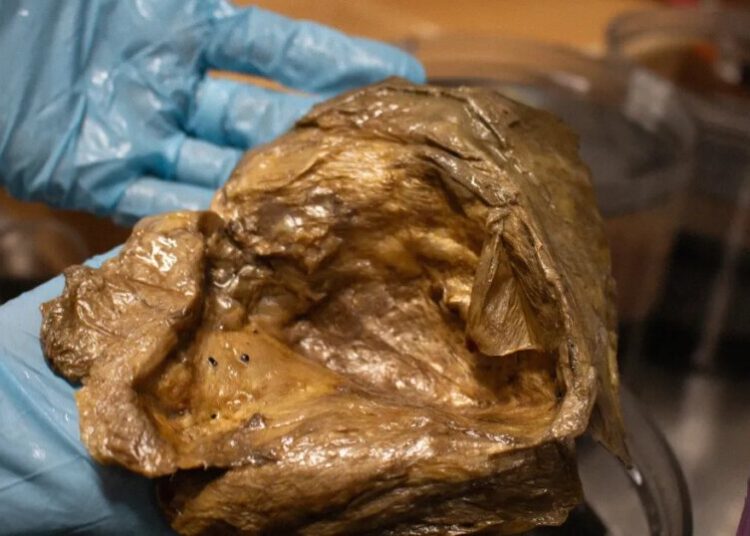
One in particular, from a fungus called Aspergillus calidoustus, has proved itself almost unkillable. A group of researchers recently identified the strain living inside NASA facilities where Mars mission components are assembled, and subjected it to a litany of brutal challenges that simulate those of space travel and Mars itself. The verdict: the Terminator of microbes.
The scientists’ findings, published this week in the journal Applied and Environmental Microbiology, are not just good science trivia. They reveal that, unless NASA’s cleaning protocols change, the robotic systems that explore the surface of Mars could inadvertently infect the planet with hyper-resilient colonizing spores.
“This is really about doing exploration responsibly,” said Atul M. Chander, a postdoctoral research associate at the University of Mississippi, who was the first author on the publication. “As we explore this universe, we want to be able to send aircraft without bringing any hardy Earth microbes,” he said.
NASA follows international guidelines called the Planetary Protection protocol, aimed at making sure Earth’s biology doesn’t taint celestial bodies, and vice versa. The agency also has a dedicated team, the Jet Propulsion Laboratory’s biotechnology and planetary protection group, or B.P.P.G., that oversees efforts to avoid cross-contamination on missions.
Several scientists behind the new research, including the study’s leader, Kasthuri Venkateswaran, a former senior scientist at the Jet Propulsion Laboratory, have worked in the protection group, so they knew firsthand that hardy microbes existed. Still, Dr. Venkateswaran called the fungal strain’s survival “remarkable.”
Previous studies have identified various bacteria and fungi on NASA facility surfaces, including the ultrafiltered clean rooms, where spacecraft are constructed and tested. There, employees involved in assembly wear full-body coveralls and masks, but decontamination techniques are currently focused on eliminating bacteria, not fungi.
In the study, researchers examined 27 fungal strains they had acquired from the floors of NASA clean rooms used in the Mars 2020 mission, which landed the Perseverance rover on Mars, plus two control microbes known to tolerate radiation well. Most of the samples that survived a preliminary ultraviolet screening and underwent more intense treatments died quickly, but the A. calidoustus, which had been taken from a Florida assembly facility, endured.
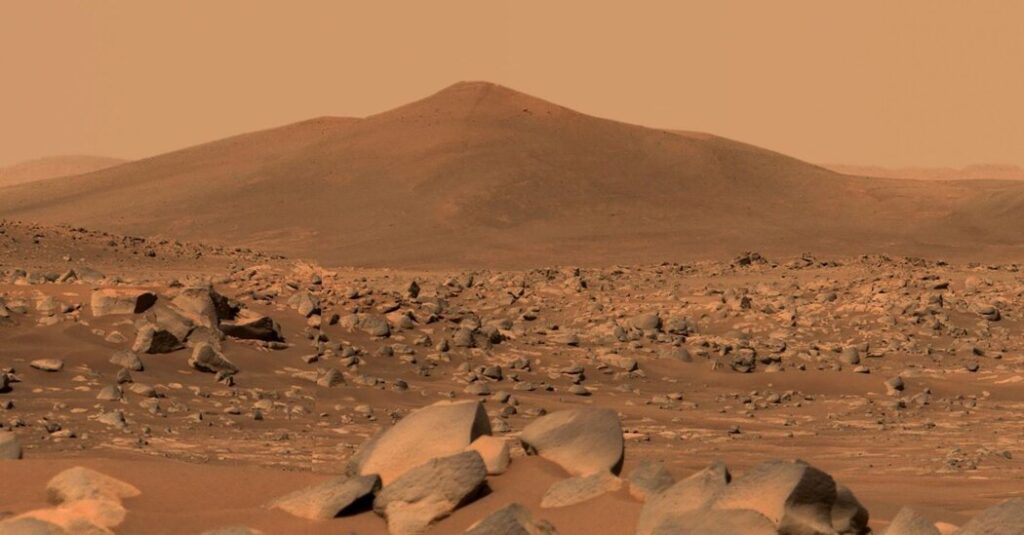
The scientists subjected the A. calidoustus spores to six months of chronic neutron radiation — mimicking space travel — and almost half of them survived. They heated them with 125 degree Celsius dry heat, typically used to sterilize spacecraft components, and the spores outlasted even Bacillus pumilus, a species that NASA often uses as a benchmark. And they treated the spores with harsh conditions that mirrored the experience on Mars itself: 24 hours of extreme UV radiation, plus low atmospheric pressure and the average annual Mars surface temperature of negative 60 degrees Celsius.
For good measure, they topped it off with exposure to hostile Martian soil.
“We’re trying to find the limits of these microbes,” Dr. Chander said, adding, “This level of resistance is unusual, to say the least.”
The atmosphere caused some surface pitting and scarring on the microbes, but it was not lethal, and the dusty Martian rock, called regolith, appeared to provide a buffering effect, helping spores to survive the low pressure. They fully died only when they faced both extreme radiation and cooling together for an extended period of time.
Study authors declined to say whether A. calidoustus could have already made the journey to Mars, saying it was beyond the scope of this inquiry. But they noted that the work could have implications for industries like pharmaceuticals, medical sectors and food safety, since similar fungi could survive pasteurization and heat treatments via similar means.
“Knowing that something can survive 125 degrees Celsius plus radiation — that’s going to make it a model organism for setting new sterilization standards,” Dr. Chander said.
In the meantime, they remain focused on keeping earthly organisms out of the cosmos. No one wants to imagine the heartbreak of a scientist discovering life on Mars — only to realize the creature is a stowaway from Florida.
Emily Baumgaertner Nunn is a national health reporter for The Times, focusing on public health issues that primarily affect vulnerable communities.
The post Could an Earthly Fungus Contaminate Mars? NASA May Have Found One Hardy Enough. appeared first on New York Times.