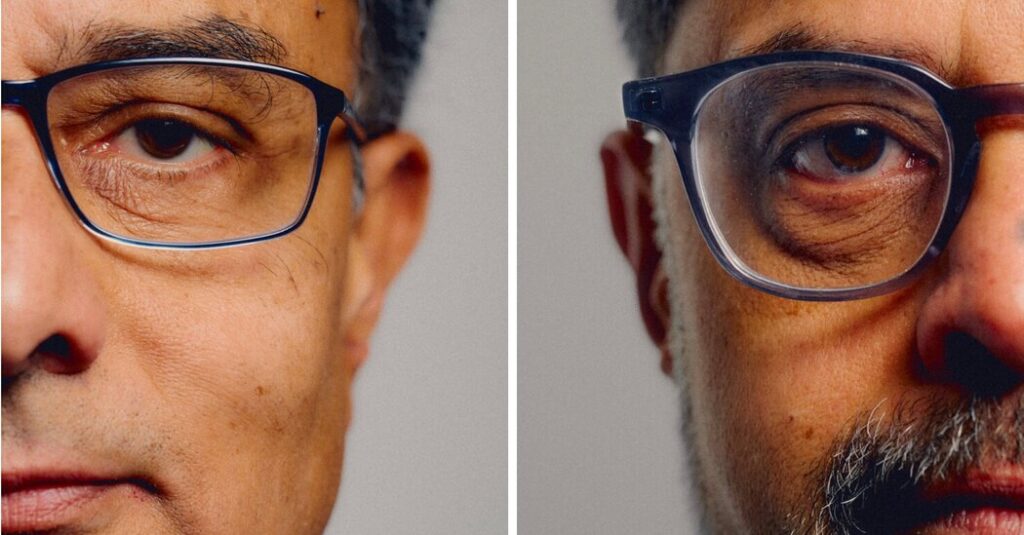
Before Projjal Dutta sued his older brother, Prajit Dutta, for trademark infringement; before Prajit accused Projjal of selling fake artwork through the gallery space they’ve shared since 2008; before the brothers began trying to settle financial disputes by holding each other’s artworks ransom; and before a business partner suffered a blow to the head from a metal thermos, there was a basic problem involving the rent.
The brothers were considering splitting up.
Projjal couldn’t really afford to stay at 35 Great Jones Street, in the NoHo section of Manhattan, if Prajit left, and he couldn’t really afford a comparable space on his own.
This was in 2017.
Over the previous decade and a half, the Duttas had turned Aicon Gallery into one of the United States’ few high-profile dealerships for South Asian art, a segment of the market that grew with the fortunes of Indian technocrats, and continued to thrive even as the prices for blue-chip art finally dropped.
But behind the scenes, the brothers had been fighting over who was doing the real heavy lifting and what direction the business should take.
The biggest sales usually came from commissions earned from selling the works of deceased and aging Indian painters, like M.F. Hussain and H.S. Raza. Those were largely done by Prajit, 66, and his deputy, Harry Hutchinson.
Projjal, 57, was mostly interested in younger artists he believed would build a legacy for the gallery, among them Faiza Butt and Salman Toor.
After much tussling, they reached an agreement. Prajit would divide their trove of art into two piles, and Projjal would get to pick which one he wanted. They would establish separate entities — in the same gallery space — and stage exhibits back-to-back, in roughly six-week stints, around four times a year.
Prajit’s new entity would be called Aicon Art; Projjal’s, Aicon Contemporary.
Both brothers believed this would enable a sense of brand continuity.
What could possibly go wrong?
“I Decided Not to Be Cut Off”
One mystifying thing about the Dutta brothers is how two very similar people came to be so at odds, like a pair of misaligned scissor blades endlessly chafing against each other.
Both are of medium height and build, with short graying hair. In addition to their expert eyes, they have day jobs reflecting their shared interest in the environment: Prajit is an economics professor at Columbia University; part of his focus is on international agreements around climate change. Projjal is the head of sustainability initiatives at the Metropolitan Transportation Authority.
And when talking about each other, both sound like clinicians diagnosing the pathologies of a longtime patient.
They grew up in Delhi in a Hindu household rich with culture, if not money, raised by a mother who tutored students in math and science and a father who ran a division of the Indian equivalent of the National Endowment for the Arts.
The brothers were extremely ambitious in school — though, as Projjal said, Prajit was the better student of the two. So it came as something of a surprise when Prajit did not receive the “sword of honor” — essentially valedictorian — when graduating from high school, while Projjal did.
“I don’t think that was something my brother was delighted by,” said Projjal, who saw this as part of a pattern where Prajit, who was nine years older, would be dismissive of him.
Prajit said he was never jealous of his brother, whom he believes is afflicted with lifelong anger management issues. “The truth is not in the middle. The truth is on one side, and it’s not as if we are equally to blame,” he said. “There’s one guy with a pattern of behavior that involves rage.”
As proof, he recounted a 40-year-old incident that happened when Prajit returned home to India to marry his girlfriend, Susan Sobelewski, a concert pianist, whom he had met while he was in graduate school at Cornell University.
Projjal, then 17, was behind the wheel when another driver cut him off.
“Rather than slowing down,” Prajit said, “Projjal accelerates,” rear-ending the other vehicle.
“I decided not to be cut off,” Projjal said. “This is a trope my brother goes back to again and again about my anger issues. It was a road rage thing,” he said, adding that it was dismissed in court.
The Early Days of Aicon
In 1999, soon after Projjal finished his master’s in architecture, at the Massachusetts Institute of Technology, he and his brother realized their dream of selling art when they launched their website ArtsIndia.com. In 2002, they opened a gallery near Madison Square Park, in Manhattan, and for a time had two other outposts, one in Palo Alto, Calif., another in London.
“A lot of people who set up galleries in the U.K. and America prior to them were effectively running mom-and-pop shops,” said Rob Dean, the co-founder of Pundoles, a Mumbai-based auction house. “It wasn’t done at this level of professionalism.”
By 2008, the business had changed its name to Aicon (for Arts India Contemporary) and moved downtown into what became a gleaming space at 35 Great Jones Street.
.
.
Projjal, who oversaw the renovation of the NoHo space, installed concrete floors in the ground floor exhibition area, hung industrial lighting and created a steel volute staircase to offices and another gallery. The treads were made from bamboo that shimmered like seashells.
“It’s a beautiful staircase,” Prajit said, offering his brother a rare compliment.
Even his wife, Ms. Sobelewski, acknowledges that Prajit can be gruff.
“The thing I’ve always said is, ‘Sometimes you show your irritation too easily.’ He would say: ‘What does the style matter? It’s the substance,’” said Ms. Sobelewski, who was a partner in the gallery along with Mamta Prakash, who was married to Projjal at the time.
The Third Man
One ally Prajit had at the gallery was Harry Hutchinson, a slick, young Englishman who looks like a cross between Jude Law and Mark Zuckerberg. He arrived at Aicon in 2010, after he graduated from the Courtauld Institute of Art in Britain. On his first day as an intern, he sold a watercolor by the Indian artist Bhupen Khakhar for what he said was “not much, only around $7,000 to $10,000.”
“Prajit was a great gallerist and a great businessman,” said Mr. Hutchinson, who is now a director. On the other hand, “Projjal would take art in a suitcase to art fairs, which he does all the time and is not respectful to the art and the artists,” he said. “He did that to save money because his artists were not generating revenue.” Projjal acknowledges carrying work to fairs in suitcases, saying it was done “creatively and lovingly.”
Other employees portrayed Projjal as being as likely to take them out to drinks as he was to lose his temper in a meeting. “He goes to 11 immediately,” said Timm Mettler, a registrar for the gallery, who used to work for both brothers, but now is employed solely by Prajit.
By 2017, it was clear that the brothers were going to part ways.
Gloves Are Off
“The last straw,” according to Projjal, came when he announced his plan to show at the Abu Dhabi Art Fair because of its proximity to the new outpost of the Louvre.
Prajit had been disappointed by the gallery’s sales there in years past.
Projjal went to the fair anyway. Soon after he returned, Prajit and Mr. Hutchinson began dividing the gallery’s collection between themselves and Projjal, who picked his pile, and they set up separate businesses. Then the fighting commenced.
In 2019, Prajit plucked a Jamini Roy work from Projjal’s pile and showed it in an exhibition. He claimed it was an accident.
According to Mr. Hutchinson, Projjal took the painting off the wall, demanded his brother pay him $45,000 and emailed his former partners to say he was “stopping payment into the common pool” until the “issue of the painting was addressed.” (Projjal acknowledges the dispute over this, but denies taking the Roy off the wall.)
Projjal’s estimate didn’t bother Prajit so much as “this worldview that there was a conspiracy to steal something,” he said, noting that they had split up thousands of works, so it is inevitable that “you are going to miss one or two.”
When other disputes arose over money, more art was poached, this time from Prajit’s side, documents show. By May 2022, Projjal was aware that his brother and Mr. Hutchinson were also referring to their business in communications with industry colleagues as “Aicon.”
This caused problems for Projjal, as when he applied for his annual booth at the Armory Show — and was rejected, because they already had an application from Aicon from Prajit and Mr. Hutchinson. Internal emails indicate that Projjal ultimately resolved the matter with the Armory and got his booth., but when he discussed the matter of the name with Prajit in 2022, he got nowhere.
Prajit said in an email to him that “Aicon Art” was “redundant.”
That week, Projjal auctioned off a Salman Toor painting through Christie’s for just under $700,000. It was a rare piece on which he and his brother were sharing the consignment. Per the terms of the contract, he and Prajit were to receive 25 percent each of the final sale price for the painting while the consignor would receive the remaining 50 percent.
The money was sent to Projjal. He wired the consignor their $340,000 and sent $107,000 to his brother’s company, Aicon Art. That was $63,000 short of what Prajit had been expecting.
Projjal said this was on purpose. Having failed to compel Prajit to stop calling his business “Aicon” he was trying to gain leverage by withholding payment.
It led straight to a letter from Prajit’s lawyer, in July 2022, notifying Projjal that his “right” to share the premises at 35 Great Jones Street was being “terminated” over various alleged infractions. (Prajit, who said that he never initiated a legal proceeding against his brother, downplayed the threat to me. “Lawyers send letters,” he said.)
Shortly thereafter, Projjal came upon a painting that, to the naked eye, was similar to a painting by S.H. Raza, an Indian artist whose works sell for millions of dollars. Projjal’s consignors — Molly Aitken, a professor of South Asian art at the City University of New York, and her life partner, the Harvard University trained psychiatrist Hans Agrawal — had provenance.
But when Prajit and Mr. Hutchinson saw the painting, they alleged that it was fake, arguing, among other things, that the colors present — bright yellow, cadmium blue, and vibrant orange — were not used by Raza at the time the work was allegedly completed.
A number of experts agreed that it did not look good.
“Under no circumstances whatsoever should that S.H. Raza work be sold,” Mr. Hutchinson wrote to Projjal.
Within days, the painting vanished.
On Oct. 28, 2022, Projjal received what he called “the ransom note” from Mr. Hutchinson, telling him that he and Prajit were holding a number of his works in escrow and would return them only after the satisfaction of outstanding debts, which included their commission on the sale of the Toor, as well as various other unpaid charges.
Mr. Hutchinson wrote, “I propose we effect a quick exchange — you wire us the balance from the Toor sale and we release your artwork from escrow.”
Projjal fired back, “If the works that you have taken are not put back by the end of the day today, Friday October 28th, 2022, I will register a criminal complaint with NYPD, based on the theft and admission thereof, in your email below.”
Mr. Hutchinson did not facilitate a return, and Projjal did not go to the police.
Instead, in January 2023, Projjal filed his first suit against his brother and Mr. Hutchinson in the New York State Supreme Court. The allegation: “conversion,” which is legalese for stealing.
Projjal didn’t seem to care about the potential reputational damage to him when Prajit and Mr. Hutchinson filed their response, in which they accused him of selling counterfeit art. (They would also allege that it was part of a larger pattern that began in 2020.)
And the lawsuits had just begun. Professor Aitken and Dr. Agrawal filed a breach of contract suit against Projjal in State Supreme Court in 2024 over the Raza.
In an email to The New York Times, Professor Aitken’s lawyer, Carter Reich, said his client is “an innocent bystander whose property has been held up for years due to a family drama that she has no involvement in. She has no reason to doubt the authenticity of her artwork and will seek appropriate redress through the Court.”
Projjal said that the source was “exceptionally good,” and refused to validate the concerns of his former partners. “Why would I take their word for anything?”
His lawyer, Richard Lehun said that there is a sliding scale when it comes to the provenance of certain artworks, citing as an example the “Salvator Mundi” painting that sold through Christie’s for $450 million in 2017, despite claims by numerous art experts that it might not have been painted by Leonardo da Vinci.
“It’s fake or it’s not fake,” Prajit said the following day. “That’s like being half pregnant. You’re either pregnant or you’re not.”
The Altercation
Late on a Friday afternoon in April 2025, Projjal was on the second floor of the gallery preparing to go see a client. He said he had his computer in one hand, his coffee thermos in the other, and was standing in front of the door, talking on his phone through AirPods when Mr. Hutchinson came up from behind and shoved him out of the way.
“He was the aggressor,” said Projjal.
Prajit, who had witnessed part of the altercation, saw it differently.
“I look up from my desk and I see Harry and Projjal jostling in the doorway,” he said, “and before I can say Jack Robinson, Projjal reaches out, he has a metal bottle in his hand, and smacks Harry.”
Mr. Hutchinson claimed that the smack “was completely unprovoked.” At his Brooklyn apartment, Mr. Hutchinson showed me the bloodstained shirt he’d worn that day, as well as Projjal’s “weapon” — the metal thermos, which he had kept to use as evidence in court. He grabbed his laptop to pull up a selfie he’d taken after the altercation where he had blood dripping down the side of his face.
Prajit said his brother’s outburst lined up “exactly” with the “traffic incident from when he was 17.”
The three men agree about what happened next:
Prajit, addressing his brother, said, “I cannot believe we were born of the same mother.”
Projjal, who saw himself as the victim, began filming as Mr. Hutchinson used paper towels to soak up the blood from his head.
Mr. Hutchinson hurled the crumpled, bloody paper towels at Projjal, who left the gallery.
A few days later, Projjal was standing at his cubicle when Mr. Hutchinson walked in with two police officers.
“Surprise!” Mr. Hutchinson yelled out to Projjal, adding a vulgarity as he filmed with his iPhone.
The officers reprimanded Mr. Hutchinson for his outburst, then handcuffed Projjal, who spent the night behind bars.
In court, a judge dismissed the charges on the condition that Projjal complete anger management courses.
The parties resumed fighting in civil courts. In October, Mr. Hutchinson sued Projjal and Aicon Contemporary in State Supreme Court in Brooklyn, claiming he had sustained serious injuries and “mental anguish.”
Projjal filed a separate suit against Mr. Hutchinson and Prajit, alleging that the two had repeatedly used the name “Aicon Gallery” or “Aicon” to promote their own business in an attempt to confuse the market. Among other things, Projjal alleged that they had conducted Aicon Art’s business using “Aicon Gallery letterhead” and had created and used pens that were labeled “Aicon Gallery.”
The matter of Professor Aitken’s consignment did get resolved. The painting was, according to Richard Lehun, Projjal’s lawyer, “unceremoniously dumped on Projjal’s desk two days after they were excoriated by the judge to return it or face serious sanctions.”
“In the eyes of the law, apparently it doesn’t matter if it’s fake,” said Mr. Hutchinson. He proudly revealed that for three years, the painting never left the gallery.
Where was it?, I asked.
“In the basement,” he said. “Right under his nose!”
A Possible Détente?
“Nothing about what’s happened between Prajit and Projjal feels insurmountable. They just seem somewhat juvenile, like kids fighting over a toy,” said Ms. Prakash.
So when Projjal was invited to the wedding of Prajit’s daughter, Anjali, in Calcutta in January, some expressed the hope that the two might reconcile.
But Ms. Sobelewski knew that was unlikely. “I think the only chance they have is to go to therapy,” she said.
Projjal and Prajit spoke only once. “We ran into each other in the men’s room,” said Projjal. “I said, ‘Great party,’ and he said, ‘Thank you.’”
“I think I was washing my hands,” Prajit said the following day before descending the stairs of the gallery, and stepping right into Projjal’s new exhibit. Several G R Iranna sculptures of blindfolded, naked men were laying across the floor.
“We showed them in London in 2007 when they were first made,” Prajit said.
Projjal, who was sitting at the reception table, looked up at us from his laptop and asked if I would be attending the opening.
Neither brother acknowledged the other. Fairly soon, they may not have to.
Last fall, Prajit and Mr. Hutchinson closed on a new space in West Chelsea.
“September can’t come soon enough,” said Mr. Hutchinson, who, with Prajit, offered to drop the Aicon name entirely, on the condition that Projjal does, too.
So far, he has refused.
Jacob Bernstein reports on power and privilege for the Style section.
The post Two Brothers, One Art Gallery, Infinite Feuds appeared first on New York Times.