The International Criminal Court ruled on Thursday that the trial of Rodrigo Duterte, the former president of the Philippines, on charges of crimes against humanity could proceed, a milestone for a country where there has been little legal reckoning for a brutal crackdown on drugs under Mr. Duterte’s leadership.
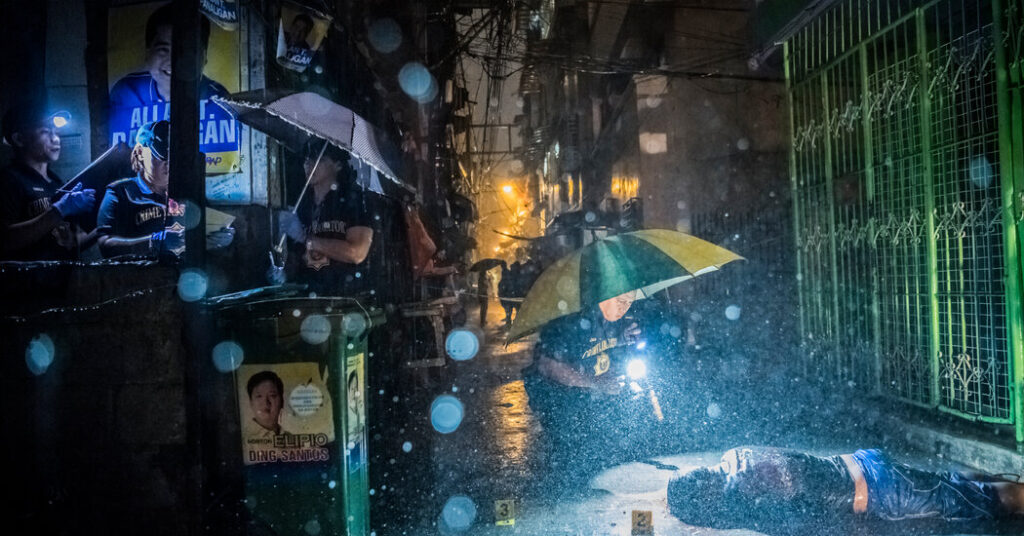
Rights groups say that roughly 30,000 people were killed during the crackdown, many of them gunned down by police officers, hit men or vigilantes, and many of them minors or people who were not involved in the drug trade.
Mr. Duterte, 81, was arrested in March of last year in Manila and has been held in The Hague since then. Prosecutors argued at a pre-trial hearing in February that there was enough evidence to try him on charges of crimes against humanity, which he denies having committed.
The court said on Thursday that the pre-trial judges agreed with the prosecutors and confirmed the charges. They concluded that there were substantial grounds to believe that “Mr. Duterte is responsible for the crimes against humanity of murder and attempted murder.”
The court described “a widespread and systematic attack against a civilian population” in the Philippines during Mr. Duterte’s presidency and, before then, when he was mayor of Davao City. He was elected to a six-year term as president in 2016 after promising, in violent terms, to restore law and order.
Filipinos have long debated Mr. Duterte’s legacy. To some, he is a hero remembered for cracking down on problems like drugs, petty crime and violence. To others, the charges are an important step toward accountability: Only a few people have received prison sentences related to the killings.
“The charges against Duterte have been finally confirmed for crimes that he should have been punished for a long time ago,” said Leila de Lima, a Filipina lawmaker who has long opposed Mr. Duterte and was detained for six years after criticizing his war on drugs.
“This is still a great day for the fighters against impunity and state-sponsored violence,” she said.
“Today,” she added, “we celebrate even as we grieve for those we lost to Duterte’s madness.”
Mr. Duterte has said that the court did not have the right to order his arrest. He has refused to attend the proceedings, saying that he is “old, tired and frail.”
Mr. Duterte’s lawyer, Nick Kaufman, attacked the prosecution’s case in a lengthy statement. He questioned the reliability of witnesses he described as “vicious self-confessed murderers,” and he said he planned to show that the evidence carried “zero weight.”
Mr. Duterte publicly encouraged the violence in the Philippines. He promised immunity to police officers who targeted “drug suspects.” Government forces engaged in large-scale nationwide roundups. Prisons were overcrowded, and bodies were left lying in the streets of Manila.
Mr. Duterte left office in 2022 with high approval ratings, and his arrest in 2025 shocked many Filipinos.
Human rights groups welcomed the court’s decision, calling it an important moment for those who suffered under Mr. Duterte.
Maria Elena Vignoli, senior international justice counsel at Human Rights Watch, said in a statement that sending the case to trial “opens the door to long-awaited justice for the families of ‘drug war’ victims and is an important acknowledgment of their suffering.”
Jason Gutierrez contributed reporting.
Amelia Nierenberg is a Times reporter covering international news from London.
The post Duterte to Stand Trial for Crimes Against Humanity at I.C.C. appeared first on New York Times.