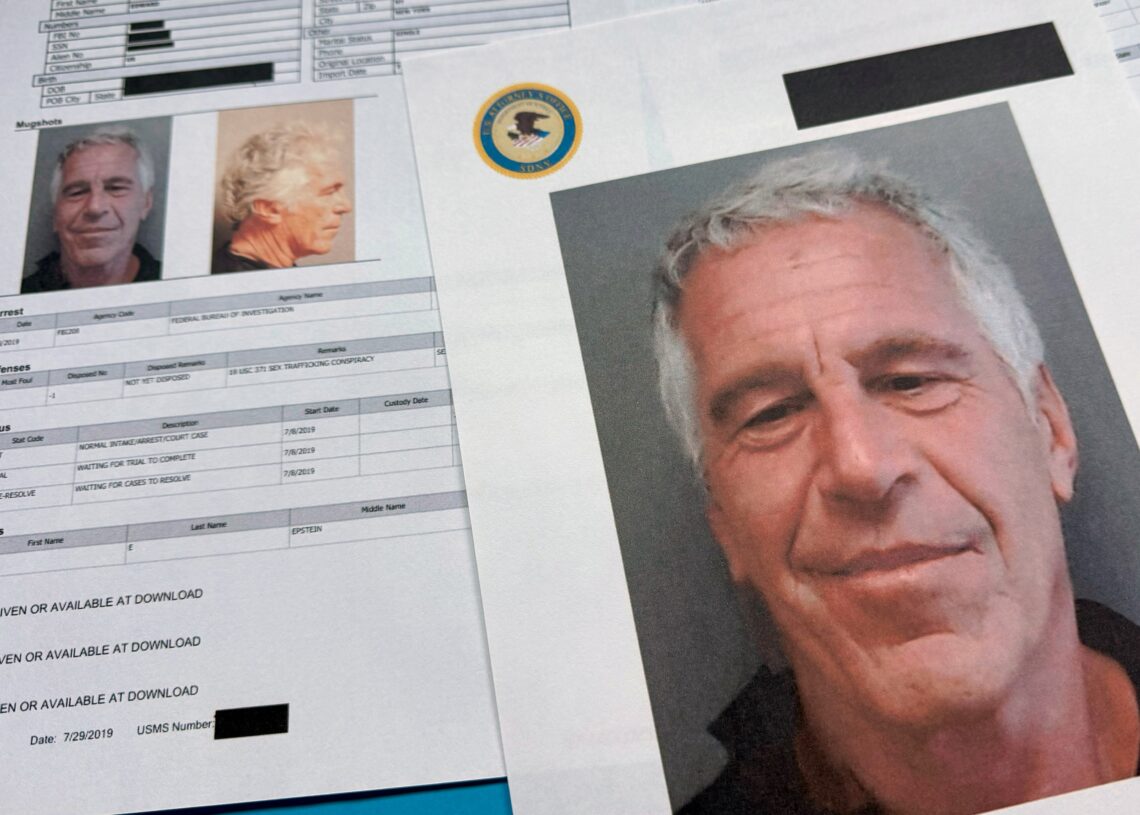
The Justice Department’s chief watchdog said Thursday that his office is launching an audit of the department’s compliance with the law compelling the release of millions of pages of investigative material tied to sex offender Jeffrey Epstein.
The internal probe, announced by Deputy Inspector General William M. Blier, follows months of complaints from victims who say their personal information was included in publicly released documents and from lawmakers who have questioned decisions to redact the names of members of Epstein’s influential circle from some of the files.
The review will focus on how the Justice Department identified the more than 3 million documents it has made public since late last year, the guidelines used to determine what information to redact or hold back, and how officials have addressed concerns raised over the disclosures in the months since.
“If circumstances warrant, the OIG will consider addressing other issues that may arise during the course of the audit,” the inspector general’s office said in a statement. It said the office will issue a report at the end of its inquiry, summarizing its investigators’ findings.
The audit’s announcement is one of the most high-profile actions taken by the Justice Department’s inspector general since the start of President Donald Trump’s second term. Designed to serve as an independent referee reviewing department activities, the office has remained markedly quiet as Trump appointees have dismissed scores of Justice Department lawyers, abandoned long-held norms and moved aggressively to reshape the agency to meet the president’s demands.
The choice to focus a prominent effort on the Epstein disclosures will also almost certainly extend a debate that has become a persistent pain point for the Trump administration.
Then-Attorney General Pam Bondi came into office in February 2025 promising greater transparency surrounding the Justice Department’s multiple investigations of Epstein only to face backlash from within her own party after the department’s decision this past summer that no further files would be released.
That announcement led to months of outrage on both sides of the aisle culminating in Congress’s passage in November of the Epstein Files Transparency Act. The law, which Trump signed, compelled the release of all documents collected during the Justice Department’s investigations. Trump’s dissatisfaction with Bondi’s handling of the Epstein matter also led, in part, to his decision to fire her this month, The Washington Post has reported.
Epstein, a well-connected financier who pleaded guilty in 2008 to charges of soliciting prostitution and died in federal custody while awaiting trial on federal sex trafficking charges in 2019, faced multiple investigations during his lifetime over his relationships with young women. His longtime companion Ghislaine Maxwell was convicted on sex trafficking charges and is currently serving a 20-year prison sentence in Texas.
Since Epstein’s death, which was later ruled a suicide, conspiracy theorists have speculated that federal officials have worked to protect powerful friends who may have participated in his crimes.
Trump, who had a long-standing friendship with Epstein that soured in the mid-2000s, has repeatedly denied any knowledge of the man’s illegal activity.
Though the Justice Department has now made public millions of pages of documents from those investigations — a process it says it completed in January — the rollout was plagued by delays and missteps. In some instances, documents that included personal information of Epstein accusers were made public, errors that department officials described as oversights that they quickly worked to correct.
Those blunders prompted some Republican members of the House Oversight Committee to join Democrats in voting to subpoena Bondi to testify about the disclosures in a closed-door deposition that had been scheduled this month. Bondi was fired before that testimony, and the Justice Department later said she would not appear for her scheduled deposition.
Lawmakers have continued to question whether she and other top Justice Department officials complied with the transparency law’s requirements, including those allowing the agency to withhold only information that might compromise ongoing investigations, disclose victims’ information or constitute child sexual abuse material.
At a news conference in January, then-Deputy Attorney General Todd Blanche said that the department identified about 6 million documents related to Epstein but withheld roughly half of them because they were deemed to fall under those exceptions or to be duplicates of files it had already released.
“I can assure that we complied with the statute, we complied with the act, and we did not protect President Trump,” he said. “We didn’t protect or not protect anybody,” he added, dismissing the ongoing debate as “a thirst for information that I do not think will be satisfied by the review of these documents.”
More recently, Blanche, who has since been elevated to acting attorney general following Bondi’s departure, told Fox News that he did not believe debate over the Epstein files should “be a part of anything going forward.”
A spokesperson for Blanche did not immediately return requests for comment Thursday on the inspector general’s review.
Still, news of the audit drew praise Thursday from victims and some on Capitol Hill.
“My sincere hope is that this is truly an independent investigation and audit, aimed at uncovering this blatant cover-up, and not just another performative partisan show to protect Trump and his allies,” said Arick Fudali, an attorney who represents several Epstein accusers, in a statement.
Rep. Ro Khanna (D-California), who authored the Epstein transparency law along with Rep. Thomas Massie (R-Kentucky), said he hoped the audit would force Justice Department officials to provide more insight into the more than 3 million pages withheld and the redactions made in documents that were released.
“The survivors and the American people deserve transparency,” he said.
The post DOJ watchdog launches review of agency’s compliance with Epstein files law appeared first on Washington Post.