Two treatments being tested in clinical trials are raising hopes for patients with pancreatic cancer, which has long been one of the most dire diagnoses in oncology.
Researchers presented the promising data this week at a cancer conference in San Diego. The data was collected from a small number of patients and has not yet been published in a medical journal or reviewed by regulators. Neither drug has been approved for use.
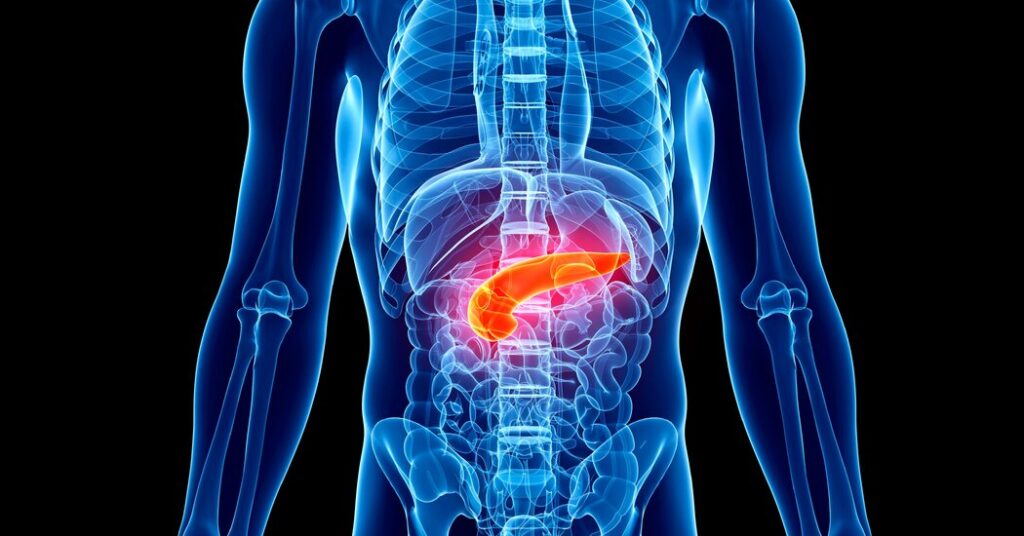
Cancer of the pancreas, the gland buried deep in the abdomen that is involved in digestion and regulates blood sugar, kills more than 50,000 Americans each year, accounting for about 8 percent of cancer deaths in the United States. Many patients die within a year of diagnosis, and only 13 percent of people live for five years after being diagnosed.
There are few treatment options, and those that are available often do little to help, which is why the new drugs are generating so much excitement.
“We are having to tell ourselves that this is in fact unprecedented,” said Dr. Robert Vonderheide, director of the Abramson Cancer Center of the University of Pennsylvania, who was not involved in the new research.
One of the experimental drugs, daraxonrasib, doubled diagnosed patients’ life expectancy, giving them over 13 months, compared to less than seven months for those who received chemotherapy in a late-stage clinical trial, according to Revolution Medicines, the company developing the drug.
A gain of six months of life is virtually unheard-of in the field. The company also said the drug’s side effects were “manageable.”
“The statistic that caught everyone’s eye was a doubling of overall survival,” said Dr. Vonderheide, who is also president-elect of the American Association for Cancer Research, the group of oncologists and scientists that is hosting the meeting in San Diego this week. “This is a patient population that has very limited options. To see that effect with a side-effect profile that is manageable unleashed a lot of excitement in the field.”
Researchers plan to present the data next month at a cancer conference in Chicago. In San Diego this week, researchers presented data from earlier stage testing of the drug that involved a few dozen patients. Many patients reported side effects like rash, diarrhea, fatigue and nausea. No patients died because of the treatment.
In a recent interview with The New York Times, former Senator Ben Sasse, a Republican from Nebraska, who late last year disclosed his terminal pancreatic cancer diagnosis, said he had been receiving that drug in a clinical trial.
He said he had been told in December that he had three or four months to live, but that the drug had shrunk his tumors and allowed him to reduce his reliance on pain medication. He had a rash on his face that he attributed to a side effect from the drug.
Revolution, based near San Francisco, said that it was planning to seek regulatory approval soon for the treatment, which the Food and Drug Administration has already designated for a fast-track review.
The other promising treatment involved a personalized vaccine using mRNA technology. Unlike vaccines for infectious diseases, which aim to prevent people from contracting an illness, there is hope that vaccines could be used to treat cancer that has already been diagnosed, though the approach is not widely used for most cancers.
In San Diego this week, researchers reported that in a small safety study, seven of eight patients whose immune systems responded to the treatment were alive up to six years after receiving the last treatment, compared with just two of out eight of those whose immune systems did not respond.
Phase 1 studies like this one are not designed to assess whether a treatment is effective, only whether it is safe. The treatment is being developed by BioNTech and Roche’s Genentech unit.
The technology used in the vaccine, known as messenger RNA, or mRNA, is best known for its use in Covid vaccines. It instructs the body to produce a fragment of a virus that then sets off an immune response.
Under Health Secretary Robert F. Kennedy Jr., the Trump administration has made a series of funding and policy changes that are hostile to the technology.
Patients diagnosed with pancreatic cancer fare far worse than people with other cancers, like some of the blood or breast. In those other forms of cancer, significant treatment advances in recent years have turned once devastating diagnoses into manageable chronic illnesses for large numbers of patients.
Pancreatic cancer is different from many other cancers. It is often caught very late, when the disease has already spread widely, because it often presents no early symptoms. Patients often realize something is wrong only when they suddenly lose weight and become jaundiced. And treatment approaches like immunotherapy that have transformed the outlook for other cancers have not worked for that of the pancreas.
Rebecca Robbins is a Times reporter covering the pharmaceutical industry. She has been reporting on health and medicine since 2015.
The post Two Drugs Stir Hope for Treatment of Deadly Pancreatic Cancer appeared first on New York Times.