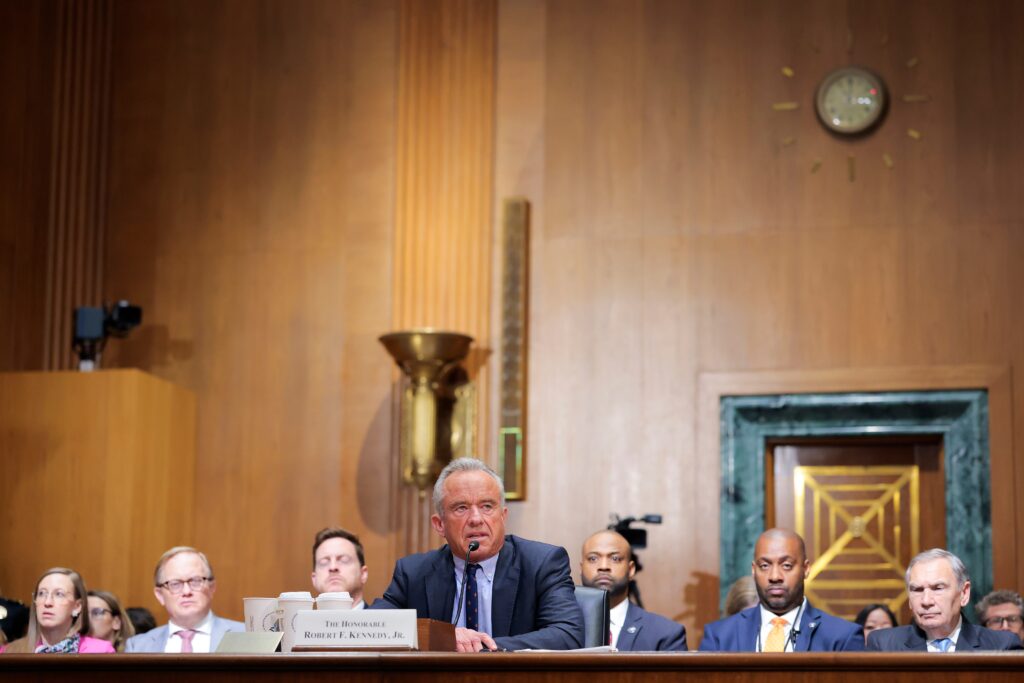
Two top GOP senators who are physicians quizzed Health Secretary Robert F. Kennedy Jr. on Wednesday about his controversial record on vaccines in their first public meeting in over seven months.
The Senate’s No. 2 Republican, John Barrasso (R-Wyoming), grilled Kennedy during a Senate Finance Committee hearing on vaccines and a key panel focused on preventive screening recommendations. And in the most anticipated health committee hearing hours later, Sen. Bill Cassidy (R-Louisiana) — Kennedy’s onetime political savior and now adversary — drilled into the vaccine issue.
“I am a doctor who has seen people die from vaccine-preventable diseases,” Cassidy says, calling it “more than tragic.”
He went on to probe Kennedy as to whether he would allow the new pick to lead the Centers for Disease Control and Prevention to make decisions independent of political appointees, whom Cassidy accused of “undermin[ing] trust in immunizations.”
Kennedy shot back that Cassidy’s “characterization of the political appointees is wrong.” He said the CDC director has that power now and argued that the United States is unmatched in its efforts to control measles outbreaks. Cassidy went on later in the hearing to question Kennedy on a study the secretary had referenced regarding the reduction of mortality not being attributable to vaccination.
In an earlier hearing, Cassidy, who is in a tough primary election fight, steered clear of the controversial issue, highlighting affordability and fraud. But during the hearing, the Health, Education, Labor and Pensions Committee chairman dove headfirst into a key contentious issue with the nation’s top health official.
As part of the marathon of congressional hearings, Kennedy highlighted his nutrition efforts and defended his work on drug prices, while appearing more agitated than he has been in previous hearings.
During his confirmation hearings last year, Kennedy made a range of commitments to Cassidy, including protecting the nation’s vaccine infrastructure. Since then, Kennedy’s health department has sown doubt about vaccines as they relate to autism (they do not cause it, medical experts say).
As Republican senators have expressed concerns about President Donald Trump’s surgeon general nominee, Casey Means, whose best-selling book on metabolic health is touted as the bible of the Make America Healthy Again movement that Kennedy champions. Cassidy has not held a vote on her nomination in his health committee. Cassidy has also accused Kennedy of “effectively” denying Americans the coronavirus vaccine and asked top officials to promote vaccination.
Since their last face-to-face meeting in September, several political dynamics have changed as the midterm elections approach. Trump has endorsed one of Cassidy’s primary opponents, Rep. Julia Letlow (R-Louisiana), whom the MAHA movement’s political arm has vowed to support with $1 million in funding. Kennedy has been speaking less about vaccines amid polling showing skepticism of shots is politically unpopular, and his health department has undergone a leadership shake-up. (In a hearing Tuesday, Kennedy denied that the White House had told him to stop talking about vaccines.)
The stakes are high for Cassidy and the secretary. Kennedy was grilled by lawmakers Tuesday about whether he had lost favor with the White House with his controversial moves, while any support from Trump for Cassidy if he were to win his primary could be key.
Barrasso previously expressed concern about Kennedy’s vaccine actions, in a hearing in September. On Wednesday, he said “there’s been more confusion for families and for providers” amid Kennedy’s sweeping overhaul of the childhood vaccine schedule this year.
“Are you taking steps now to ensure vaccine guidance is clear, evidence-based and trustworthy?” Barrasso asked.
Kennedy said he was seeking placebo-controlled trials for new vaccines that are currently not on the schedule and noted he could not discuss all of his actions, as some are under litigation. A federal judge last month blocked some of Kennedy’s actions related to vaccine recommendations.
Barrasso also pushed Kennedy on the U.S. Preventive Services Task Force, saying Kennedy was not prioritizing this work because meetings had been canceled and rescheduled.
The Department of Health and Human Services is soliciting nominations of new experts to serve on the panel, which Kennedy has said he plans to overhaul.
Barrasso pushed Kennedy to follow the committee’s independent review of the evidence. The task force makes recommendations about preventive services and screenings, and insurers generally must follow certain recommendations to determine what is covered.
“I can promise you, senator, we are not going to undermine any of those functions,” Kennedy said. He conceded that he has not done a good job of “getting the meetings out there.”
Over the last few days, Kennedy has said he is not anti-vaccine, noting his department’s investment in vaccines and his push for vaccine safety, which many medical experts say has the effect of discrediting vaccines.
Sen. Michael Bennet (D-Colorado) got into a fiery exchange with Kennedy over his past comments on the flu vaccine, mentioning Kennedy’s previous comments — surfaced in a Washington Post examination in February — that the flu vaccine was “destroying” children’s brains.
Kennedy, who killed a flu vaccine campaign the day after he took office and has suggested the flu vaccine is linked to his voice condition (medical experts say there is no scientific evidence to support that link), noted he had funded a universal flu vaccine and said the flu vaccine was not very effective last year.
Bennet pushed Kennedy on whether the measles vaccine is vital to keeping American children healthy. Kennedy responded: “That’s my position. We promote the measles vaccine.”
Sen. Ron Johnson (R-Wisconsin) pushed Kennedy on injuries from coronavirus vaccination. The secretary, who has previously called the covid vaccine the “deadliest vaccine ever made,” committed to working on medical codes for people diagnosed with such injuries. Experts say the coronavirus vaccine has been shown to be safe and effective.
The questioning came after The Post reported Wednesdaythat a study on the effectiveness of the covid-19 vaccine — previously delayedby the head of the CDC — was blocked from publication in the agency’s flagship scientific journal.
Kennedy, who was pugilistic in previous congressional appearances, has notably tried to tone down his rhetoric in hearings over the past week, steering conversations toward fraud issues, his popular moves on nutrition and how he believes his department is helping rural health. But fireworks over vaccines, environmental concerns and personal attacks have still ensued, as Kennedy’s push on making the country healthier again runs into the reality of the administration’s funding and staffing cuts. And in this final day of hearings, he got more heated.
Sen. Catherine Cortez Masto (D-Nevada) pushed Kennedy on rural health care, a large talking point over the hearings, pointing to a rural hospital in her area that was losing 71 jobs due to upcoming Medicaid cuts passed in Trump’s One Big Beautiful Bill Act.
In response, Kennedy highlighted the $50 billion investment in the Rural Health Transformation Fund, calling it the “largest investment in history into rural hospitals.” That won’t make up for the estimated $137 billion in Medicaid dollars rural areas are expected to lose over the next decade due to Medicaid cuts, according to an analysis by health policy research and news organization KFF.
Sen. Elizabeth Warren (D-Massachusetts) pushed Kennedy on the cost of drugs on TrumpRx, arguing they have remained high, eventually leading to Kennedy yelling “We got the lowest prices in history.”
The post Top GOP doctors grill RFK Jr. on vaccines appeared first on Washington Post.