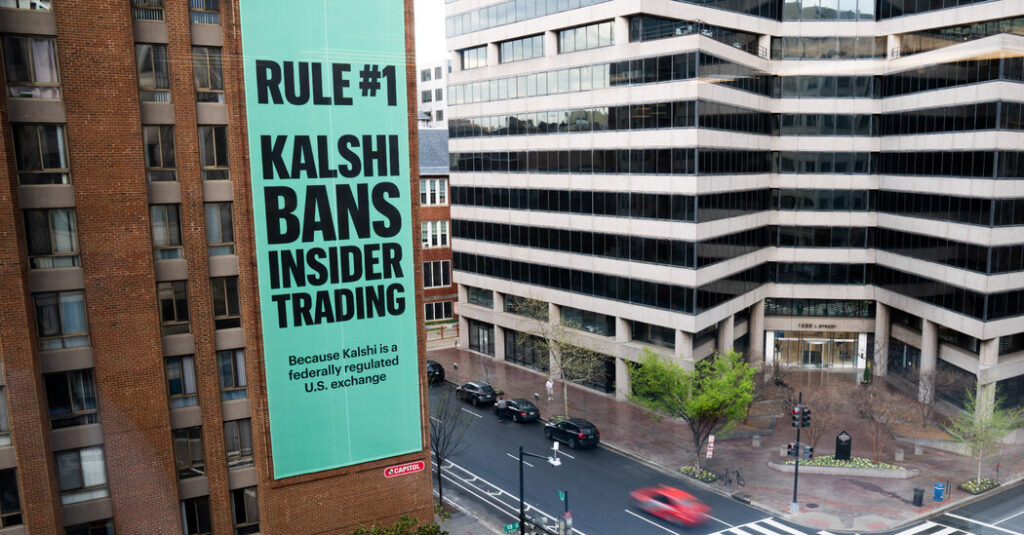
Kalshi has sanctioned three political candidates for trying to make trades on their own races, a move that could signal increased scrutiny by the popular prediction market as the platform and similar companies face mounting pressure to self-police or risk greater regulation.
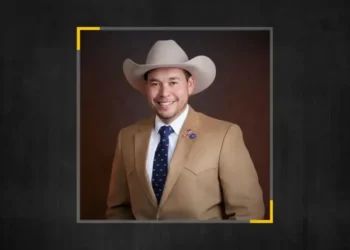
The three candidates were Mark Moran, an independent running for U.S. Senate in Virginia, Ezekiel Enriquez, a former Republican congressional candidate in Texas, and Matt Klein, a Democratic Minnesota state senator who is running for Congress, according to disciplinary action letters on Kalshi’s site. Mr. Enriquez tried to make a trade in his race, Kalshi said, but was preemptively blocked.
Bobby DeNault, Kalshi’s head of enforcement and legal counsel, said the sanctions are part of Kalshi’s “proactive engineering solutions” to “identify illicit trading activity.” The activity, Mr. DeNault said, violated Kalshi’s rules, which were recently updated to ban this type of activity. It’s unclear if they were trading in a manner that was relying on inside information.
The announcement comes after legislation in both houses of Congress was filed late last month to crack down on which government officials can use the site. Arizona’s attorney general filed criminal charges against Kalshi last month, accusing the company of operating an illegal gambling venture. A company spokeswoman denied the claims.
Kalshi users can wager on everything from how long the government shutdown will last to what show will top Netflix’s streaming numbers in a given week. There are also markets where people can bet on the direction of the Iran war and President Trump’s policymaking.
In a December post, Kalshi said it had millions of weekly users placing bets across 3,500 markets. The platform is regulated by the Commodity Futures Trading Commission, a federal agency tasked with keeping watch over U.S. derivatives markets. The president’s eldest son, Donald Trump Jr., has ties to Kalshi and Polymarket, another large prediction market, causing concerns among ethics experts.
According to Kalshi, Mr. Klein and Mr. Enriquez admitted to the wrongdoing, accepted small fines and received a five-year suspension. Mr. Klein is the co-author of a bill that would ban prediction markets in Minnesota. The legislation is in committee.
Trump Administration: Live Updates
Updated
- Navy Secretary John Phelan is out, Pentagon says.
- Kennedy defends Trump’s mathematically impossible drug discount claims.
- Trump’s nominee to lead a cyber agency withdraws after languishing in the Senate.
Mr. Moran, who placed a bet on himself, stopped cooperating with Kalshi’s investigation and was eventually assessed a larger fine, of $6,229.30, Mr. DeNault said.
Mr. Moran, who initially ran as a Democrat, said in a brief interview that he had made the bet knowing it would be publicly exposed at some point. He said he hoped to bring attention to a vice that he called “dangerous to our democracy” and to his own dark horse candidacy.
“It’s almost so ridiculous that it was this easy to bring this attention,” he said, adding that he wanted to use the notoriety to promote his campaign ideas. “I look at it as this my patriotic duty,.”
Mr. Moran said he was fined much more than the other two candidates because he had refused several offers from Kalshi to settle. “They wanted me to make a public statement, a tweet, that was acknowledging this,” he said, adding that he refused because he saw it as marketing.
Trey Trainor, one of the 12 Republicans in the Texas race that also included Mr. Ezekiel, said prediction markets have changed the world of politics. An elections lawyer and former member of the Federal Election Commission, Mr. Trainor said they needed to be better regulated.
“When you start betting on the future of our government like you bet on a football or baseball game, it really devalues what we’re supposed to be about,” he told The New York Times. “Elections are supposed to be sacrosanct.”
Mr. Enriquez did not respond to a request for comment from The Times.
Mr. Klein, a physician, said in a statement that he heard from friends in October of a prediction market site with wagers on his primary race. Curious about how it worked, he set up an account and bet $50 that he would win, he said.
“I was informed in March of 2026 that this was a violation of the platform rules. In compliance with their request, I paid a penalty and agreed to be suspended from the platform. That was the only wager I have ever made on a predictions market. This was a mistake, and I apologize,” Mr. Klein said.
He said that his experience demonstrated the need for clearer rules and regulations when it comes to prediction markets.
Corina Knoll contributed reporting.
Lauren McGaughy is the Texas politics correspondent for The New York Times, writing about the ways that policymakers in the second largest state are changing lives for their citizens and influencing American politics.
The post Kalshi Fines and Suspends 3 Political Candidates for Betting on Their Races appeared first on New York Times.