After halting a U.S. resettlement program for Afghans who helped the American war effort, President Trump is in talks to send as many as 1,100 of them to the Democratic Republic of Congo, an aid worker briefed on the plan said Tuesday.
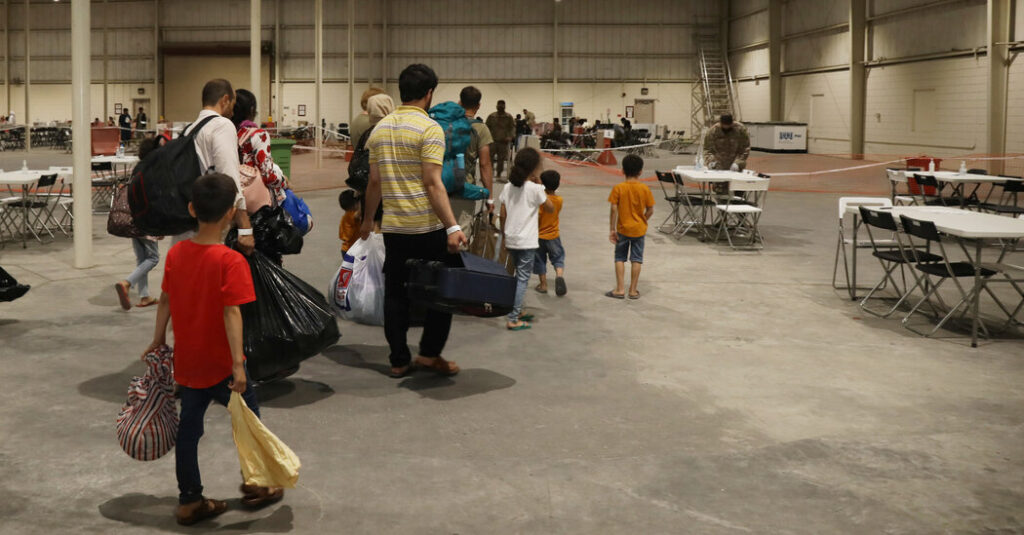
The group includes interpreters for the U.S. military, former members of the Afghan Special Operations forces and family members of American service members. More than 400 children are among them.
The Afghans have been living in limbo in Qatar for over a year after being evacuated by the United States for their own safety because they supported American forces during the war against the Taliban that began in 2001.
Shawn VanDiver, the president of the aid group AfghanEvac, said he had been briefed on the Congo plan by State Department officials. He said that the Afghans would be given a choice between returning to live under the Taliban or being sent to Congo, which is suffering one of the world’s worst humanitarian crises.
More than 600,000 refugees, mostly from the Central African Republic and Rwanda, are currently in Congo, according to the United Nations. Human rights activists say that the country is not equipped to take in more in the midst of fighting with neighboring Rwanda that has displaced even more people because of attacks on refugee camps.
“We think this is just them wanting to send these people back to Afghanistan, where they know they will face certain death,” said Mr. VanDiver. “They know that Afghans are not going to accept the D.R.C. Why would you go from the world’s No. 1 refugee crisis to the world’s No. 2 refugee crisis?”
The discussions highlight the longstanding tension between America’s commitment to Afghans, who face grave danger in retaliation for helping U.S. forces during the war, and the Trump administration’s promise to curtail immigration.
Much is unknown about the plans taking shape, including whether all the Afghans would go to Congo or whether deals were coming together in other countries. Negotiations like this have stalled before.
A Congolese government spokesman did not immediately respond to a message seeking comment. Tommy Pigott, a State Department spokesman, accused the Biden administration of moving hastily in bringing Afghan allies to the United States. He said the Trump administration was working to find options for the remaining Afghans.
Trump Administration: Live Updates
Updated
- In a tense House hearing, Kennedy refuses to support Trump’s C.D.C. nominee on vaccines.
- A Florida Democrat facing federal charges resigns from Congress.
- Senate Republicans released a measure that would fund ICE for three years.
“The American people have had to pay the price for the irresponsible way hundreds of thousands of Afghans were brought into the United States,” he said. “Our focus now is on restoring accountability by advancing responsible, voluntary resettlement options.”
American diplomats have been asking countries in Africa to take in the Afghans for months. But talks fell apart in many places, according to Mr. VanDiver and diplomats with knowledge of the discussions.
More than 190,000 Afghans who aided the U.S. effort resettled in the U.S. between August 2021 and mid-2025, after passing background checks.
A group of more than 1,100 Afghans are being housed in a former U.S. military base in Qatar known as Camp As Sayliyah. The American government brought them there in late 2024 and promised them a path to settlement in the United States if they passed further checks.
Qatar was intended as a stopover, but many of the Afghans found themselves in limbo after the Trump administration ended policies that would have enabled resettle to in the U.S.
Some of the people left at the camp have been fully vetted; others have not. But Mr. Trump’s immigration policies have made it impossible for any of them to come to the United States now. The administration said in January that it would close the transit camp without saying what would happen to the people there.
Andrew Sullivan, a military veteran and the executive director of No One Left Behind, a nonprofit group that has been working to resettle Afghans to America, said some had been deemed ineligible for reasons that have nothing to do with national security. For example, one woman turned 21 and is no longer eligible to be included on her father’s visa, he said.
But, he said, the administration has other options available to bring them to the United States, including the ability to issue exemptions to the policy.
“Our belief is that if, if they can pass security vetting, they should be coming to the United States,” Mr. Sullivan said. “If they can’t, and they’re not going to come to the United States, I do believe the U.S. government has an obligation to ensure that they’re going to a third country where they’re going to be secure, they’re going to be supported, and there aren’t ongoing humanitarian rights issues.”
American diplomats have been meeting with Democratic Republic of Congo officials for months. Recently, the Trump administration struck an agreement with the country to accept migrants from other countries who face deportation from the United States. Part of that deal included a $50 million grant to the U.N. refugee agency to provide assistance in the country.
Discussions over the Afghans are separate from the deportation deal, but both are outcomes of Mr. Trump’s sharp immigration policy changes.
Pranav Baskaran Zolan Kanno-Youngs contributed reporting.
Megha Rajagopalan is an international investigative reporter based in London.
The post Trump Is Said to Be in Talks to Send Afghans Who Aided U.S. Forces to Congo appeared first on New York Times.