Since the start of the conflict with Iran, gasoline prices in California and across the country have increased by more than $1 a gallon, straining already tight family budgets. In the spirit of never letting a crisis go to waste, the California oil industry has been using this moment to try to jam through its wish list, lobbying for more drilling permits, suspension of taxes, the elimination of environmental programs and subsidies for refineries. While the industry claims these measures would bring meaningful relief at the pump, the truth is that caving to the oil industry’s campaign would have limited benefits for California families.
Take oil production first. More drilling in California would not insulate the state from price spikes, because the price of oil is determined on the global market. The U.S. is a net oil exporter, yet that status offered no protection from the price spike that followed the conflict with Iran. In oil-drenched Texas, pump prices are up $1.20 a gallon since the start of the conflict, only a few cents off California’s $1.23 increase. California’s oil production is a negligible share of global supply, meaning more drilling would allow producers to sell more into a high-priced global market, but California consumers would see little if any effect on prices at the pump.
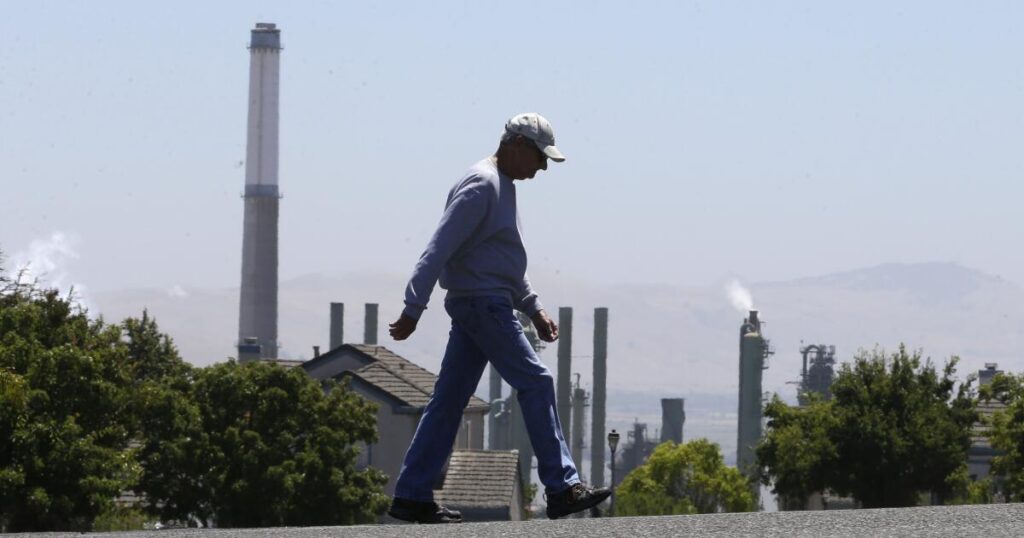
Next, take the industry’s refinery bailout request. Valero’s refinery in Benicia has begun shutting down, and Valero has lobbied lawmakers for $400 million in operating subsidies to keep it open. But granting this request would have a perverse effect of encouraging other profitable refineries to threaten to close unless they receive subsidies too, resulting in a direct transfer from taxpayers to oil companies.
Instead of industry handouts, the state should expand import infrastructure to protect California households from the refinery outages that regularly disrupt the state’s fuel supply. At the Benicia site, this would mean turning the refinery into a terminal where importers could bring in and store fuel for distribution to local gas stations. Greater imports would build more robust inventories, which could be drawn down in a crisis to limit price spikes. To make this work, the state should streamline permitting to accelerate the conversion without compromising safety or environmental standards, and limit market power by ensuring no existing California oil company controls the facility.
Converting the Benicia site to an import terminal would also improve air quality for nearby residents, compared with having a refinery in operation. The effect on global emissions would be a wash — shipping is a small share of total emissions, and either way we’re shipping crude oil or finished gasoline into the state. The transition also gives California a chance to demonstrate how to treat workers and communities fairly during the transition away from fossil fuels — compensating refinery workers for lost wages and providing Benicia with bridge funding to replace lost tax revenue. These investments would do far more for California families than writing checks to oil companies.
Finally, the legislature should revisit regulations that may no longer pass a cost-benefit test, but only after a careful review of the evidence, insulated from industry lobbying. One candidate for repeal: the Low Carbon Fuel Standard, a subsidy program to producers of biofuels such as ethanol. The regulation currently raises gas prices by 17 cents a gallon without delivering meaningful climate benefits; indeed, some experts believe biofuel programs actually add to carbon emissions. Another candidate is California Reformulated Gasoline Blendstock for Oxygenate Blending, a fuel blend that was ahead of its time when first required in 1996 but is less influential now that federal standards have caught up.
The conflict in Iran has caused a global energy crisis, which no country, state or community can avoid. Here in California, the oil industry is trying to weaponize that crisis to push through self-serving measures. Instead, the state should focus on smart policies that lower costs for consumers, dampen price volatility and protect our environment. This is our chance to lead the nation, not with handouts to the oil industry, but with the kind of forward-looking policy that Californians deserve.
Ryan Cummings is chief of staff of the Stanford Institute for Economic Policy Research. Neale Mahoney is a professor of economics at Stanford University and the director of the institute.
The post Oil industry’s wish list is not the way to help Californians appeared first on Los Angeles Times.