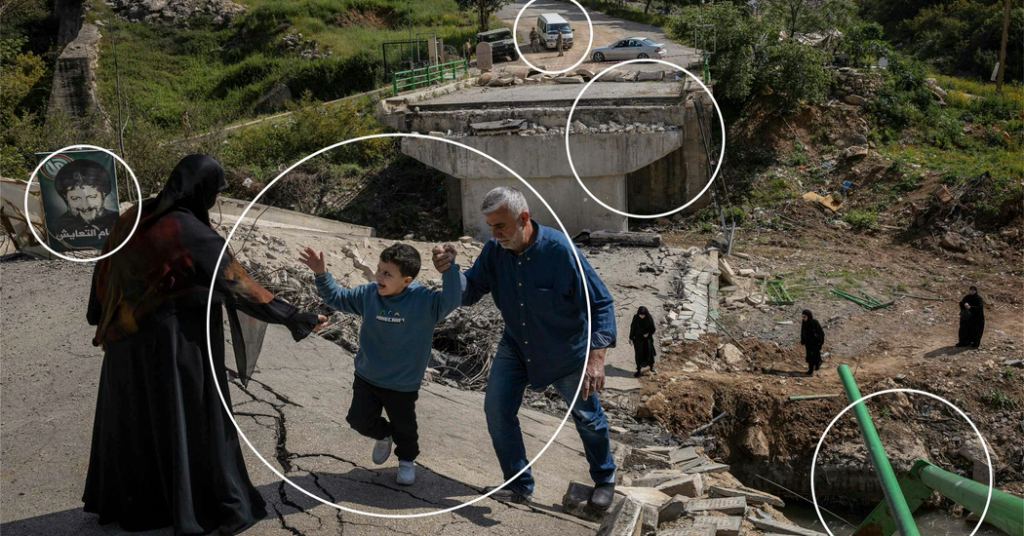
Mariam Ayad, 50, and her husband, Ali Ali, helped the boy, their nephew, clamber over the wreckage. Their Shiite family is among those that flocked back to Lebanon’s devastated south to take stock of their homes after the temporary cease-fire went into effect last week.
More than a million people were displaced, the authorities say, during the war in Lebanon that broke out last month after Hezbollah fired on Israel in solidarity with its backers in Iran. Hezbollah is Lebanon’s main Shiite political force.
This is the second major war Lebanon has endured in two years. Most of those displaced in the country are from the south, which has a large Shiite Muslim population and has been battered by Israeli airstrikes during the war.
Ms. Ayad and Mr. Ali fled their home in Tayr Felsay, a village just south of the Litani, for the Lebanese capital, Beirut, last month. They returned when the temporary cease-fire went into effect late last week.
Zeinab Ayad, Mariam’s sister, lives about nine miles north of the river in the city of Nabatiye. She, too, fled as airstrikes began battering the town and returned home on Friday.
Neither sister plans to stay when the truce ends. Like many people who returned south, they said they felt uneasy and uncertain about the days ahead. Israeli forces have remained in southern Lebanon and many residents believe that the fighting will resume.
But the Ayad sisters were determined to make the most of the time they had. They met up at the Tayr Felsay bridge on Monday so that Mariam could help her sister, nieces and nephew cross the wreckage and then drive them to her home. They planned to have a picnic, she said, of boiled potatoes and vegetables — crops she had planted before the war.
Facing the prospect of having to pick up her home again and then leave it soon, Mariam remained defiant.
“Nothing will stop the people of the south,” she said. “This is our land, our country, our homes. We will do anything to keep it.”
Hwaida Saad contributed reporting.
David Guttenfelder is a Times visual journalist based in Minneapolis.
The post Crossing the Divide appeared first on New York Times.