Tool watches, the industry term for durable timepieces used for specific purposes, such as diving, excite collectors and enthusiasts with their sophisticated functions and built-in instruments.
But what do people who rely on these watches in their everyday lives wear on their wrists?
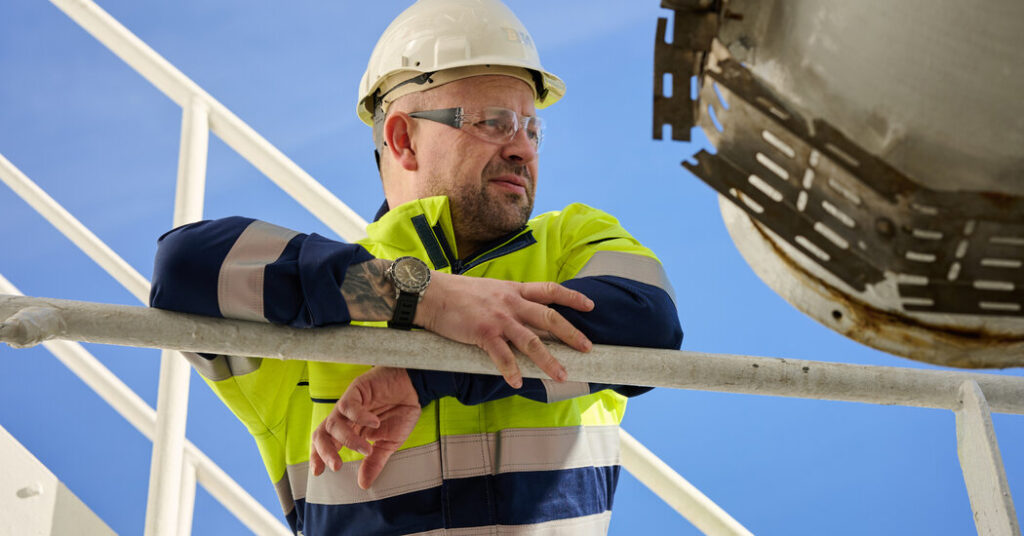
For Morten Paulsen, who works with underwater remotely operated vehicles, also known as R.O.V.s, the watch of choice is a JSAR diver’s quartz model by Marathon, a Canadian brand of Swiss-made military timepieces.
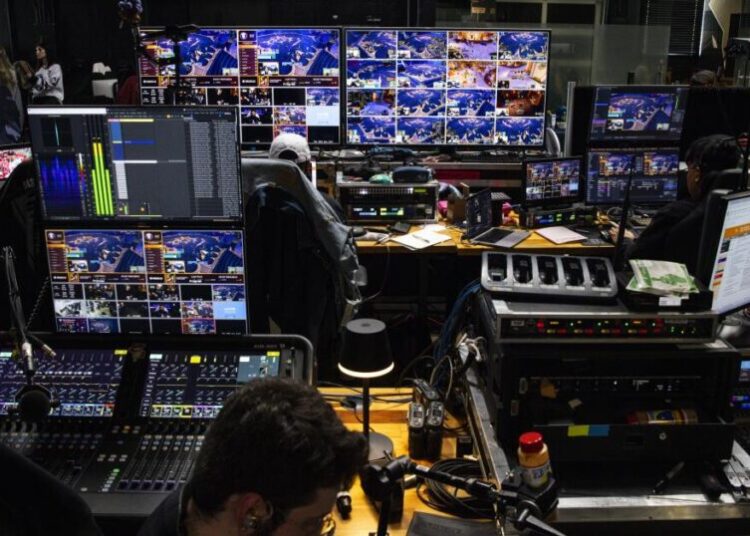
Because smartphones and devices containing combustible substances like lithium are forbidden in many of the control rooms, vessels and areas where Mr. Paulsen and his teams work, a sturdy, reliable watch is essential for telling the time.
“And it has to be waterproof,” said Mr. Paulsen, an employee of BSA, in a telephone interview. The Norwegian company provides services and maintenance to underwater installations around the world, among them pipelines, oil rigs and offshore energy plants.
In his line of work, a watch can easily become drenched by water that runs off the vehicles when they are retrieved from the ocean, often from depths of up to 3,000 meters, or 9,850 feet, below the surface.
Manipulating the vehicles Mr. Paulsen works with, which can weigh 8,000 kilograms, or 8.8 tons, and are about the size of a small camper van, means his watch also “has to be able to handle some knocks,” he said.
“You just have to be OK with the idea of it being scratched,” he continued, “because the job comes first.” (For this reason, he said, he prizes the robust 46 millimeter stainless steel case on the JSAR, which stands for “jumbo search and rescue.”)
Mr. Paulsen added that the illuminated hands and hour markers on the watch — lit using a substance called MaraGlo, according the brand’s website — ensure it is legible even in the often-gloomy ocean environments in which he works.
The exact model Mr. Paulsen owns is available on the Marathon website for 2,150 euros; it has stainless steel and rubber bracelets, an ETA F07 quartz movement and MaraGlo markers on the hands and bezel.
‘They Just Kept Failing’
Detached bezels, chipped crystals, broken spring bars.
Branton Clancy was let down by tool watches — many produced by well-known manufacturers — during his service in the Canadian Army.
“They just kept failing,” he wrote in an email from his home in Alberta, where he works as a constable with the Canadian Royal Mounted Police.
That was until, he said, he discovered SeL Instrument, a maker of tool watches in Tucson, Ariz. (Its name, according to its website, is pronounced “seal.”)
“Wow, this guy gets it,” Mr. Clancy wrote, recalling his reaction to a statement on the SeL website from Andrew McLean, who founded the brand in 2013.
In 2022, Mr. Clancy purchased a SeL FTX S1 field watch. (Often referred to as “trench watches,” field timepieces are usually lightweight, highly legible and designed to meet specific military criteria.)
His quartz model had a titanium case with black diamond-like carbon coating and a removable crown protector. The sold-out model originally cost $3,360 on the brand’s website.
Mr. Clancy said the watch has survived brutal training exercises as well as sandstorms, collisions with rocky surfaces and ocean immersions during his deployment to the Middle East in 2023.
In one incident involving a military vehicle, the watch’s crystal — the transparent cover on a watch face — received just a few chips when it was smashed between a piece of the vehicle and the bullet-resistant armor Mr. Clancy was wearing at the time.
“This is normally a death sentence for watches,” he wrote, “as it will smash them into oblivion.”
No More Cracking Crystals
While recently reflecting on his struggle with an epileptic disorder, Niklas Osterlund, a Finnish watch enthusiast, recalled a series of broken timepieces, many considered rugged by industry standards.
“I’ve been into watches for almost 20 years,” he said in an interview. “In the past 10 years, I’ve broken, like, 10.”
The illness, for which he received a diagnosis in 2011, caused problems with coordination and sudden muscle cramping, symptoms he said manifested in him as “clumsiness.” He also experienced regular seizures, he said.
“I’ve broken crystals against many different surfaces” he said. “One of them was the kitchen counter; the other was my car.”
As for a third crystal, “I literally have no idea,” he said of its demise. “I just came home and noticed it was broken.” A fourth cracked during a seizure.
But when he accidentally destroyed an expensive timepiece belonging to a friend while horsing around with family members, he realized “I could no longer wear fragile watches.”
Although he successfully controls his illness with medication and has had fewer and less severe seizures in recent years, he said he now wears only rugged timepieces.
Among them is the Sif N.A.R.T. 1948, a timepiece the Icelandic brand JS Watch Co. produced to honor the Nordic nation’s coast guard.
The watch has a Swiss-made mechanical movement, a 40-millimeter case in German surgical-grade stainless steel and is water-resistant to 1,000 meters, according to the brand’s website.
Mr. Osterlund said the watch had survived more than 15 seizures since he purchased it in 2017 for around 3,000 euros. The days of cracking crystals could well be behind him, he said, thanks to its 4-millimeter thick sapphire crystal.
“It’s a high-grade crystal,” he said. “The crystal on that watch is just incredible.”
The post They Put Their Tool Watches to the Test appeared first on New York Times.