In 2022, Jack Brand, an environmental toxicologist, loaded a bunch of Swedish fish with cocaine.
He wasn’t trying to bring a Halloween hoax to life; he wanted to see how salmon in the wild reacted to pollution from the illegal drug.
In recent years, there has been an alarming rise in the number of waterways polluted with cocaine, prompting scientists to wonder how fish might be handling their highs.
As it turns out, fish indeed get wired when on cocaine. In a study published Monday in the journal Current Biology, Dr. Brand and his colleagues show that coked-up salmon swim faster and travel farther than their sober counterparts. This study prompts additional questions about the effects that human drug habits may be having on salmon and other freshwater fish.
It wasn’t easy for Dr. Brand, a researcher with the Swedish University of Agricultural Sciences, to get permission from local governing bodies to dose fish with the drug.
“It was a fairly tedious and laborious process,” Dr. Brand said of all the paperwork.
Countless studies have looked at how fish and other animals respond to cocaine in a laboratory setting. But none had studied the impact of the drug in the real world.
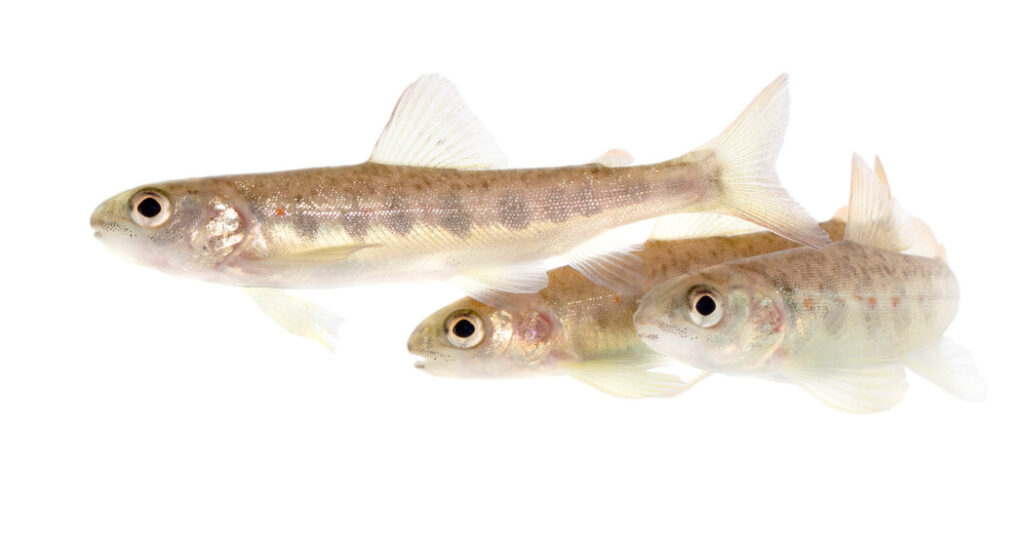
As soon as they got permission, Dr. Brand and his team headed to an Atlantic salmon hatchery in Southern Sweden and began implanting dozens of 2-year-old fish with tracking tags and slow-release capsules. Some capsules contained cocaine, while others had benzoylecgonine, a compound that is created when our bodies break down the drug and is used as a signature in drug tests.
The capsules were designed to give the fish amounts of cocaine or benzoylecgonine each day that would be equivalent to what they would get by living in a polluted waterway.
The fish were then released into Vättern, a lake in Sweden that is routinely stocked with Atlantic salmon for recreational fishing. For eight weeks, the researchers tracked the movements of the young salmon.
The researchers were not surprised to see that the hopped-up salmon swam more than the unaltered fish. What was unexpected was that the salmon receiving doses of the cocaine byproduct benzoylecgonine had an even more unnatural pep in their step, swimming nearly twice as far per week and traveling around 7.6 miles farther from their release site than the straight-edge salmon who had been released alongside them, and also farther than those that were just on cocaine.
“Our results suggest that risk assessments focusing only on cocaine may underestimate the ecological effects of its breakdown products,” said Tomas Brodin, a university colleague of Dr. Brand and a co-author of the study.
Cocaine and benzoylecgonine are just a few of the hundreds of chemical pollutants that make their way into aquatic ecosystems as a result of the production and consumption of drugs.
A 2016 study of the salmon in the Puget Sound in Washington found Prozac, Advil, Benadryl and Lipitor, as well as cocaine, in the tissues of juvenile chinook salmon.
Although this new study is the first to look at the ways cocaine and one of its metabolites affect salmon in the wild, a study published last year found that wild salmon hopped up on anti-anxiety drugs were less fearful and thus more likely to be eaten by predators.
While it’s unclear if swimming faster and farther while under the influence harms these fish, experts say it’s probably not great.
“The rule of thumb in our business is that any alterations to physiology or behavior in fishes should be considered adverse,” said James Meador, an environmental toxicologist and affiliate professor at the University of Washington.
Dr. Meador, who was not involved with the study, stresses that fish are highly tuned to their environments. “Any change in that definitely affects them in some adverse ways,” he said, like forcing them to expend more energy.
The presence of drugs and their metabolites in aquatic environments is “an environmental engineering problem,” Dr. Meador added. In the United States alone, treatment facilities process approximately 34 billion gallons of wastewater every day. Outfitting these facilities with new infrastructure designed to remove undesirable chemical compounds from our wastewater would be costly and logistically complex. But it’s also not a fantasy.
“People are working on it,” he said. “I’m optimistic that someday it will reduce a lot of these things.
Dr. Brand hopes that day comes soon. He sees cocaine, benzoylecgonine and other human-crafted chemicals as “invisible agents of global change.” They find their way into all manner of animals, not just fish.
He warns that “people don’t have a good appreciation for the potential effects they can have.”
The post These Salmon Got High on Cocaine. That Wasn’t the Craziest Part. appeared first on New York Times.