Draped in a yellow cape and black mask, Javier Milei stepped onto a Buenos Aires stage as a makeshift superhero. Brandishing a salvaged scepter and wearing kitchen gloves, he announced his mission: to rescue capitalism and restore the value of individual liberty to Argentina.
That was in 2019, when Mr. Milei was a fringe libertarian economist and media celebrity, shouting from the margins of a political establishment that did not take him seriously.
Since then, he has stunned the world with a meteoric rise to the presidency. He has become a right-wing global star, tamed Argentina’s runaway inflation and made friends with President Trump.
Now, Mr. Milei’s superhero avatar is back. Reimagined as an A.I.-generated, animated character on the president’s official social media accounts, the masked avenger can be seen flying over the Buenos Aires skyline reaffirming his key goal: “the cultural battle.”
This time, Mr. Milei has the power to take it on.
He wants to use his presidency not only to slash the country’s budget but to wage an ideological war and rewire the country’s mentality. He wants to dismantle what he calls the “aberrant” concepts of social justice and economic equality and make the nation’s core principles capitalism, the free market, a limited state and individualism.
“We are at war,” Mr. Milei said at a right-wing festival last year, and added: “We are fighting a cultural struggle, an ideological battle, a war for the survival of our freedom.”
At political rallies and international summits, in public policies and a deluge of social media posts, Mr. Milei has relentlessly sought to infuse Argentina with his libertarian ideals. And turn it into a model for the world.
It is a momentous shift in a country with some of the world’s most expansive free health care and education systems and a large government that used to pay much of the cost of electricity, gas and public transit.
A nation where people are loath to eat alone or drink a cup of mate, the national infusion, without sharing with the person next to them is embracing a leader whose fundamental message is that people should fend for themselves.
“He is trying to break our DNA,” Juan Grabois, an opposition lawmaker, said of Mr. Milei. “To destroy the communal identity of our people.”
While detractors say Mr. Milei is eroding the social fabric that has long bound the country, supporters say he is trying to implant a culture of entrepreneurship in a nation weakened by decades of handouts by a nanny state.
A Struggle for the Soul
At the World Economic Forum in Davos in January, Mr. Milei made his argument that any wealth redistribution is immoral, eliciting praise from other right-wing leaders.
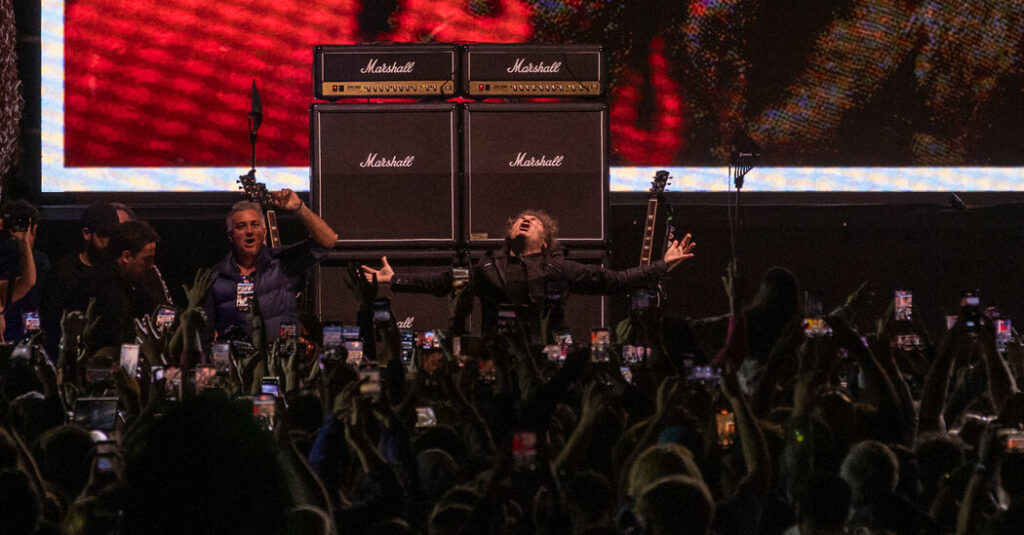
After returning to Argentina, he traveled to the seaside city of Mar del Plata, a vacation hub on the country’s Atlantic coast, to headline the Derecha Fest, or “Right Fest,” a gathering of right-wing supporters.
The sunburned crowd, in a mix of MAGA hats, nurses’ scrubs, baggy jeans and bucket hats, ordered hamburgers from a food truck and browsed dense economic treatises by the Austrian economist Friedrich Hayek and other hefty volumes championing the free market.
While they waited for Mr. Milei — he was at a nearby theater singing a surprise duet with an ex-girlfriend — some of Argentina’s leading right-wing celebrities took the stage to toast the government’s recent cultural victories.
Nicolás Márquez, a far-right pundit, cheered the government’s decision to defund journalism and the film industry, both of which the right accuses of leaning left.
“The enemy is beaten — wounded politically, culturally, and ideologically,” he said. “We are lions who have awakened.”
Moments later, as a rock song blared the lyrics “I am the lion” from loudspeakers, a crowd hoisted Mr. Milei onto the stage.
“The cultural battle,” he said, “is a struggle for our souls.”
At least at the Derecha Fest, as waves crashed at the foot of skyscrapers, it looked as if he was winning.
“I see the change he brought to Argentina’s culture,” said Natalia Paola Romero, 42, a worker at a children’s shelter.
“Promoting hard work and respect instead of laziness,” she added.
Laziness to Mr. Milei is a vice stemming from years of left-leaning governments that turned society to indolence by giving citizens generous benefits.
He has called public universities an engine of woke indoctrination, government-funded researchers and employees “parasites,” and the public sector an “illness,” the “enemy” and a “criminal and violent organization.”
He has argued that “equality of opportunity,” a core tenet in most modern democracies, is a “sham” and that taxes to redistribute resources are theft from the state.
Social justice is a “virus” that fills people with “hatred and resentment,” Mr. Milei said last year in a speech in northern Argentina at the inauguration of a large evangelical church.
In Argentina, Mr. Milei is not just facing off against an opposition party. He is also fighting the legacy of one of the world’s most durable populist movements, Peronism, which shaped the country for generations, often placing a strong state at the center of national life.
The movement’s charismatic founder, Juan Domingo Perón, and his wife, Eva Perón, promoted social justice and a powerful redemptive narrative for the marginalized.
They made the state the guarantor of equity and a better life and forged a bond with the working class that mixed politics with an emotional intensity expressed through rallies, chants and iconography.
Yet by the time Mr. Milei came to power, Argentina had cycled through repeated financial crises under diverse political ideologies. The hardships had eroded public faith not only in Peronism but also in the broader political class and in the state’s promise to deliver stability and dignity.
“The rhetoric of social rights just became empty talk,” said Martín Kohan, an Argentine professor and writer. “It doesn’t touch the concrete reality of many workers.”
Some analysts say that many Argentines are backing Mr. Milei because he provided economic relief through fairly conventional austerity measures, but that they do not necessarily subscribe to his right-wing ideology.
For Mr. Milei and his base, however, economic recovery is just a prelude to more profound cultural change.
And they think they are succeeding.
“We changed the mind-set of millions of young people,” said Axel Kaiser, a prominent Chilean intellectual whom Mr. Milei often quotes. “These people are never going to be Peronists again.”
Pushing the Boundaries
Fixing the economy remains the most urgent task for Argentina, and Mr. Milei, a bookish professor, is focused on economic theory. (In preparation for Davos, he read 16 books, said Lilia Lemoine, a cosplayer who sewed his superhero outfit and is now a lawmaker. In his speech, he cited 24 people, from Moses to Adam Smith.)
But Mr. Milei has also engaged in a MAGA-style attack on identity politics. He has shuttered the national institute against discrimination and the ministry of women and promoted a revisionist version of the military dictatorship that ruled the country five decades ago.
“We are out of the closet,” said Agustin Laje, a right-wing intellectual and author.
Mr. Laje, the author of “The Cultural Battle,” said his adherents had once been mostly older military men. Now, he said, “80 percent are under 30.”
Mr. Laje has over 2.5 million followers on YouTube. “The only way we have today to take culture is by taking social media,” he said.
Mr. Milei has elevated social media provocateurs to government roles and amplified a new generation of digital activists who bash opponents and promote catchy headlines and memes.
Values and the Wallet
But while social media has been effective in reaching young men, analysts say much of Mr. Milei’s broader popularity — 40 percent of Argentine voters chose his party again in a midterm election — is tied to a deeper transformation from a reliance on the state.
After decades of stalled salaries and the growth of informal jobs and the gig economy, more Argentines have internalized a mentality in which they must “fend for themselves,” said Pablo Semán, a sociologist. “Milei did not invent it, Milei did not install it, he channeled it.”
Younger Argentines have lived through 200 percent inflation and 15 years of economic stagnation, and as public services deteriorated, “the social contract was broken,” Mr. Semán said.
As a result, when Mr. Milei defends his most radioactive proposals, like cutting pensions and disability benefits, more people are open to his arguments.
“The state shouldn’t gift you anything,” said Sandra Cristóbal, 58, a lawyer attending a Milei rally in Mar del Plata. “Whoever works more should have more.”
Still, there remains a strong strain of opposition to what many Argentines describe as the cruelty of Mr. Milei’s radical individualism. Some recent polls show that his popularity has fallen as his free-trade measures have contributed to the closing of over 24,000 Argentine companies and inflation is creeping higher.
“The danger goes beyond the material worsening of our living conditions; it’s a loss of our national identity,” Manuel Samaja, 27, a researcher, said at a recent protest of Mr. Milei’s policies.
Mr. Milei still faces the arduous task of generating sustained growth. While lower inflation has provided him political capital to pursue his ideological agenda, his long-term success may ultimately hinge on whether he can deliver the enduring prosperity he has promised.
Mr. Milei’s culture warriors are aware of the risk.
“There is no way people will buy into a cultural model if their pockets are empty,” Mr. Laje, the author, said.
Daniel Politi and Lucía Cholakian Herrera contributed reporting.
Emma Bubola is a Times reporter covering Argentina. She is based in Buenos Aires.
The post Javier Milei Wants to Rewire the Argentine Mind appeared first on New York Times.