There’s a compound that can reverse Alzheimer’s, increase cognitive function and potentially even help you live longer, Dave Asprey, a biohacking influencer, has told his million-plus social media followers.
The wonder drug? Nicotine, Mr. Asprey claims.
A new wave of health influencers like Mr. Asprey, many of whom are aligned with the Make America Healthy Again movement, are championing nicotine as a health product. They promote nicotine patches, gums and lozenges as well as pouches, which are often filled with nicotine salt powder and give people a convenient way to consume the compound.
To these boosters, nicotine is another “natural” product that the medical establishment has unfairly demonized, like beef tallow, peptides or raw milk.
Jillian Michaels, a celebrity fitness trainer, has spoken about the health benefits of nicotine on her podcast. She said in an interview that she uses low doses of nicotine to protect against Parkinson’s disease and Alzheimer’s and sharpen her focus, which she said is affected by A.D.H.D. “Nicotine, unto itself, is not toxic. It’s beneficial,” Ms. Michaels said though she added that she doesn’t believe everyone should use it and emphasized that people should consult their doctors.
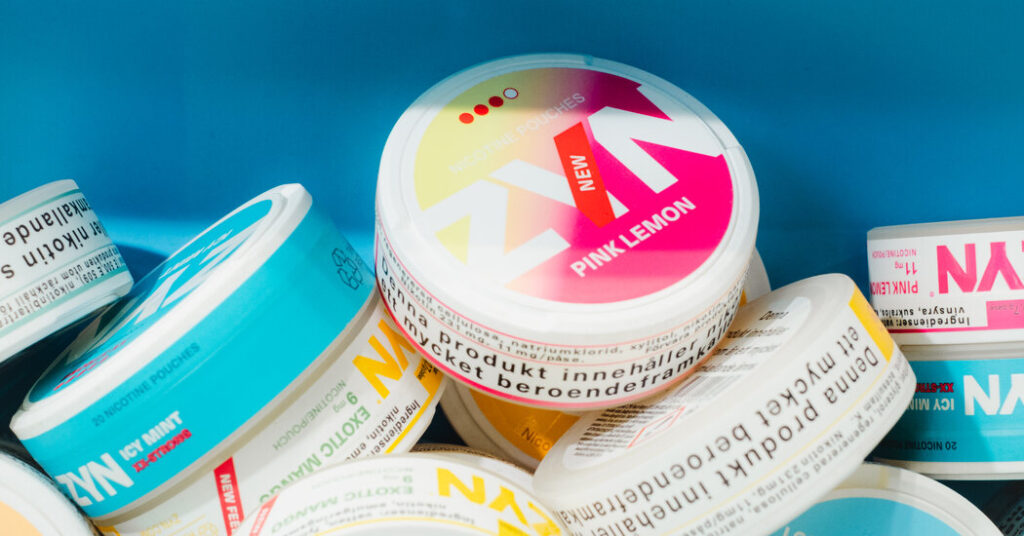
Tucker Carlson, the conservative TV host and vocal MAHA ally who sells his own brand of nicotine pouches, has called the nicotine pouch brand ZYN a “lifesaving” product that can increase productivity and “male vitality.” Mr. Carlson went so far as to say that the pouches are “like the hand of God reaching down and massaging your central nervous system.”
Doctors say many influencers’ claims exaggerate the evidence around nicotine’s potential uses, and warn that it can pose a health risk, especially to young people, who are increasingly using nicotine pouches.
“It’s alarming that people who appear to be very health conscious are allowing themselves to participate in a giant human biology experiment when we know that nicotine is extremely harmful,” said Jeremiah Mock, a health anthropologist at the University of California, San Francisco, who has studied nicotine and tobacco products.
Not everyone in the MAHA movement believes that nicotine is good for your health, nor are these influencers the first to tout it as a health product. Andrew Huberman, a popular health podcaster, has for years claimed nicotine can make users more alert, for example.
But this latest crop of influencers have put a new spin on the drug, drawing on key components of the MAHA playbook and using rhetoric that resonates with their health-focused followers.
“What the Make America Healthy Again movement is saying is, ‘I am going to question what I’m told,” said Mr. Asprey, who has encouraged his followers to do their own research on and experiment with nicotine, which he calls one of “Mother Nature’s cognitive enhancers.” (Mr. Asprey has invested in the nicotine pouch company Lucy and said he had done brief consulting work for Philip Morris.)
Another common refrain among MAHA supporters is that the medical establishment has made Americans sicker by suppressing information about natural cures and instead pushing prescription medications.
That was the focus of an episode last year of the popular “Culture Apothecary” podcast, titled “Nicotine is NOT the Villain: What Big Pharma Hides from Parents.” Alex Clark, the podcast’s host and a leading figure in the MAHA movement, interviewed a chiropractor and alternative medicine practitioner who suggested that the drug industry had buried information on nicotine’s benefits and claimed that nicotine could treat Covid, cancer and more.
“Everything you’ve ever been told about it has been a lie,” Ms. Clark said, adding that the compound might be “one of the best natural cures we have.” (Ms. Clark told The Times she has not tried nicotine herself, and that she hosted a range of perspectives on her show.)
The broader embrace of nicotine stands to benefit the tobacco industry, which has invested heavily in nicotine products in recent years. U.S. sales of nicotine pouches nearly tripled between January 2023 and December 2024.
Dr. Mock, the U.C.S.F. researcher, said that the “evangelizing” around nicotine as a wellness product has been fortuitous for the tobacco industry, amplifying its argument that nicotine is not the primary cause of disease.
Indeed, some influencers’ claims echo those made by tobacco companies — namely, that pouches are “harm reduction” tools that help people avoid more dangerous products like cigarettes. Health Secretary Robert F. Kennedy Jr., who has been photographed carrying a tin of ZYN, has said that pouches are “probably” the safest way to consume nicotine.
Some smaller nicotine companies have made bolder health claims. One company, Athletic Nicotine, has billed itself as a brand for “high-intensity, health-conscious individuals working to optimize performance on the field, at the gym, or in the office,” for example.
Some wellness influencers promote specific nicotine protocols — such as cutting patches in half — that they say can improve your health without as many risks. But there is no evidence that using nicotine products in this way can improve your health, said Jonathan Foulds, a professor of public health sciences and psychiatry at the Penn State College of Medicine.
Like any stimulant, nicotine can make you slightly more alert, Dr. Foulds said. “It doesn’t make you more intelligent, it doesn’t make you funnier, it doesn’t make you able to write interesting novels, any of those things,” he said. “It makes you able to focus in boring situations and stay with the topic a little bit longer.”
Over time, users can also build up a tolerance to nicotine and become addicted, struggling to concentrate without it, said Adam Leventhal, director of the Institute for Addiction Science at the University of Southern California.
Some influencers cite the work of Dr. Paul Newhouse, director of the Center for Cognitive Medicine at Vanderbilt University, who has led many of the top studies on nicotine and cognition. Dr. Newhouse said that while he has found that a small amount of nicotine can benefit concentration in certain circumstances, such as among some people with mild cognitive impairment, many of the claims around the drug’s benefits misrepresent the research.
Experts said that the data cited by influencers on other claims, including that it could prevent Parkinson’s or Alzheimer’s disease, is preliminary and far from definitive. And they emphasized that, while much less hazardous than cigarettes, nicotine does carry risks.
“If there really was a health benefit for nicotine, then the medical community would be recommending it to their patients,” Dr. Leventhal said. “And what’s happening is the opposite.”
The primary concern is that people who have never used nicotine will try these products and become dependent on them. That’s especially troubling in children, since the compound may be harmful to developing brains. Nicotine can also increase blood pressure and heart rate, which could, over time, raise the risk of heart disease; the compound may also harden the walls of arteries in the heart, which can lead to heart attacks. Nicotine can also exacerbate existing heart conditions.
Mark Dohner, a musician and YouTuber, first tried nicotine pouches a few years ago, after hearing Mr. Huberman call it a cognitive enhancer and seeing posts from other influencers claiming small doses could be good for his brain. He bought a can of pouches at a gas station, hoping he would feel “locked in.”
“I was like, maybe this will give me a boost,” he said. And it did — at first. But Mr. Dohner, 32, said he became addicted. Every time he has tried to quit, he has developed intense brain fog.
Once, after he tried to go a day without nicotine, the brain fog made it so hard for him to drive that he had to pull over and buy a ZYN. He still uses a pouch as soon as he wakes up most mornings.
Dani Blum is a health reporter for The Times.
The post Influencers Are Spinning Nicotine as a ‘Natural’ Health Hack appeared first on New York Times.