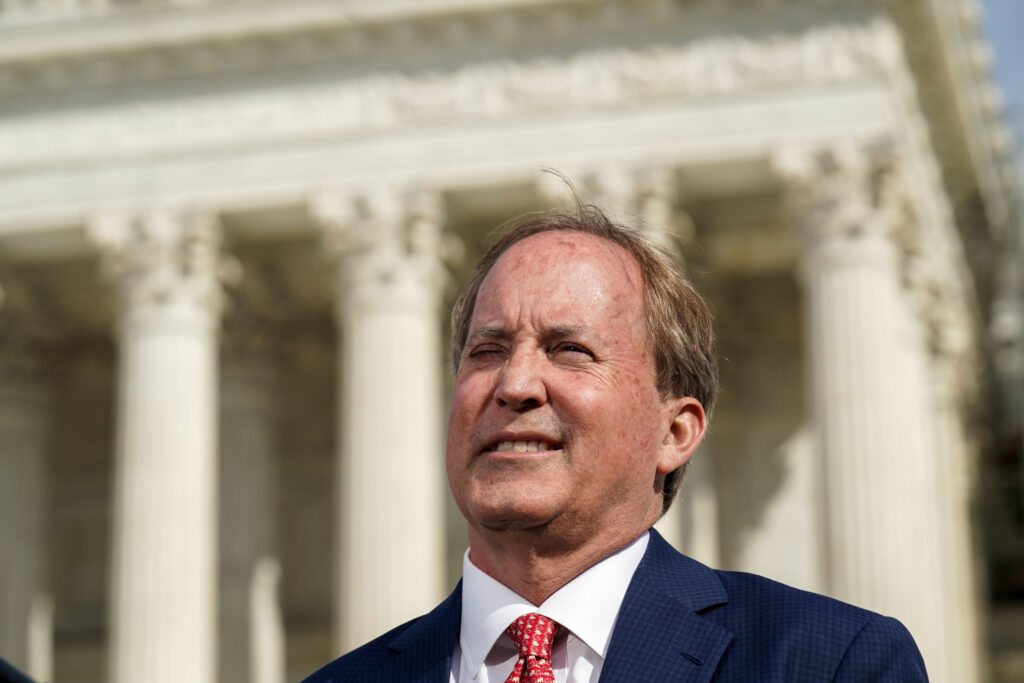
Texas Attorney General Ken Paxton (R) on Monday filed a lawsuit against ActBlue alleging that the Democratic fundraising apparatus misled Congress and the public about its process for vetting donations — ratcheting up pressure on the platform ahead of the midterm elections.
Filed in a Texas state court, the lawsuit is the latest turn in an expansive effort from Republican officials and the Trump administration to investigate Democrats’ core vehicle for small donations.
ActBlue has been under duress since 2023 when House Republicans began inquiring about how it vets donors. They launched a full-fledged investigation, and President Donald Trump directed the Justice Department to probe it as well.
But renewed urgency to look under ActBlue’s hood came this month when the New York Times reported that the platform’s lawyers suggested it potentially misled congressional investigators about how it filters out foreign donations. Paxton cited that reporting, which ActBlue has denied, in his lawsuit to buoy his accusation that ActBlue accepted fraudulent donations.
Paxton, who is running for the U.S. Senate, trying to unseat Sen. John Cornyn (R) in the primary runoff, said in a statement that he would “work to ensure no illegal campaign donation flies under the radar,” adding that “fair elections are the foundation of our democracy.”
ActBlue spokesperson De’Andra Roberts-LaBoo called Paxton’s lawsuit a “thinly veiled attempt to distract” from his upcoming primary runoff. Paxton is up against incumbent Sen. John Cornyn in a race that Trump has not weighed in on.
“If he and his Republican allies actually cared about donor fraud, they would work to strengthen security standards across the board, including within their own operations, rather than targeting ActBlue,” Roberts-LaBoo said. “Our platform has done more than any other, regardless of party, to prevent improper donations and protect donors.”
The closure or restrictions on ActBlue would be devastating for the Democratic Party and its candidates as they try to regain control of Congress this year and win the White House in 2028. During election cycles, the platform processes hundreds of millions in contributions to Democrats.
Democrats aren’t worried about ActBlue buckling before the midterms, said one Democratic donor adviser, who spoke on the condition of anonymity to discuss sensitive party matters, because other groups could fundraise for the party in a worst-case scenario.
Greg Berlin, managing partner of Mothership Strategies, a Democratic fundraising agency that has worked closely with ActBlue, said the legal actions wouldn’t impact donors’ desire to give their money to the party.
“They know this is a witch hunt,” he said.
Paxton’s office and other Republican state attorneys general previously investigated ActBlue over alleged suspicious donors. The platform began requiring donors using credit cards to submit their CVV codes — a new mandate that Paxton said came as a result of his investigation.
In October 2023, House Republicans, led by Rep. Bryan Steil (Wisconsin), launched their probe into ActBlue’s processes for verifying donor information.
One month after the congressional investigation began, ActBlue wrote a letter to Steil explaining its process for preventing fraudulent donations, including from foreign donors. The steps detailed in the letter included using an external fraud prevention tool, reviewing donations for possible foreign addresses and requiring passport information from donors with no address.
But this month, new reporting suggested ActBlue may not have followed those steps.
A law firm working for ActBlue, Covington & Burling, found that the protocol outlined in its letter was not always carried out, according to the New York Times. The firm told ActBlue about its finding in early 2025.
In a blog post after the story broke, ActBlue said its attorneys raised the concerns about the letter to Congress more than a year after approving it.
Dan Merica contributed to this report.
The post ActBlue, Democratic fundraising engine, faces lawsuit over foreign donations appeared first on Washington Post.