There are perhaps few betrayals as disorienting as when a close friend becomes romantically involved with someone you once loved. It can be even more painful if that friend was someone you confided in as your relationship developed and later fell apart.
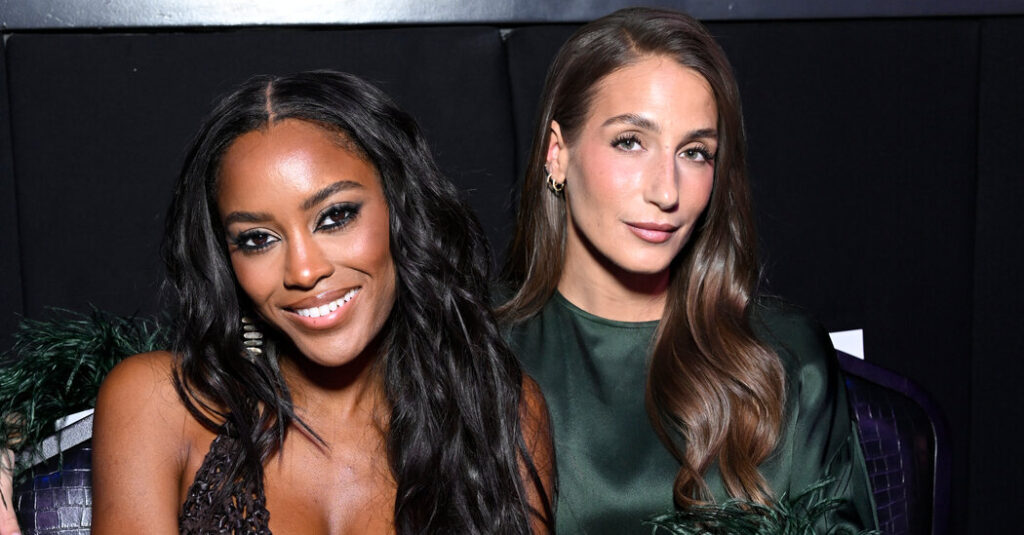
Recently, this type of conflict was put under a microscope in the online discourse surrounding a romance between Amanda Batula and West Wilson, both cast members on the unscripted Bravo series “Summer House.” Mr. Wilson had previously dated Ciara Miller, who is also on the show and was a close friend of Ms. Batula’s. The emotional fallout from Ms. Miller and Mr. Wilson’s breakup unfolded onscreen, and Mr. Wilson drew backlash from castmates and viewers over how he treated her.
Ms. Miller, who is a Black woman, has spoken about the harsh criticism she faced online for dating white men, like Mr. Wilson. She also described other moments in her dating history when she felt the pain of being fetishized or treated as an experience, rather than a person worthy of respect, love and commitment. Her vulnerability resonated with viewers and has continued to circulate online.
Many viewers described the betrayal of a friend dating an ex as a canon event, or an experience that fundamentally changes a character in a book or on a television show.
The recent “Summer House” situation struck a nerve with people who had similar past experiences, like Hailey Lynn Elberg, 24, a singer and actor who lives in New York City. When she came back from summer break for her senior year at a music conservatory, she never imagined her return would include a painful friendship breakup. Her close friend and roommate had become romantically involved with her ex-boyfriend, whom Ms. Elberg had been with for a year, followed by a period of dating on and off. Ms. Elberg shared her friendship breakup tale on TikTok after Ms. Batula and Mr. Wilson confirmed their romance.
“I always trusted her, and I always felt very comfortable with her,” Ms. Elberg said, adding, “We shared everything.”
“It was my first relationship,” she said, “and she was one of the only people I felt like I could really talk about it with and not be judged.”
On top of the pain and confusion of a friend’s involvement with an ex, some people can feel exposed from being vulnerable with both their partners and friends.
“When a friend and an ex start a relationship together, you don’t know if they are sharing intimate information about you that you shared in what you thought was the safety of those relationships,” said Catherine J. Mills, a licensed clinical psychologist and trauma specialist based in Portsmouth, Va.
“When you realize this has been violated, you feel exposed and hurt,” she added.
Ms. Elberg described her own experience as “heartbreaking,” with many layers of trauma.
“I think the worst part is two of the people you loved the most at one point have totally betrayed you,” she said, “and shown you the lack of love and respect they have for you.”
“I just remember for months and months spiraling, thinking, How did I miss it?” she added. “It was so confusing and I just kept thinking, what did I do wrong?”
It’s important to grieve not just the relationship, Dr. Mills said, but also the friendship. She suggested spending quality time with other people who have proved to be trustworthy as you heal.
The conversation has also prompted broader reflections on how race and power dynamics can shape friendships and dating experiences.
For Pallavi Gunalan, 37, a comedian in Los Angeles, the “Summer House” scandal reminded her of patterns she had experienced in her own interracial friendships as an Indian American who grew up in a predominantly white city in Utah. She recalled repeatedly opening up to white friends about her feelings for other people, only to see those same friends pursue her crushes. In one instance, one of her best friends at the time made out with someone Ms. Gunalan liked.
Putting up with it was the hardest part, she said, and upon reflection, she realized it underscored her lack of self-worth.
“There was this presumption that they get first dibs even if I had a crush on someone,” Ms. Gunalan said. “It’s the presumption that they’d be a better match, especially if it were a white man and a white woman involved.”
Moments like these, shaped by unspoken hierarchies, can cause an erosion of trust and can easily make people turn inward and question their own judgment, said Courtney Sherron, a licensed clinical psychologist based in Virginia Beach. Even after the initial fallout, she said, someone may feel reluctant to take the emotional risks needed to form deep, trusting relationships in the future.
“Violation of trust leaves scars that take years to heal,” Dr. Sherron said. “In many cases, people learn to protect themselves by not trusting in the first place. But while that may prevent hurt, it also prevents the kind of emotional closeness people actually need.”
Not every case of a friend dating an ex turns out messy. Sarah Moore, 26, who lives in Bloomington, Ind., became best friends with her husband’s ex-girlfriend after they married. The best friend had dated Ms. Moore’s husband during their freshman and sophomore years of high school, and then Ms. Moore began dating him in their senior year. The couple has been together for 10 years, and they have three children.
The two women “started as Facebook friends, and then I took her maternity photos and we clicked from there,” Ms. Moore said.
Ms. Moore acknowledges that the situation is unique and could easily have unfolded differently.
“It is essential to communicate early on and make sure everyone is on the same page,” Ms. Moore said. “If it was a long-term, love-of-her-life relationship that ruined her life, I don’t think she ever would’ve even wanted to be my friend.”
If there was any sense of lingering romantic interest, Ms. Moore added, then their thriving seven-year friendship wouldn’t have been possible.
“They just were not meant for each other, and that’s OK,” Ms. Moore said. “I do think there is a world where you can be in the same friend group and it not be weird or malicious in any way, and I think we have that.”
The post When a Friend Dates the One You Loved First appeared first on New York Times.