Secretary of Energy Chris Wright said on Sunday that gasoline prices in the United States had probably peaked but acknowledged that they could remain elevated for months, undermining President Trump’s earlier claim that high fuel prices would be “short-term.”
Mr. Wright had said in early March that the average gas price in the United States would fall below $3 a gallon within “weeks” after President Trump and Israel initiated airstrikes against Iran in late February. But on Sunday, Mr. Wright appeared to backtrack in an appearance on the CNN program “State of the Union” after the host, Jake Tapper, asked him when it would be “realistic” for Americans to see $3 per gallon prices at the pump.
“I don’t know,” Mr. Wright said. “That could happen later this year. That might not happen until next year. But prices have likely peaked.”
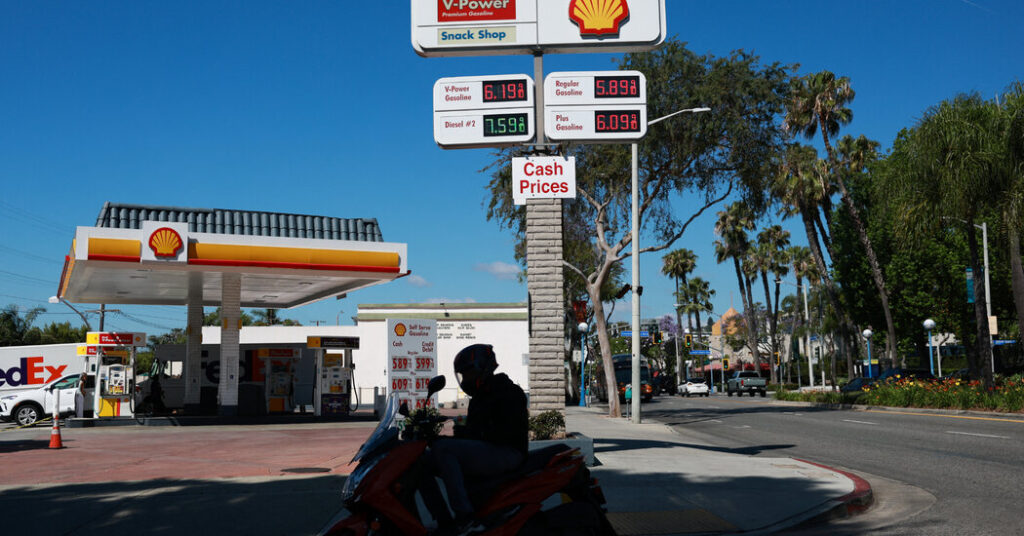
When asked again if he meant that gas prices might not return to prewar levels until 2027, Mr. Wright suggested that such price levels were “pretty tremendous” after accounting for inflation. Before the war began, the average national price for a gallon of regular gas was $2.98. On Sunday, the average price was $4.05 per gallon, according to the AAA motor club.
Iran has responded to the U.S. and Israeli attacks by disrupting shipping traffic through the Strait of Hormuz, where a significant share of the world’s energy flows. The disruption has pushed up global oil prices and led to sticker shock for U.S. consumers at the gas pump.
That has created a political headache for Mr. Trump, who promised affordable gas prices during his 2024 presidential campaign. Republicans are worried about their chances of keeping their congressional majorities in the upcoming November midterm elections as the war drives up the costs of energy and goods.
Even as gas prices rose, Mr. Trump continued to call the spike at the pump “a short-term increase” until early April. But he later undercut his own claims and said the prices “should be around the same” in November and might be “a little bit higher,” a prediction that Mr. Wright echoed on Sunday.
Mr. Trump and Mr. Wright’s reluctant acknowledgment of persistently high gas prices reflects the realities on the ground. The cease-fire remains unstable, shipping traffic through the strait is far below normal levels and it could still take months for damaged oil production facilities in the region to come back online.
Mr. Wright’s comments still prompted a round of attacks from Democrats, who have spent weeks assailing the administration over gas prices and have placed the issue at the center of their messaging going into the midterms.
“I guess they’re surrendering,” Representative Tom Suozzi, a New York Democrat from a swing district, said in an interview, referring to Mr. Wright’s comments.
Ken Martin, the chairman of the Democratic National Committee, said in a statement that Mr. Trump “might not have to worry about filling up his tank” but that many “Americans literally can’t afford the Trump presidency.”
And Senator Andy Kim, Democrat of New Jersey, wrote on social media that the administration did not “have a plan to lower gas prices or get us out of this mess — and they never have.”
Dan Eberhart, an oil executive and Republican donor, said in a text message that reversing the rise in gas prices would be more complicated than simply reopening the Strait of Hormuz. He pointed to a familiar adage in the energy industry: Oil prices rise like a rocket and fall like a feather.
Minho Kim reports on breaking news for The Times from Washington.
The post Energy Secretary Says Gas Prices May Stay Above $3 Until 2027 appeared first on New York Times.