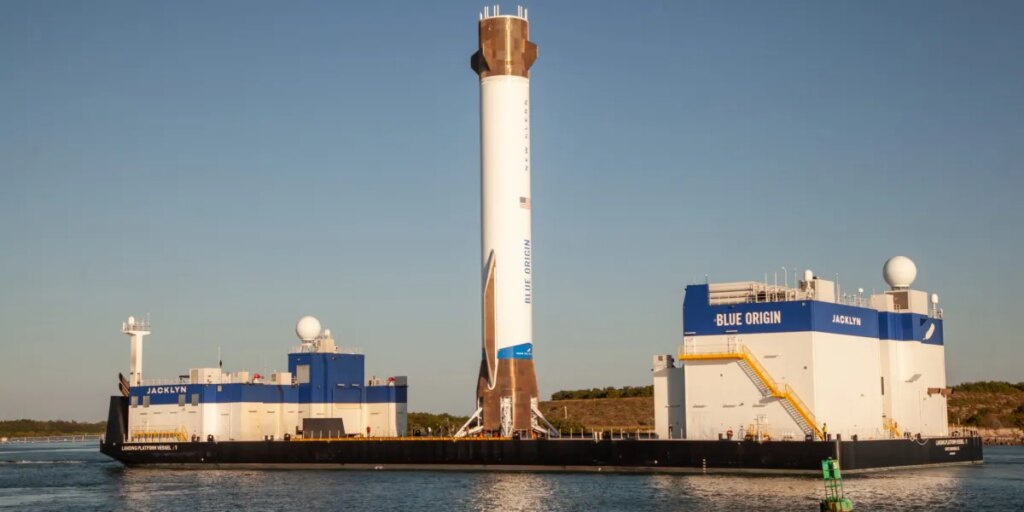
Blue Origin’s flagship New Glenn rocket launched to space on its third flight, reusing a booster for the first time but failing to correctly place the satellite it was carrying into its intended orbit.
The rocket took off from the launchpad at Cape Canaveral, Florida at approximately 7:25 a.m. local time, and its reusable first stage returned to Earth at 7:35 am, touching down on a barge in the Atlantic Ocean.
While the satellite separated from New Glenn’s second stage, it entered an “off-nominal orbit,”, or the wrong orbit, Blue Origin said in a post on X. The company is assessing the satellite, which has powered on, and says it will provide more information.
Key to Blue Origin’s ambitious plans for space exploration, New Glenn is years behind schedule and has faced longer-than-expected waiting periods between its flights. The unexpected issue today could mark a setback for the company’s ambitious plans for space exploration and its reputation as an alternative launch provider to SpaceX’s Falcon 9.
New Glenn was carrying a satellite built by AST SpaceMobile Inc., a Texas-based company building out a network to deliver connectivity directly to mobile phones. The satellite launch is the first of the year for AST SpaceMobile, which started 2026 with only seven satellites in orbit. The company said in March that it intends to launch as many as 60 satellites this year.
Blue Origin Chief Executive Officer Dave Limp would like to launch eight to 12 flights this year, he said in a Bloomberg Television interview ahead of the launch.
“We have plenty of hardware to do that,” he said, noting the unprecedented demand for launches.
“And by the way I think demand is going up,” he added, citing the growing number of satellite-based internet services and connectivity.
Blue Origin expected six to eight New Glenn launches last year, Limp said around the time of the rocket’s debut in January 2025, but ended the year with only two.
During New Glenn’s second launch in November, the company recovered the rocket’s booster, a necessary step to recycle components for multiple launches. Elon Musk’s SpaceX is the only other company to land a booster vertically after launching it toward orbit.
AST SpaceMobile is aiming to build its network and begin commercial service as it faces growing competition from SpaceX and Amazon.com Inc. to provide space-based connectivity to smartphones and other mobile devices.
On April 14, Amazon agreed to acquiresatellite firm Globalstar Inc. and announced a plan to enter the nascent market.
Blue Origin has unveiled a series of initiatives to expand its business beyond launch, including plans for an orbital data center and a new satellite network intended to provide connectivity to government and data centers.
The company also announced in January that it would pause space tourism flights on its New Shepard rocket to focus on developing technology for the moon. Blue Origin and SpaceX both hold contracts with NASA to develop lunar landers and are competing to meet the deadline of the space agency’s planned moon landing mission in 2028.
Blue Origin’s Mark 1 lunar lander has “a very good chance” of landing on the moon later this year, Limp said.
The post Blue Origin launches New Glenn, suffers issue deploying craft appeared first on Fortune.