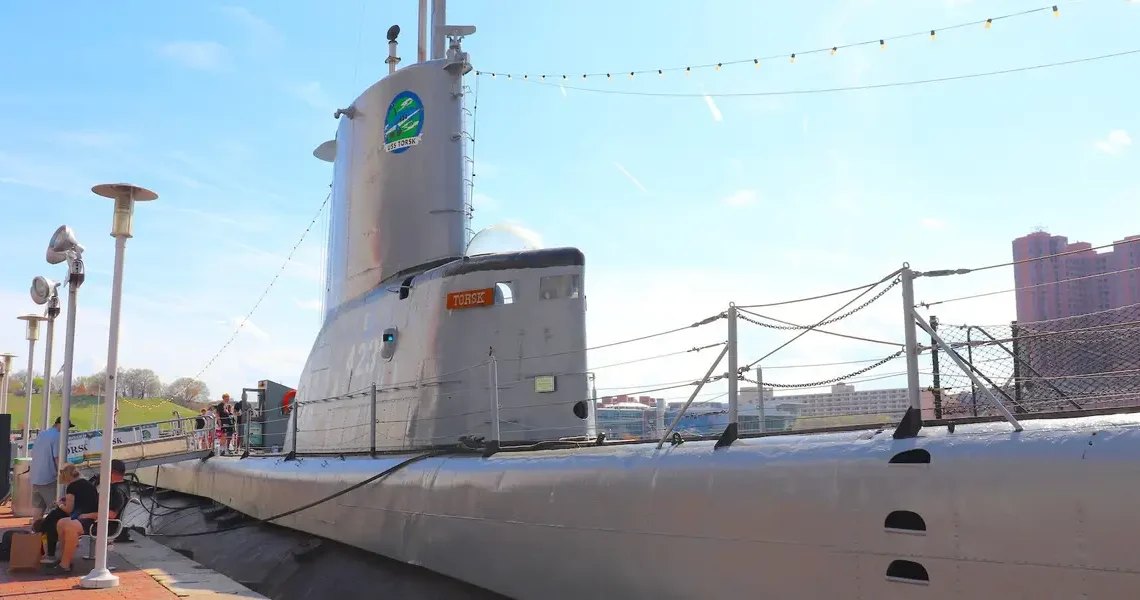
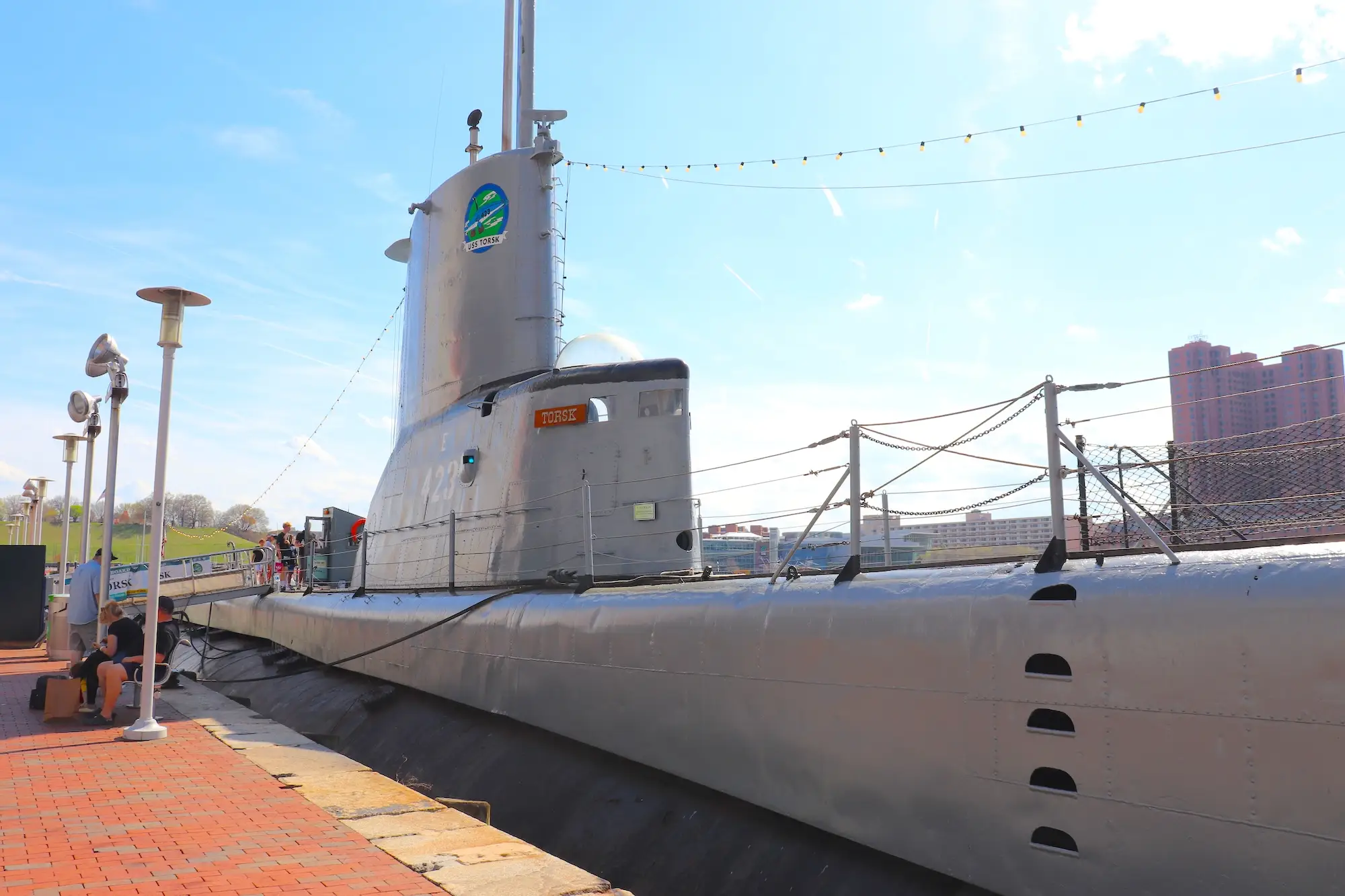
For 81 years, the USS Torsk held its claim to fame as the last US Navy submarine to sink an enemy ship in combat.
Then, a US Navy submarine torpedoed an Iranian warship on March 4 as part of Operation Epic Fury, sinking an enemy ship for the first time since Torsk’s World War II battle in 1945.
Brian Auer, the operations director of Historic Ships in Baltimore, had to update his tour of the submarine, which became a floating museum after it was decommissioned.
“Now we say we sank the last two ships during World War II,” he told Business Insider.
cdn.jwplayer.com
While modern submarine capabilities have advanced far beyond what historic ships like Torsk could sustain thanks to innovations like nuclear power, the vessels themselves don’t look all that different than they did during World War II. Visiting Torsk’s torpedo rooms, control room, and crew berthing areas still provides an unparalleled look into modern submarine warfare.
I visited Torsk in April, where Auer showed me around the submarine and even let me climb up into a restricted area that’s usually closed to the public. Take a look inside.
Commissioned in 1944, the USS Torsk is best known for firing the last torpedoes of World War II, sinking two Japanese frigates in 1945.
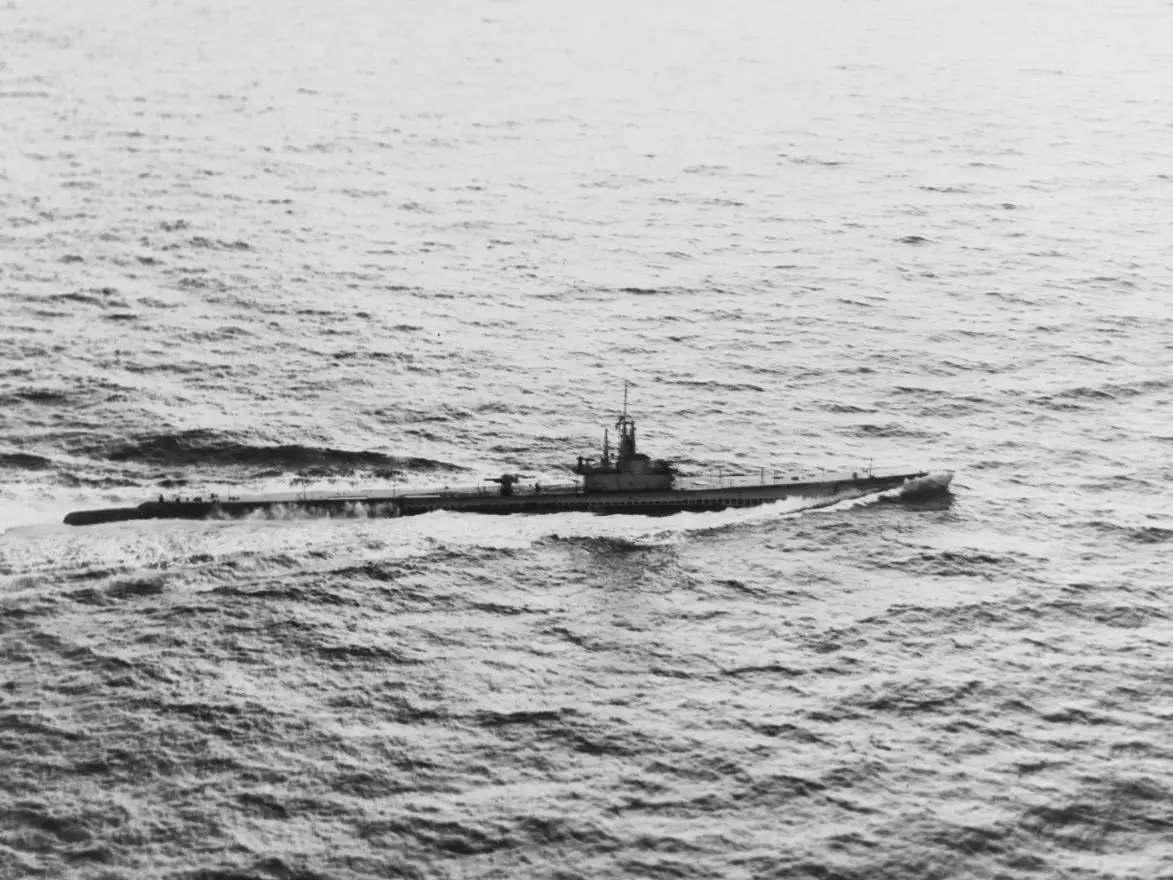
On August 14, 1945, Torsk sank the last two enemy ships of World War II in the Sea of Japan.
After the war, Torsk was updated and converted to a fleet-snorkel submarine and remained in service for several decades, participating in Operation Springboard training exercises in the 1950s and the blockade of Cuba during the Cuban Missile Crisis in 1962.
Torsk was decommissioned in 1968, Auer said. It served in training reserves until 1971, and became a museum in 1972.
Torsk was the last US Navy submarine to sink an enemy ship until this year, when a US submarine torpedoed an Iranian warship.
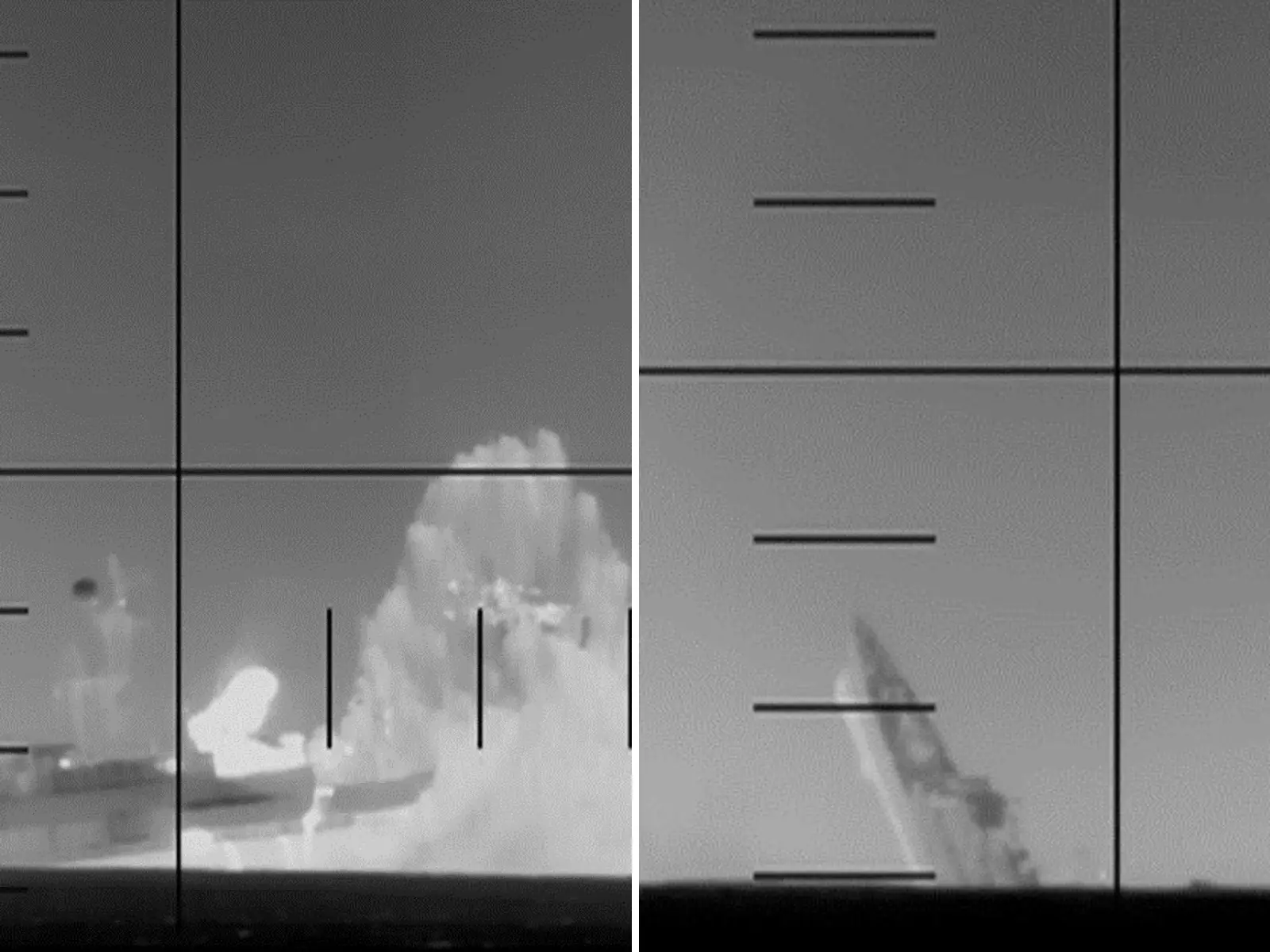
Nearly 81 years after Torsk sank two Japanese frigates, video footage released by the Department of Defense on March 4 showed a US Navy fast-attack submarine firing a Mark 48 heavyweight torpedo at an Iranian warship in the Indian Ocean, sinking the vessel.
Torsk is now a museum ship docked in Baltimore’s Inner Harbor.
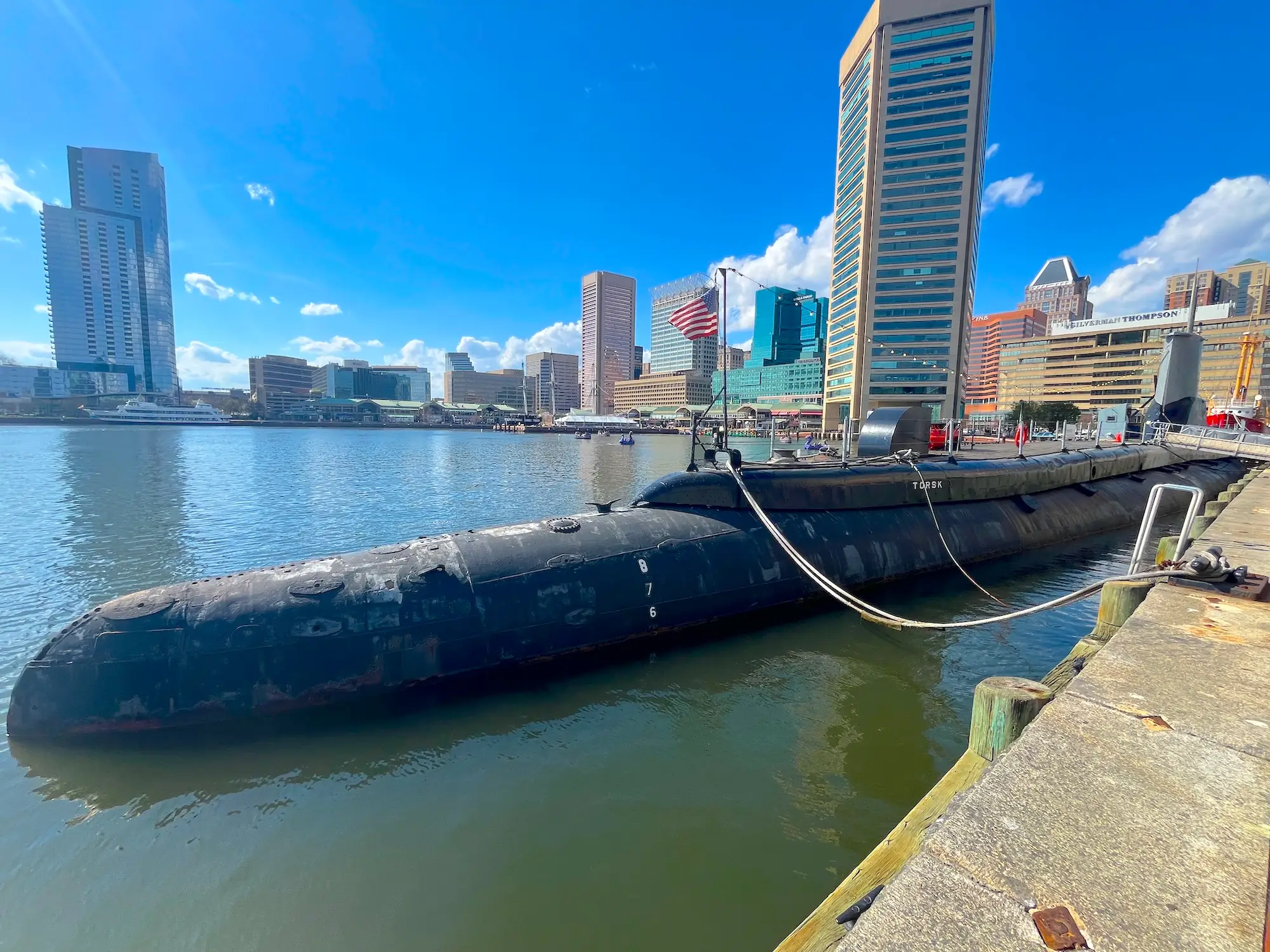
General admission tickets, which cost $21.95 per adult, grant visitors access to Torsk as well as the USS Constellation and US Coast Guard Cutter WHEC-37. All of the vessels are managed by Historic Ships in Baltimore.
Our tour began on Torsk’s wooden deck.
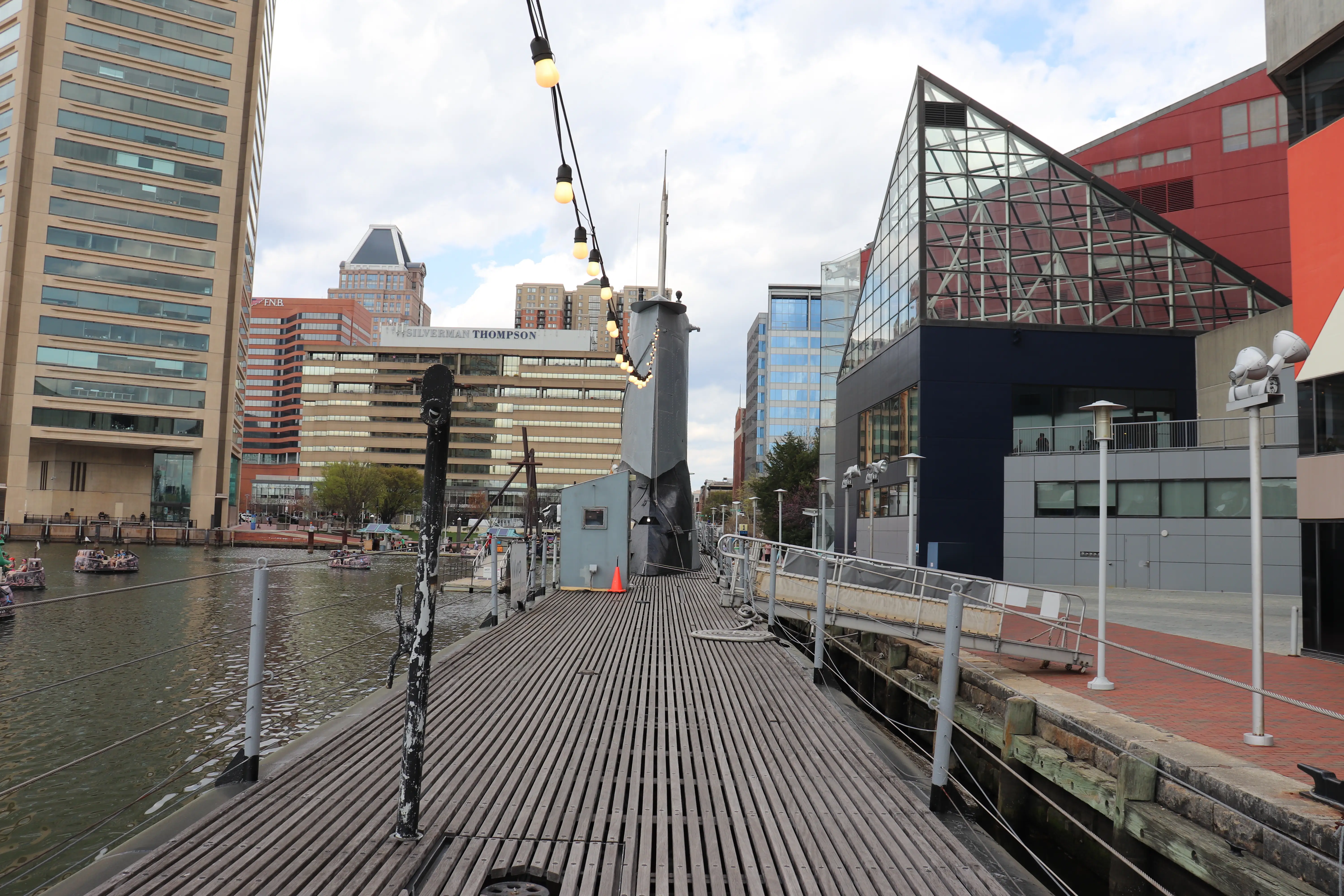
When Torsk was in service, the wood was painted black to help camouflage the submarine at sea.
“One of the biggest dangers in World War II, and today, for submarines is aerial reconnaissance aircraft,” Auer said.
An emergency buoy displayed on deck would have been used to help locate the submarine if it sank.
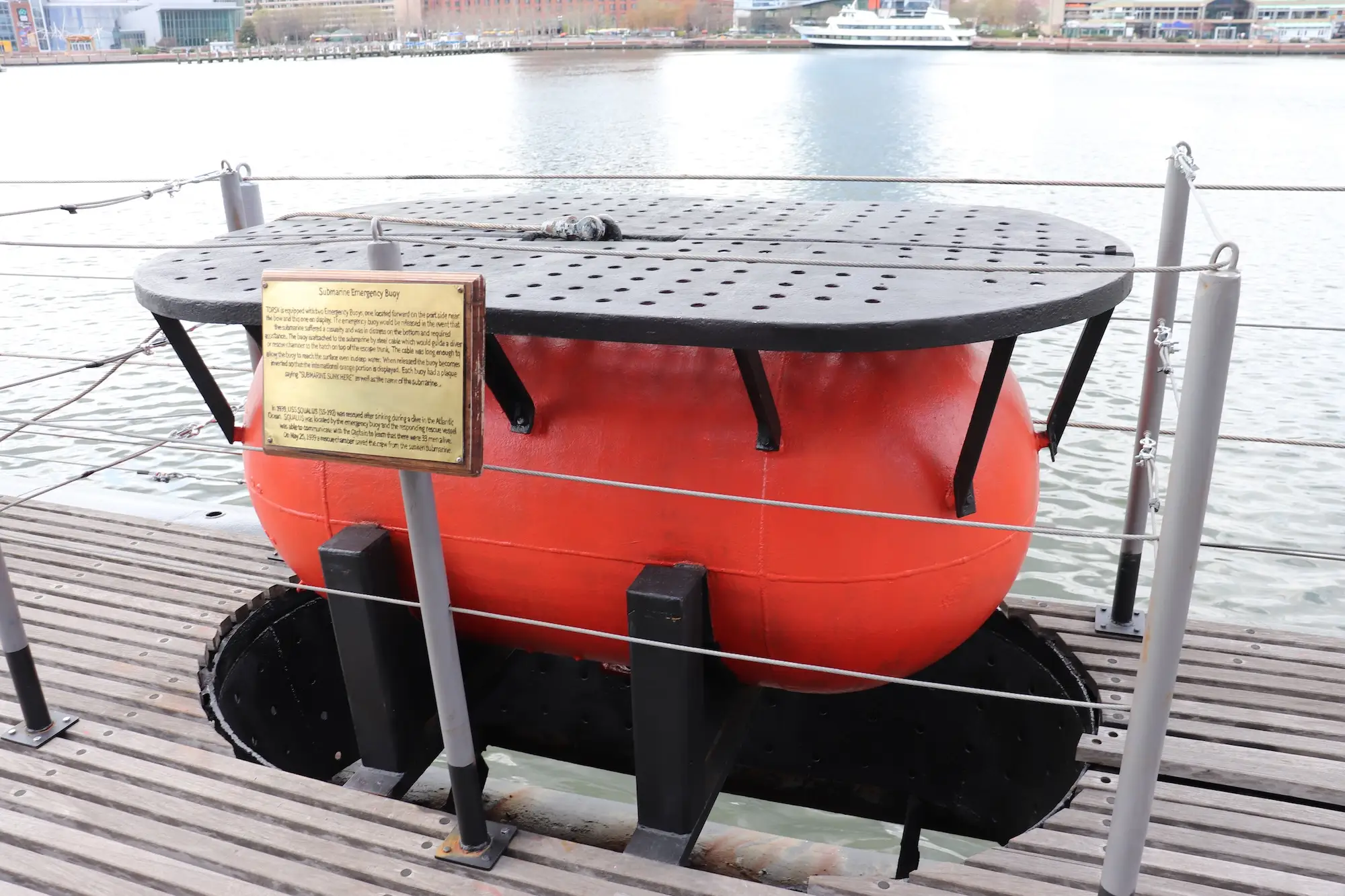
The buoy, attached to the submarine with a steel cable, would have floated to the surface and led rescue divers to Torsk’s escape hatch. While Torsk never needed to use it, 33 crew members on the USS Squalus were rescued with the help of the emergency buoy when the submarine sank in 1939.
The first stop inside the submarine was its after torpedo room, where crew members fired the torpedo that sank the last ship of World War II.
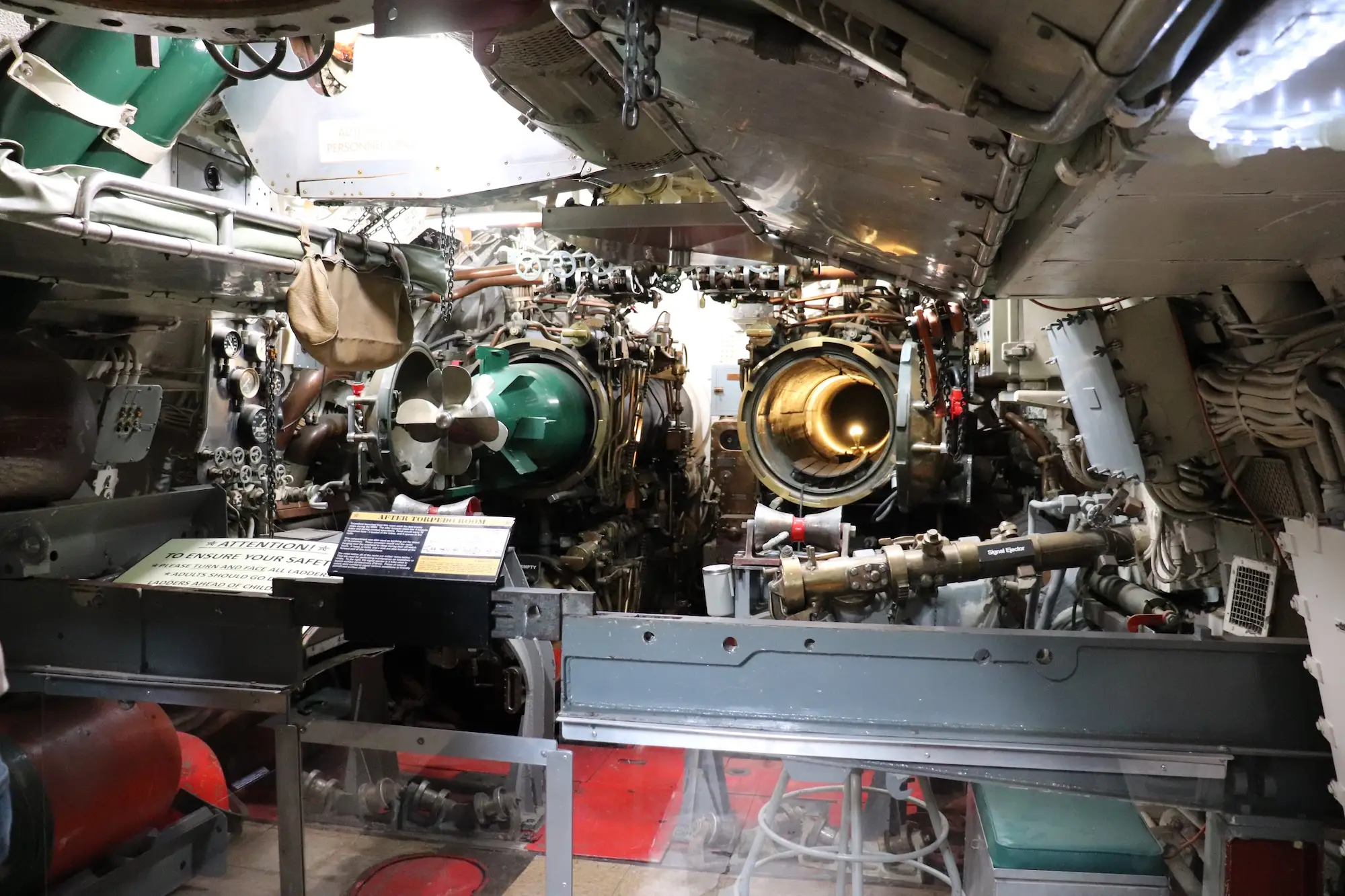
Torsk features a total of 10 torpedo tubes, four in the after torpedo room and six in the forward torpedo room.
Each torpedo room also included 12 to 18 bunks.
Tube No. 7 fired that final Mark 27 acoustic homing torpedo in 1945.
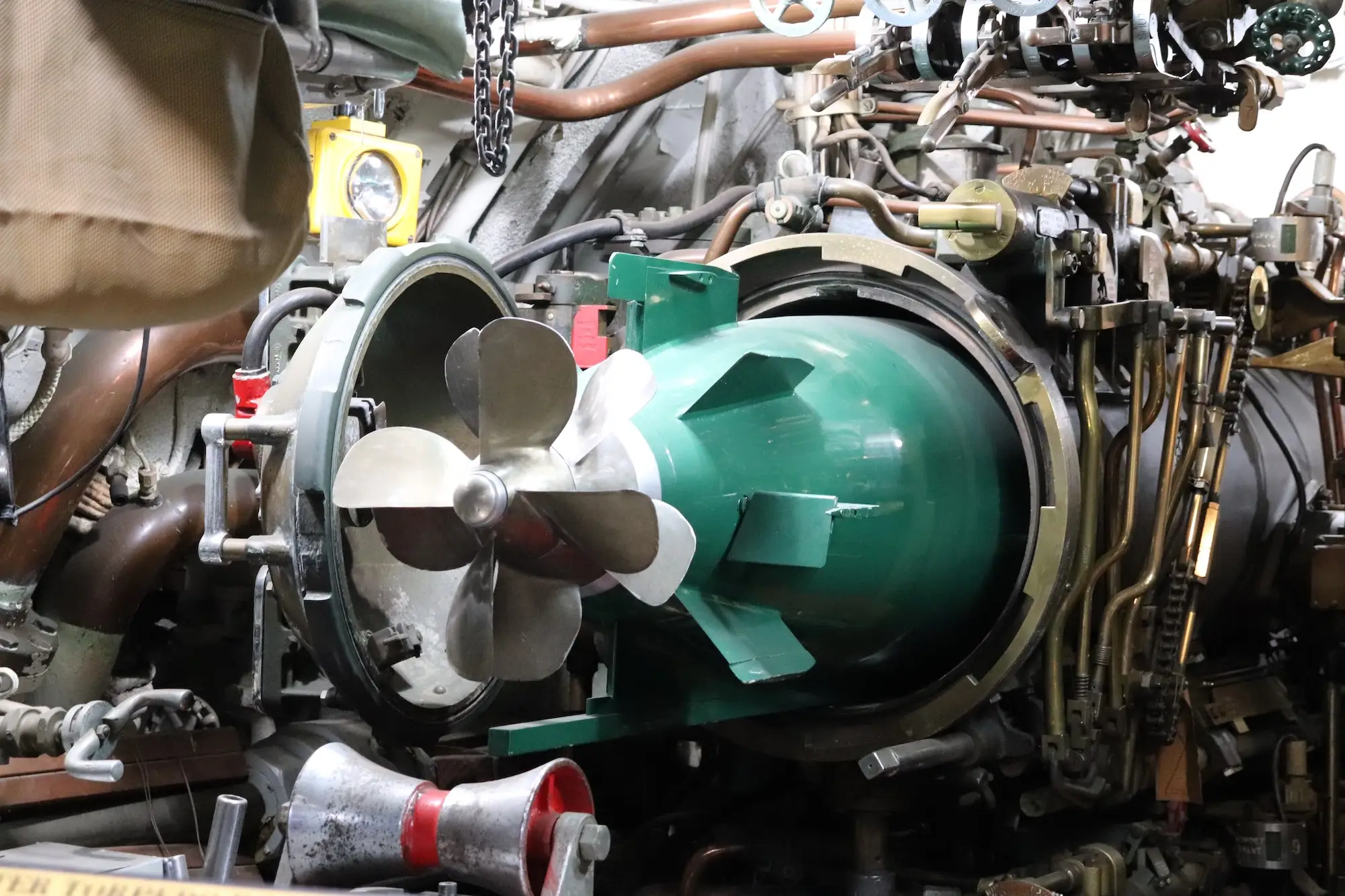
Acoustic torpedoes home in on the sound of enemy ships’ engines and propellers to locate their targets.
Having torpedo rooms in both the front and back of the submarine was key to making a quick escape during combat.
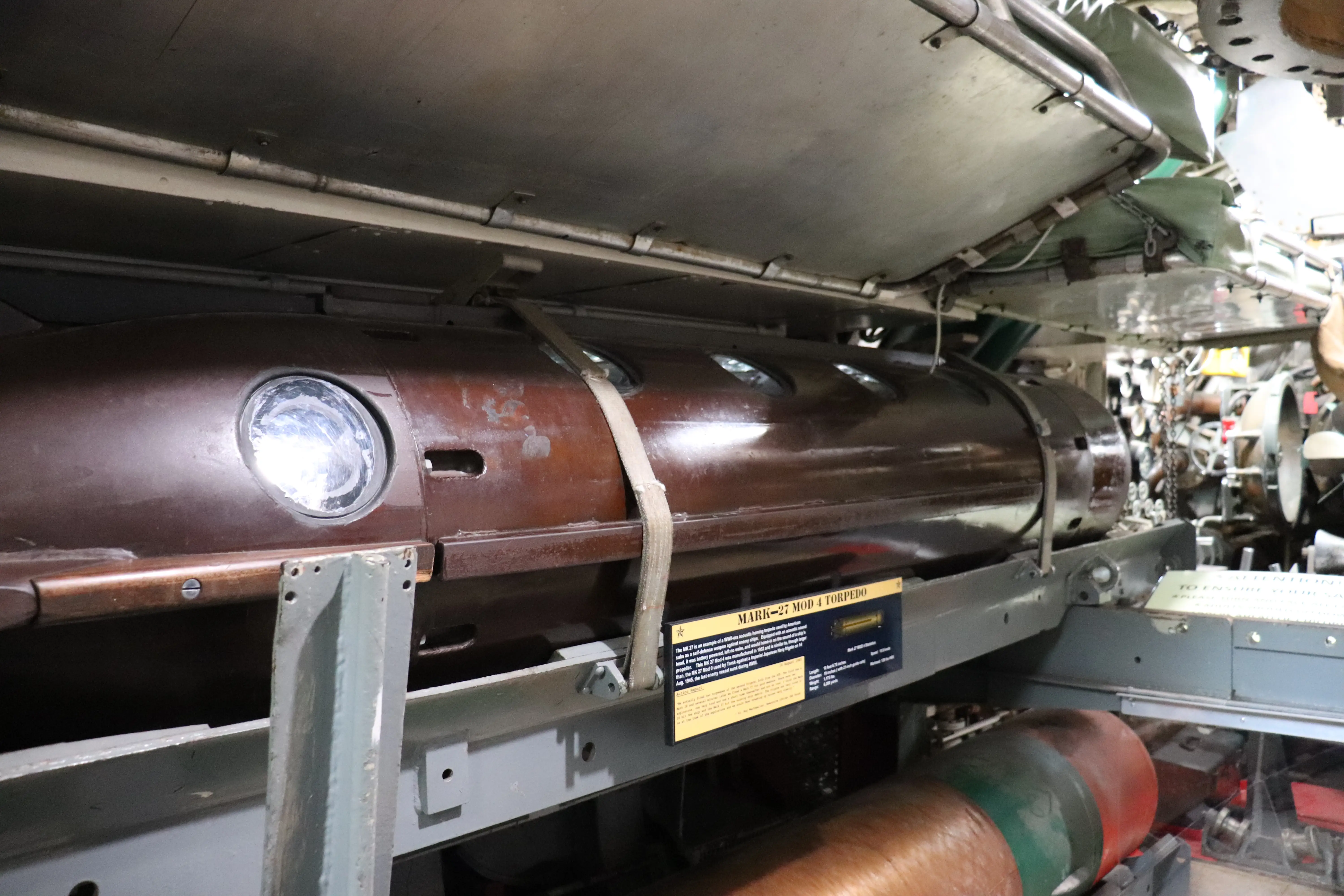
Torsk’s top speed was about 9 knots, or about 10 miles per hour. The ability to fire torpedoes from both directions saved precious time by allowing the submarine to target enemy ships while already facing the direction it needed to flee before its location could be traced.
“These torpedoes — with one shot, I can knock out an entire ship, but we have no armor at all,” Auer said. “We’re completely vulnerable to enemy fire, and our speed is terrible. All we have is firepower. So we make up for that with the ability to hide.”
The submarine’s electricity was distributed across the ship through the maneuvering room.
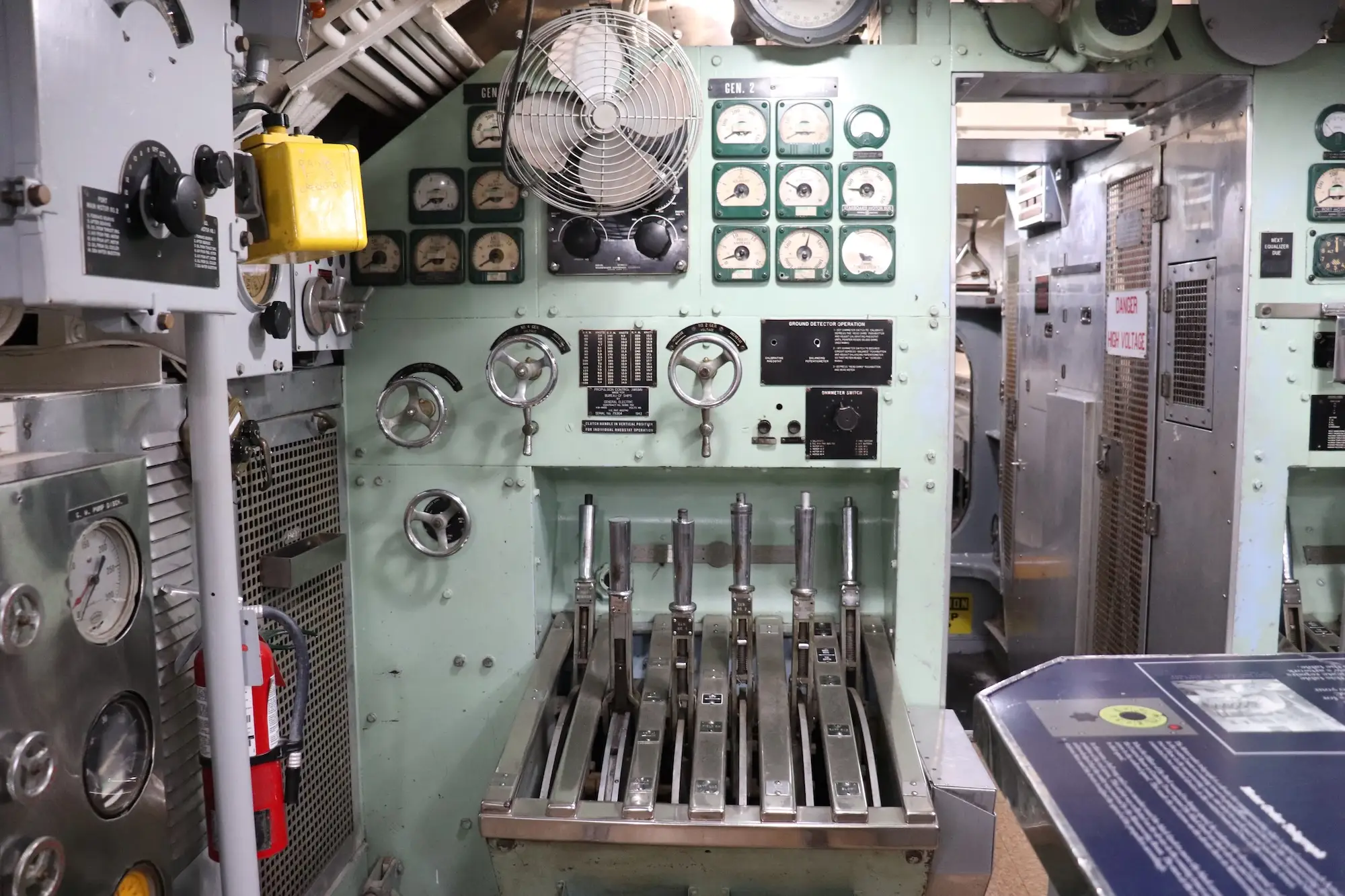
Torsk’s diesel engines generated the ship’s electricity, which crew members directed to various parts of the submarine via levers known as bus switches or “sticks.” Electricity was crucial to Torsk’s operation, powering its motors and charging its batteries.
Auer pointed out a unique addition to the maneuvering room: an aircraft altimeter added as part of Torsk’s snorkel upgrade in the 1950s.
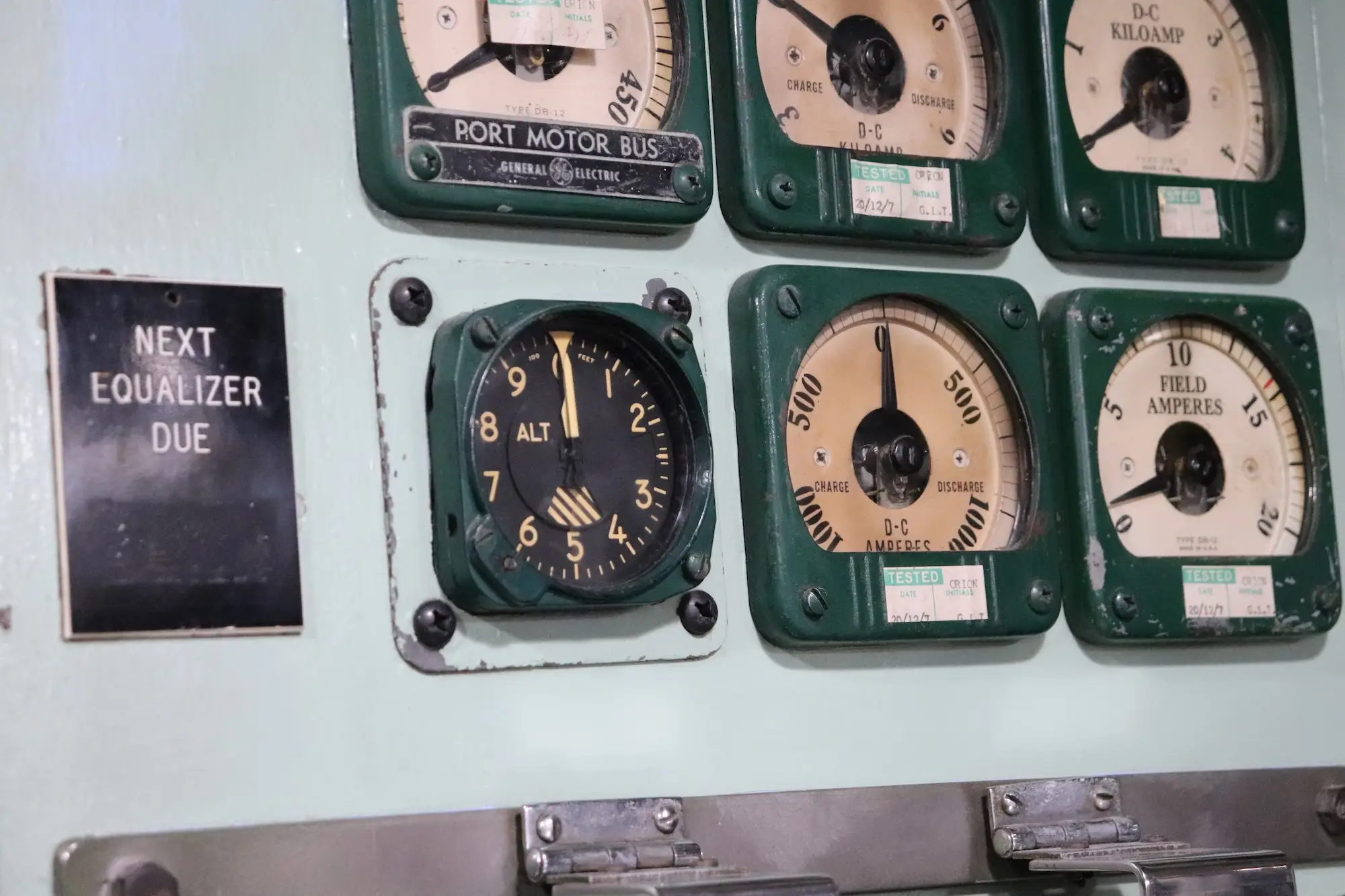
The altimeter monitored the barometric pressure inside the submarine as its engines sucked air out of the compartment while snorkeling.
Torsk featured two engine rooms, each with two Fairbanks-Morse diesel engines.
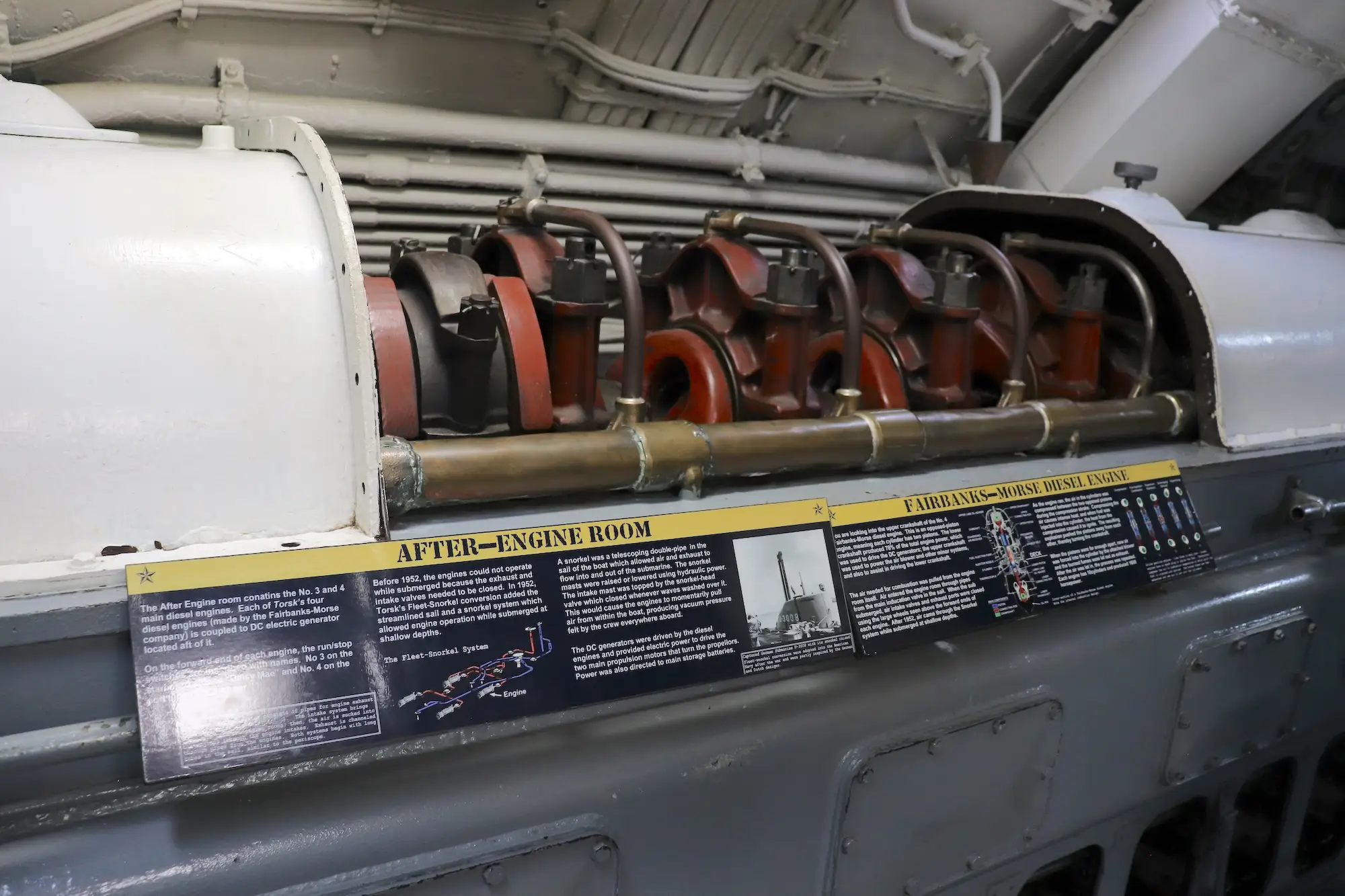
Temperatures in the engine rooms could reach up to 120 degrees Fahrenheit.
The forward engine room was largely identical to the after engine room aside from the Kleinschmidt evaporator, which distilled seawater into freshwater.
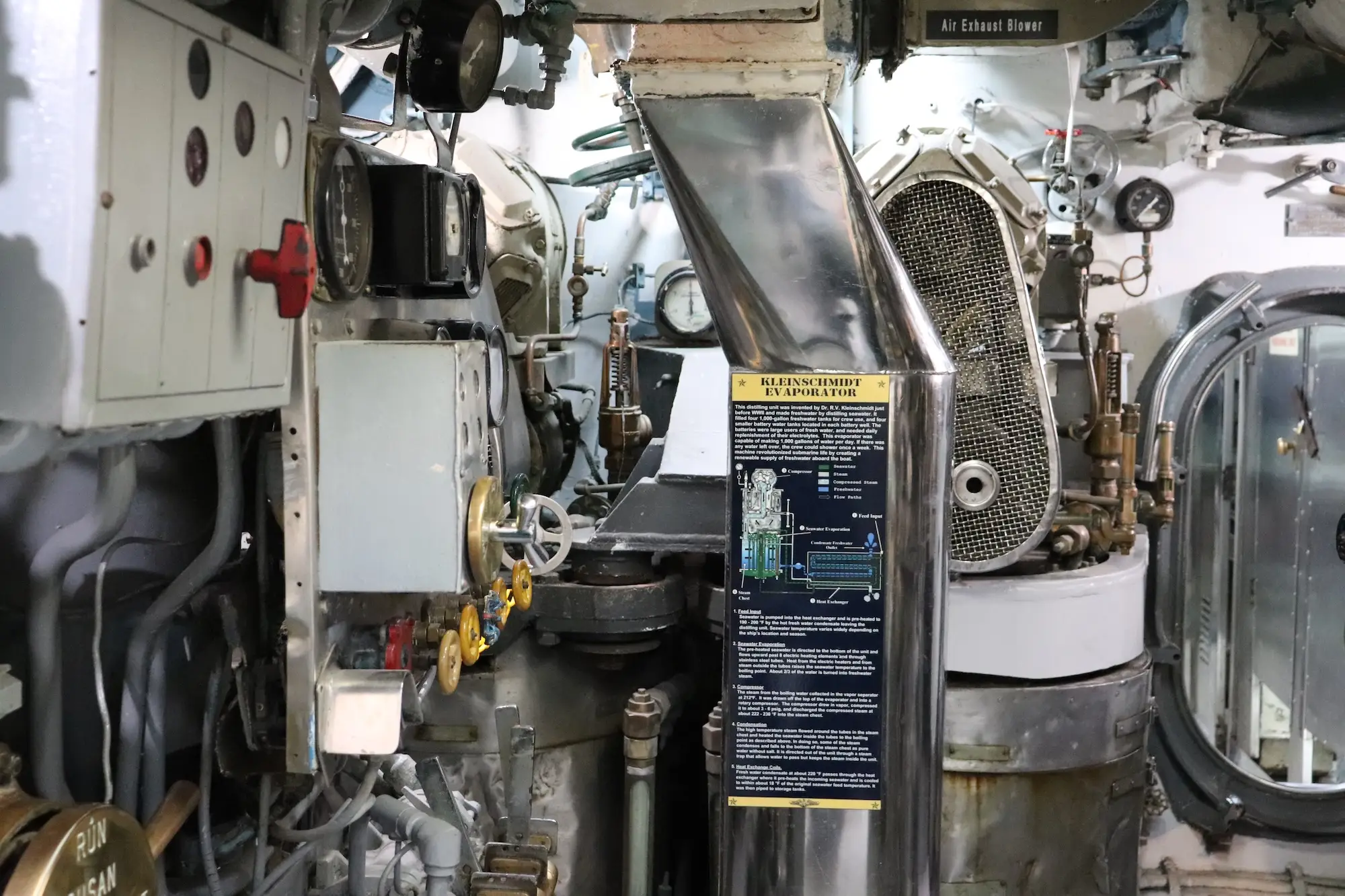
The Kleinschmidt evaporator produced 1,000 gallons of freshwater per day, most of which went to maintaining the submarine’s batteries. Crew members could shower once a week if there was any water left over.
In the crew’s washroom, all of the enlisted crew members shared two toilets, two showers, and two sinks.
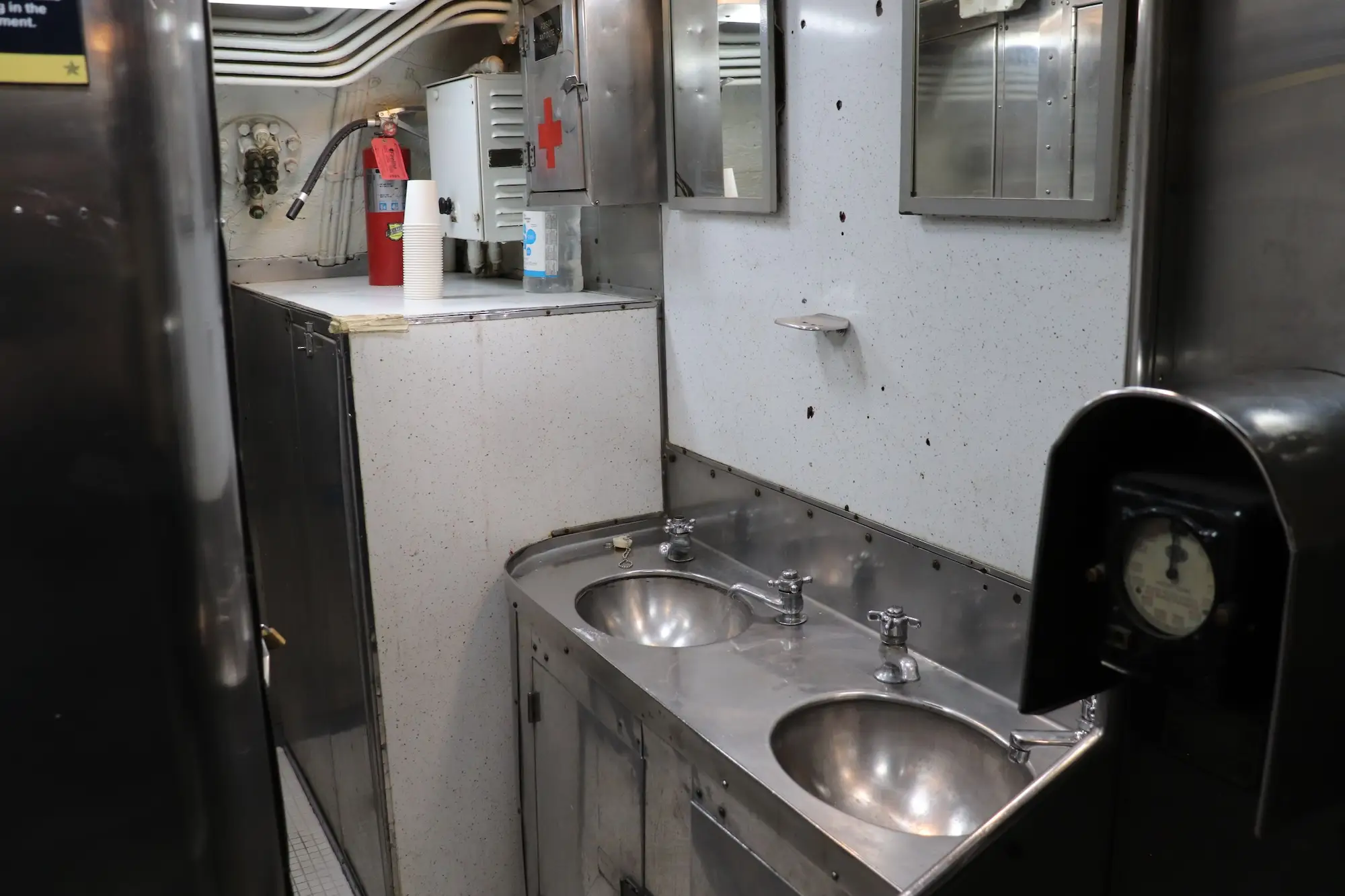
Officers had their own separate washroom.
There were 36 bunks in crew berthing, where sailors slept in tight spaces between shifts.
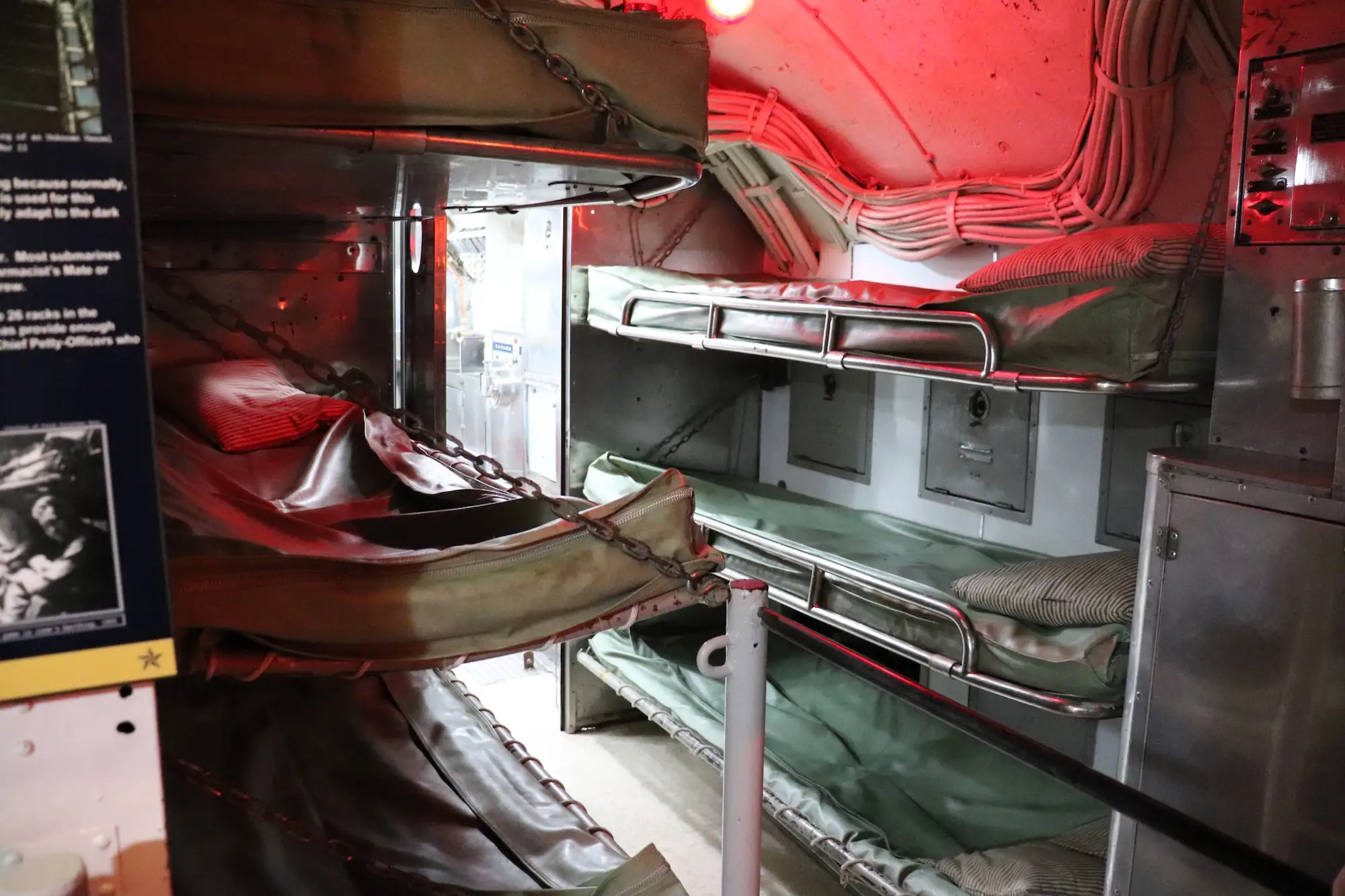
The room was lit with red light to make it easier for sailors’ eyes to adjust to the darkness.
Coffin bunks featured storage beneath the mattress, while those who slept in pipe bunks kept their personal items in storage lockers.
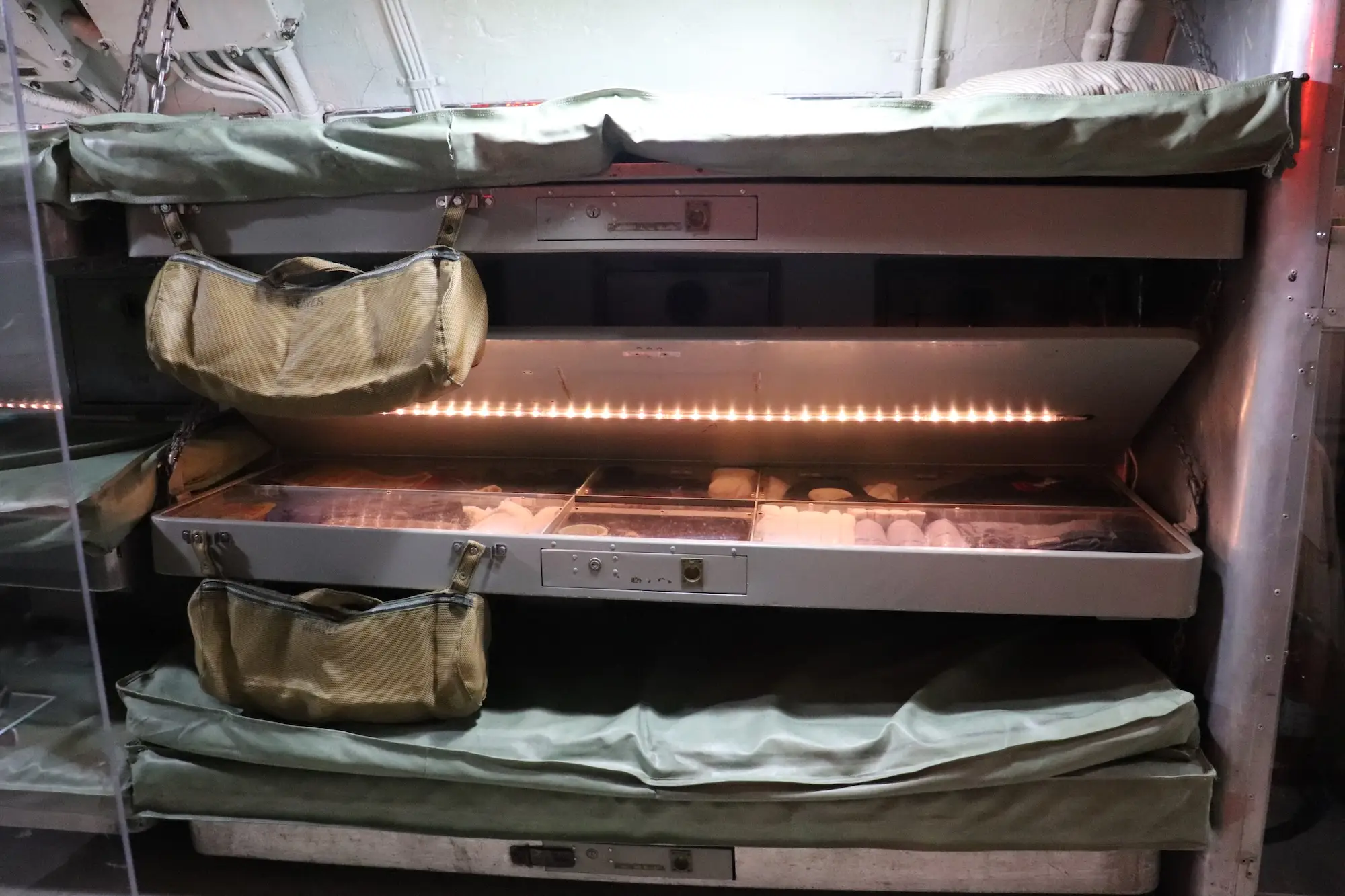
If a sailor’s personal item didn’t fit in the coffin bunk or in the locker, it couldn’t come on board the submarine.
The crew berthing also included an ashtray, a relic of a different time.
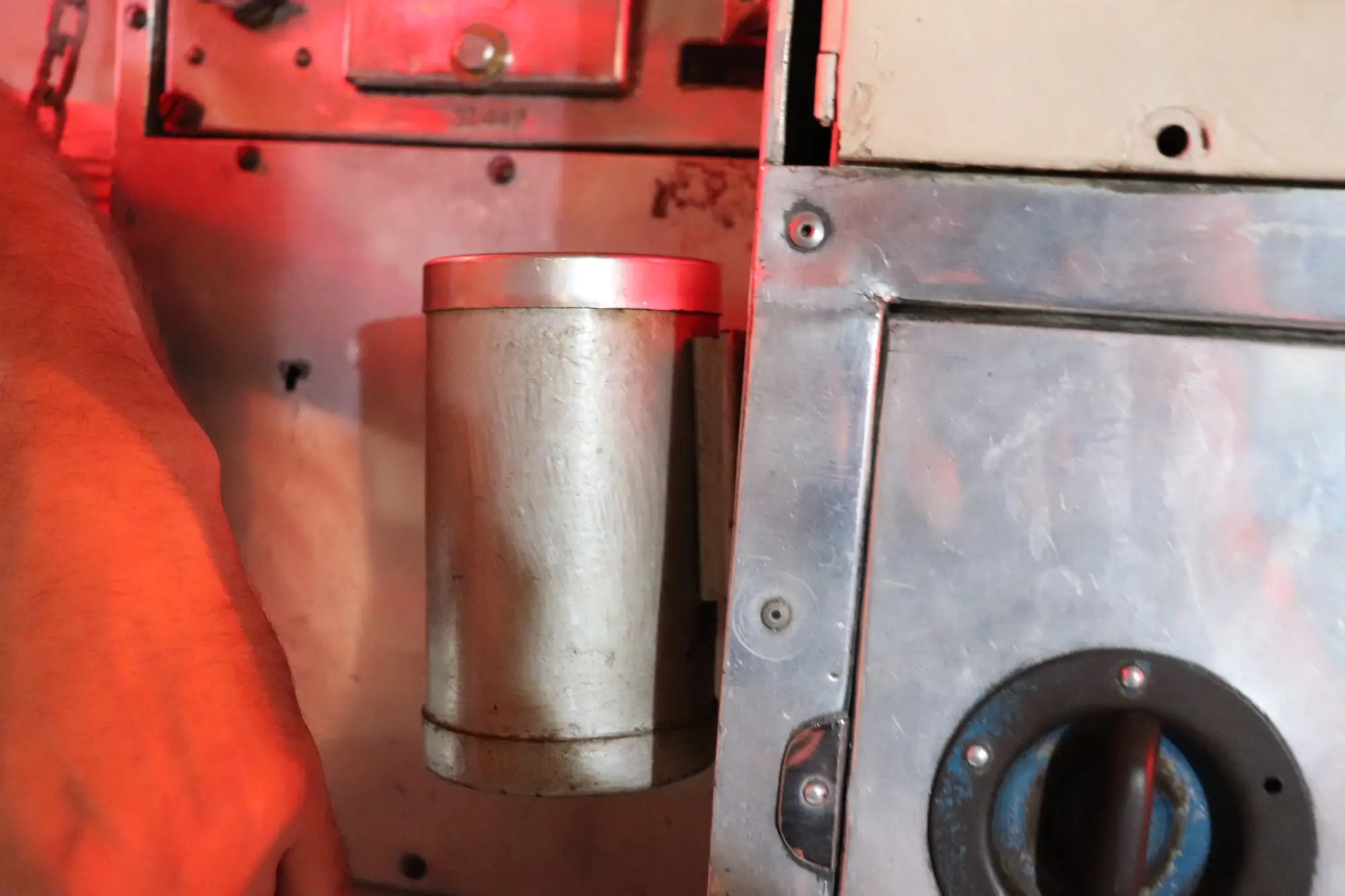
“Smoking was allowed pretty much whenever,” Auer said. “If you were not a smoker on board Torsk, you were a smoker.”
The Navy instituted a ban on smoking below deck on submarines in 2010.
In the crew’s mess, the largest open space on Torsk, sailors ate meals, relaxed, and studied for qualifying exams if they were newer to the service.
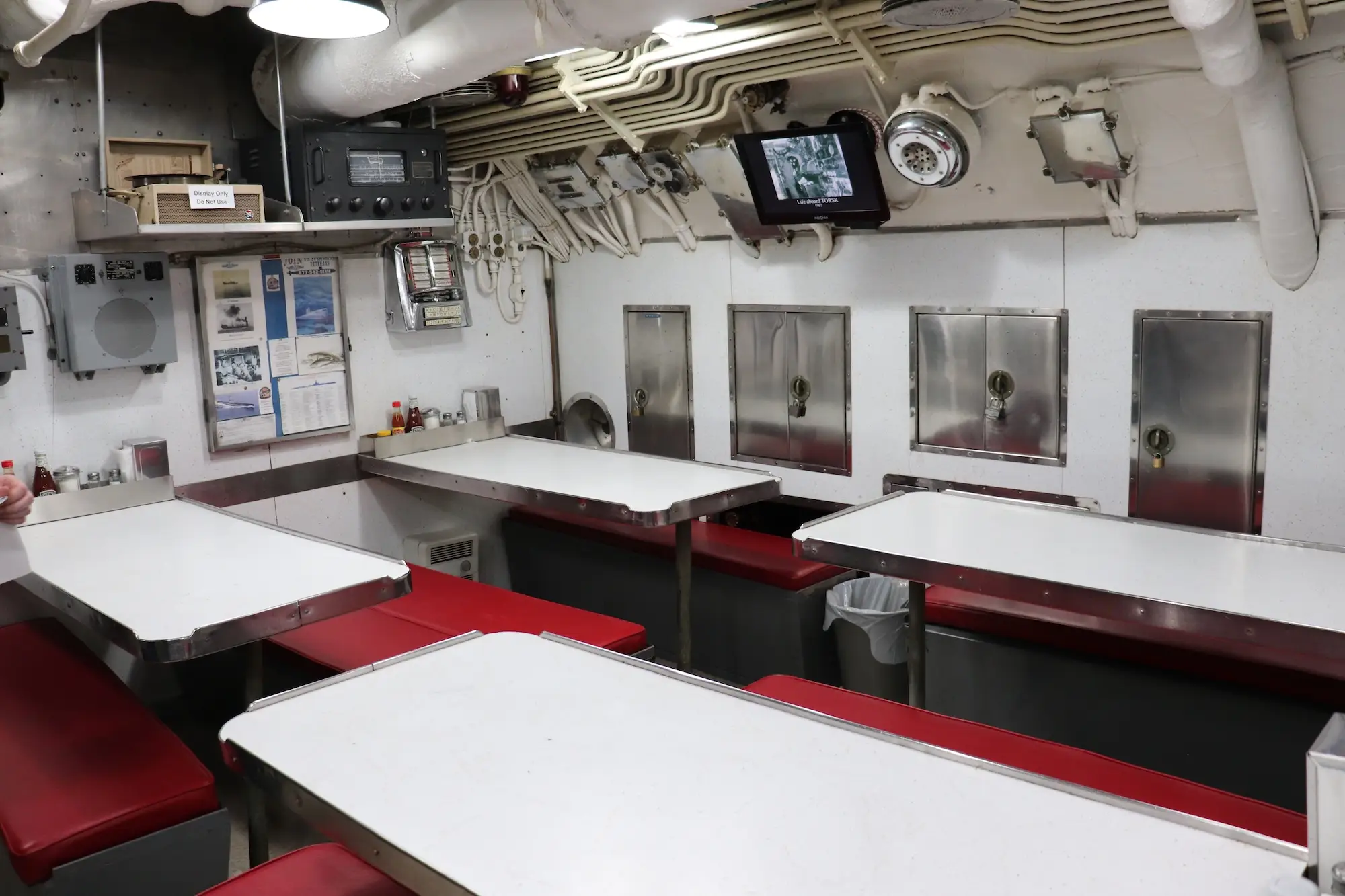
Unlike other Navy ships with cafeteria-style chow lines, food was passed around on platters handed over from the galley and served family-style. Auer said that the back left table was nicknamed “starvation corner” since it was the last one to receive the platters.
For entertainment, crew members watched movies on a projector hanging from the ceiling and listened to records.
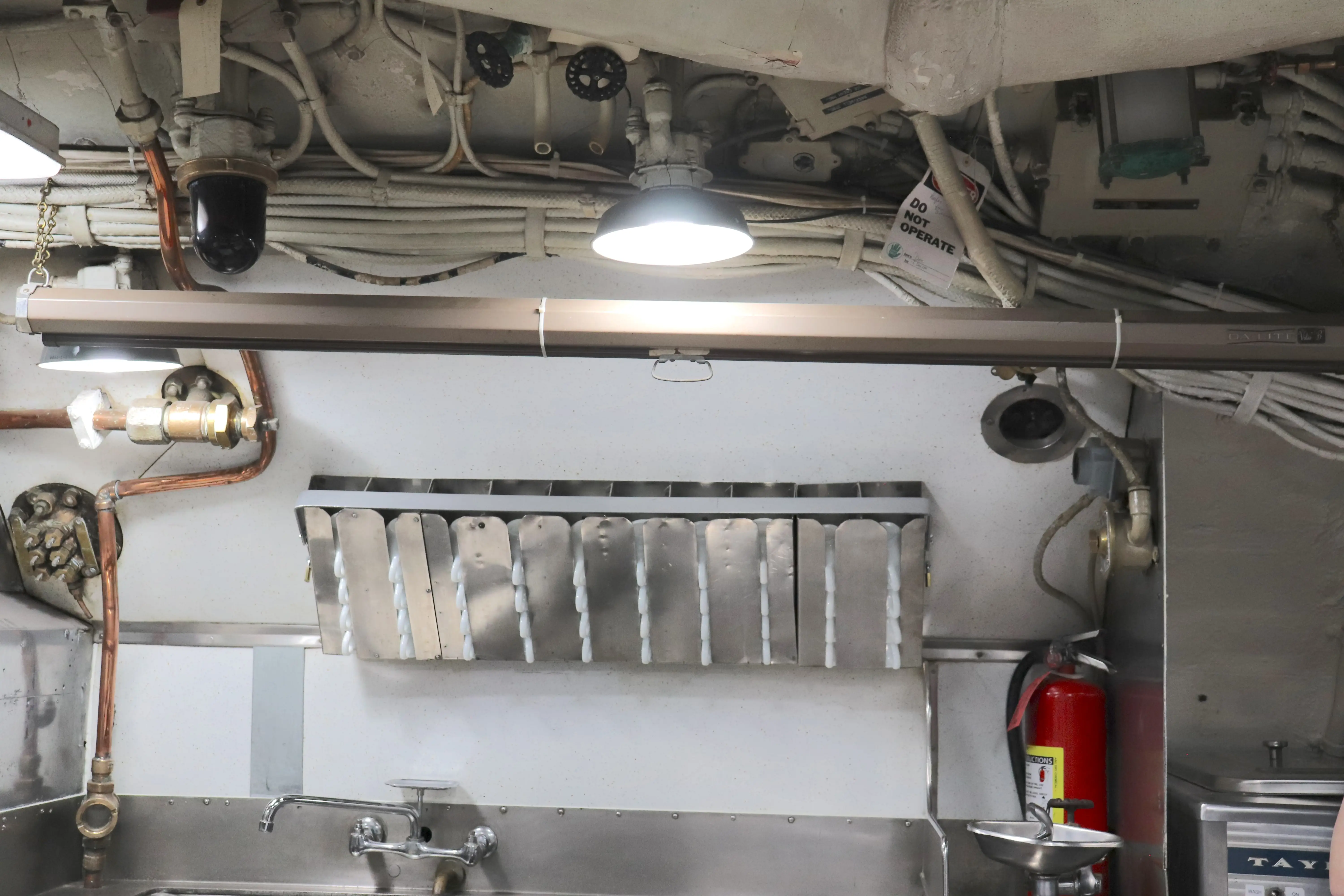
Torsk could only carry two movies at a time since each came on multiple 10-inch film reels. Navy ships occasionally swapped films with each other while out at sea.
Cooks prepared meals in the submarine’s galley. Food was essential to lifting morale during long patrols in cramped, unpleasant conditions.
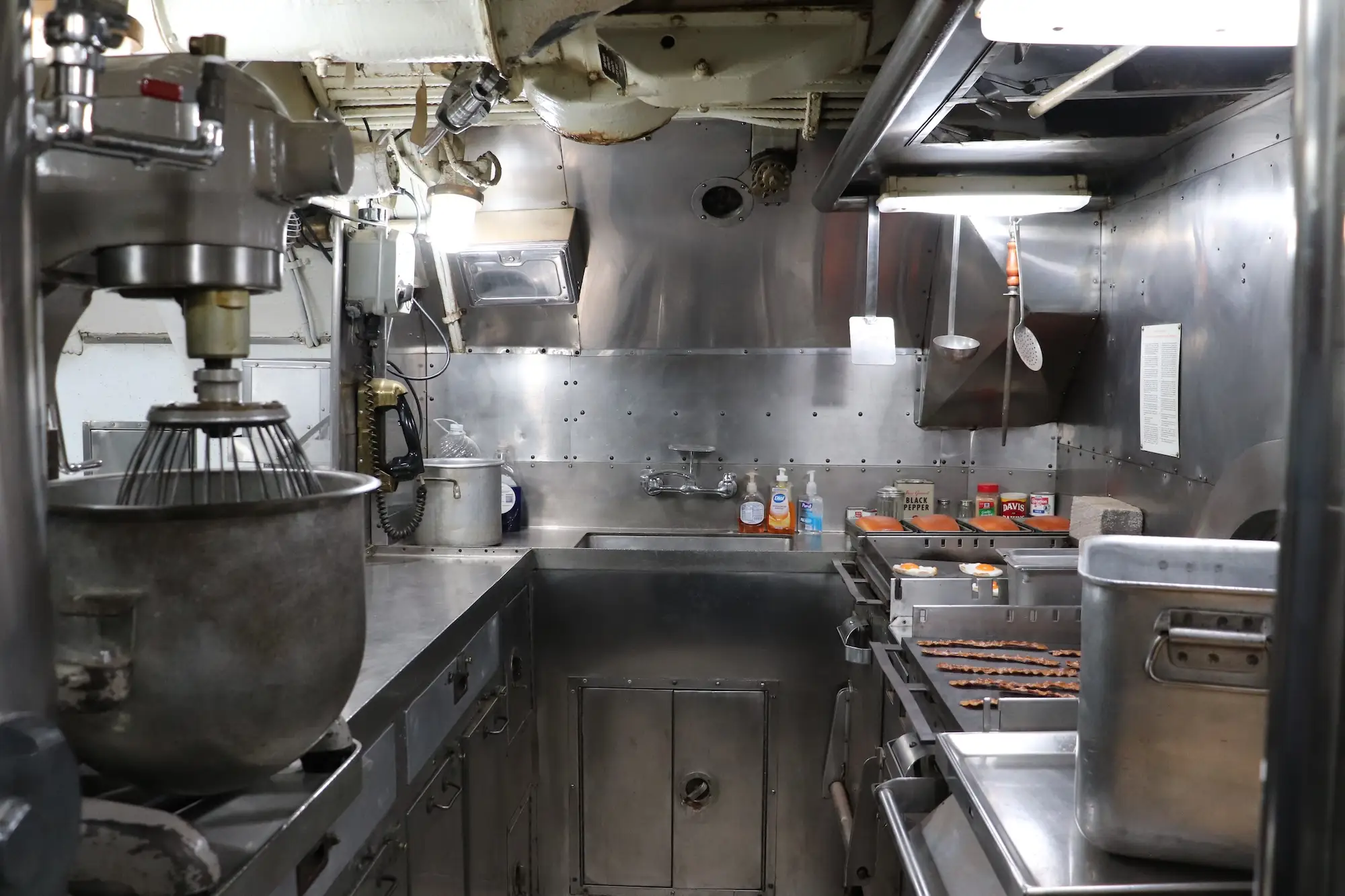
The menu included steak, lobster, and traditional holiday spreads on Thanksgiving and Christmas.
“The food onboard a submarine is the best in the Navy,” Auer said. “Still true today, and that’s not opinion. That’s documentable fact.”
Coffee was available 24/7 from the percolator.
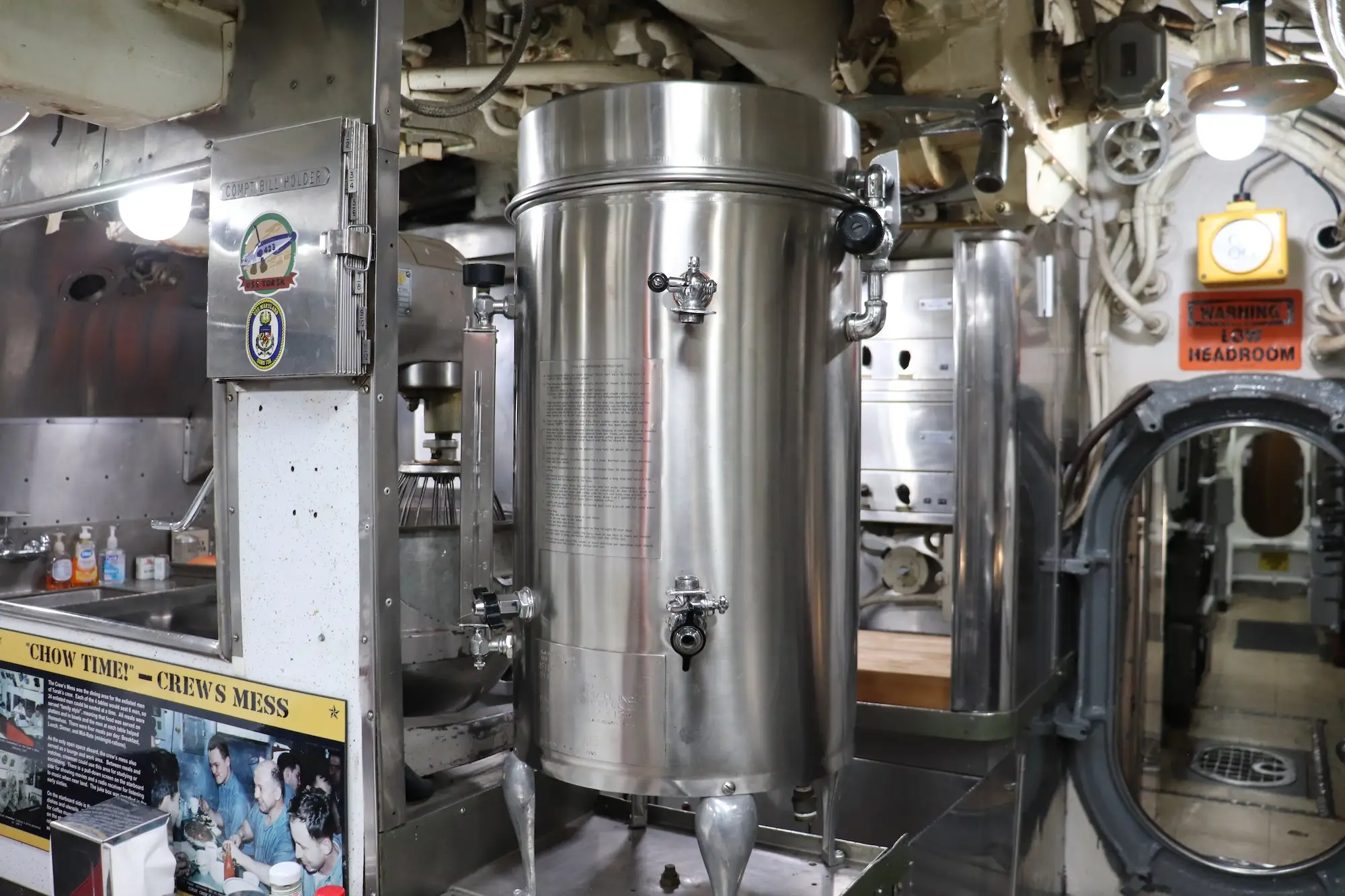
On other Navy ships, coffee was only available at mealtimes. Submariners enjoyed the perk of endless coffee at all hours of the day.
Torsk also featured a soft-serve ice cream machine.
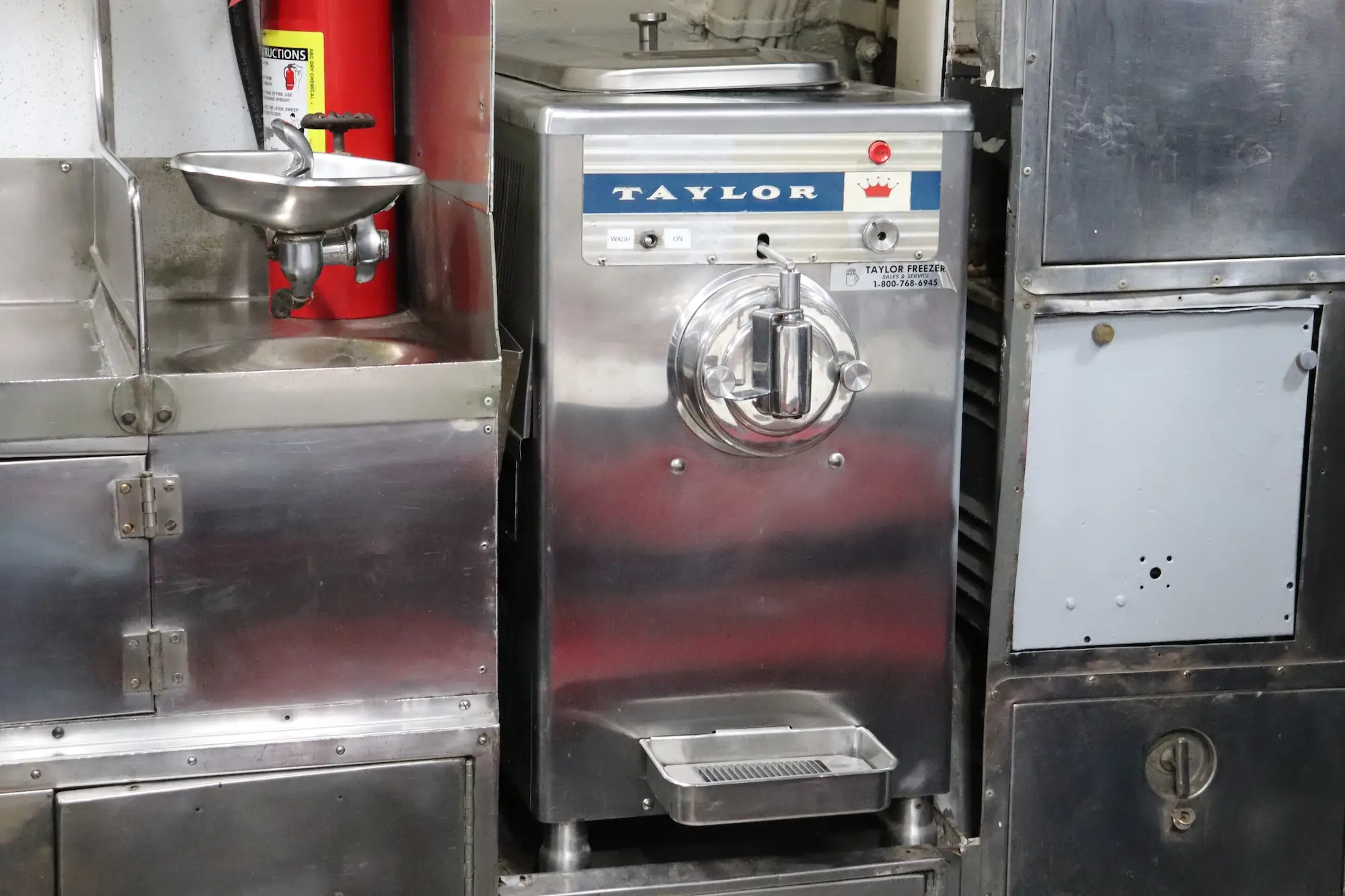
Submarines were equipped with ice cream machines in the 1940s and 1950s, while other Navy ships received them later.
The garbage disposal unit functioned similarly to a torpedo tube, jettisoning waste into the ocean.
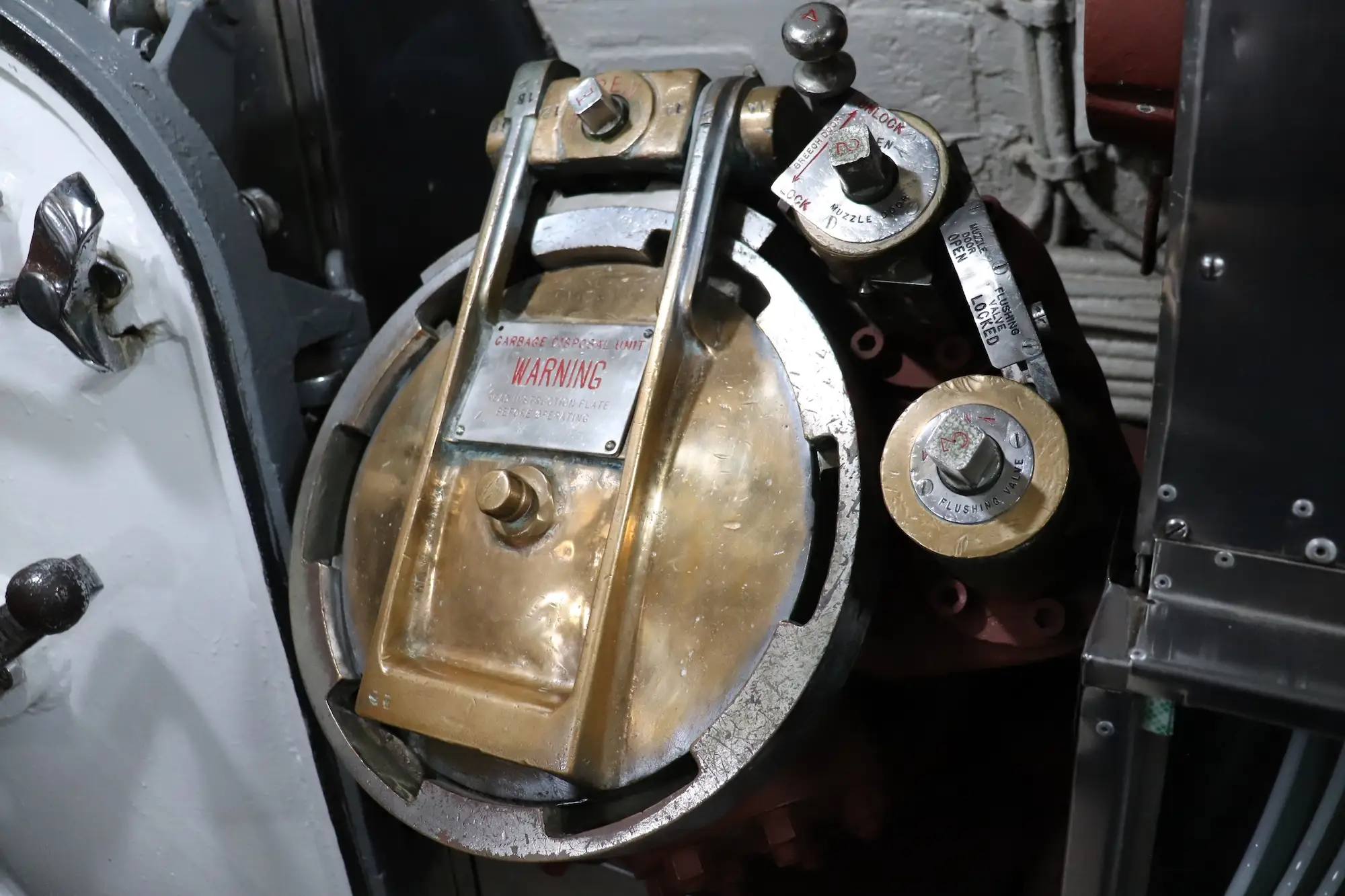
Garbage bags were weighted down so that they wouldn’t float to the surface and expose the submarine’s position.
In Torsk’s radio room, crew members received and transmitted all communications.
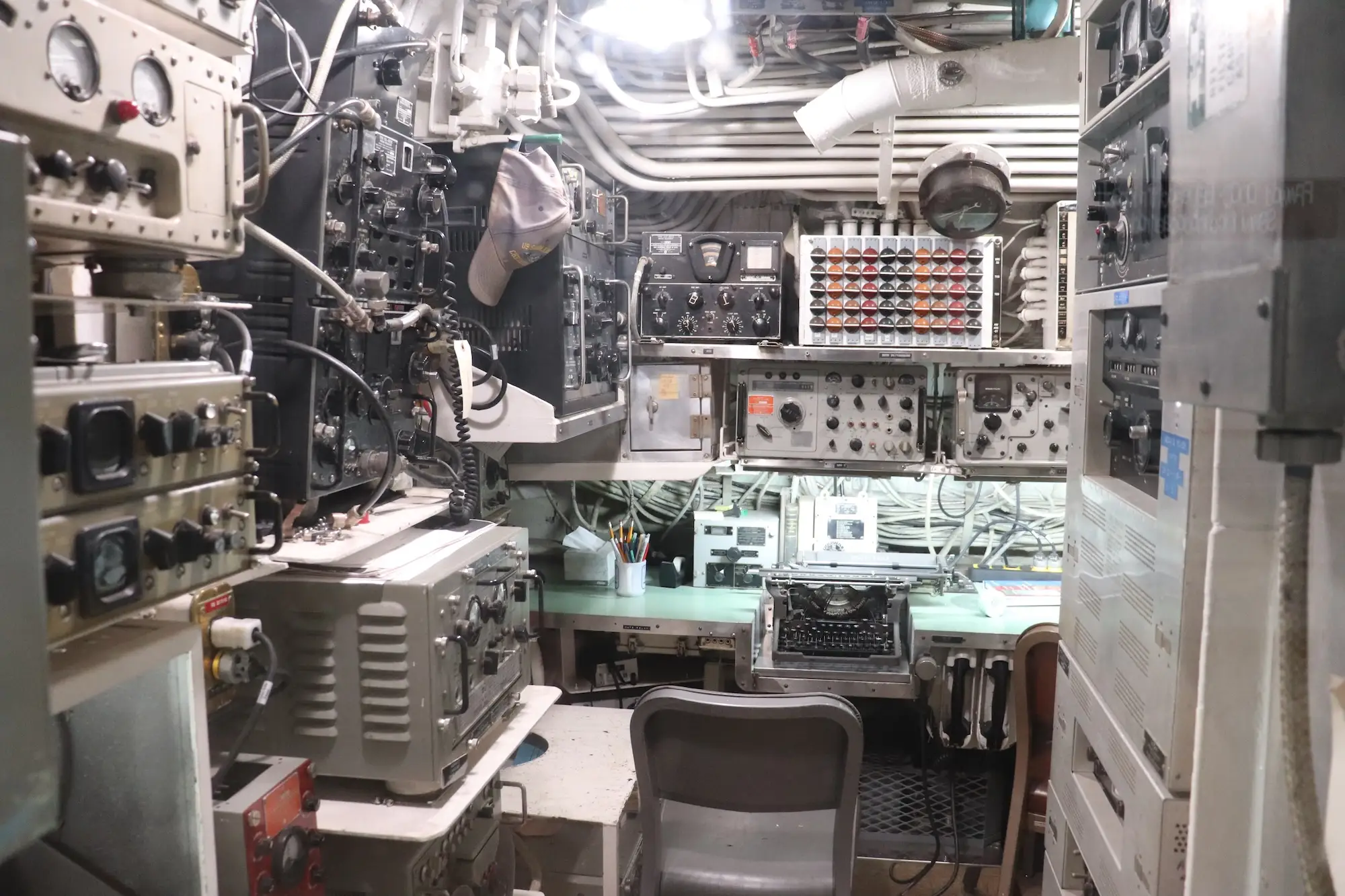
The radio room also featured cryptographic equipment for top-secret messages.
We proceeded into the control room, where crew members could steer the submarine and adjust its depth and angle.
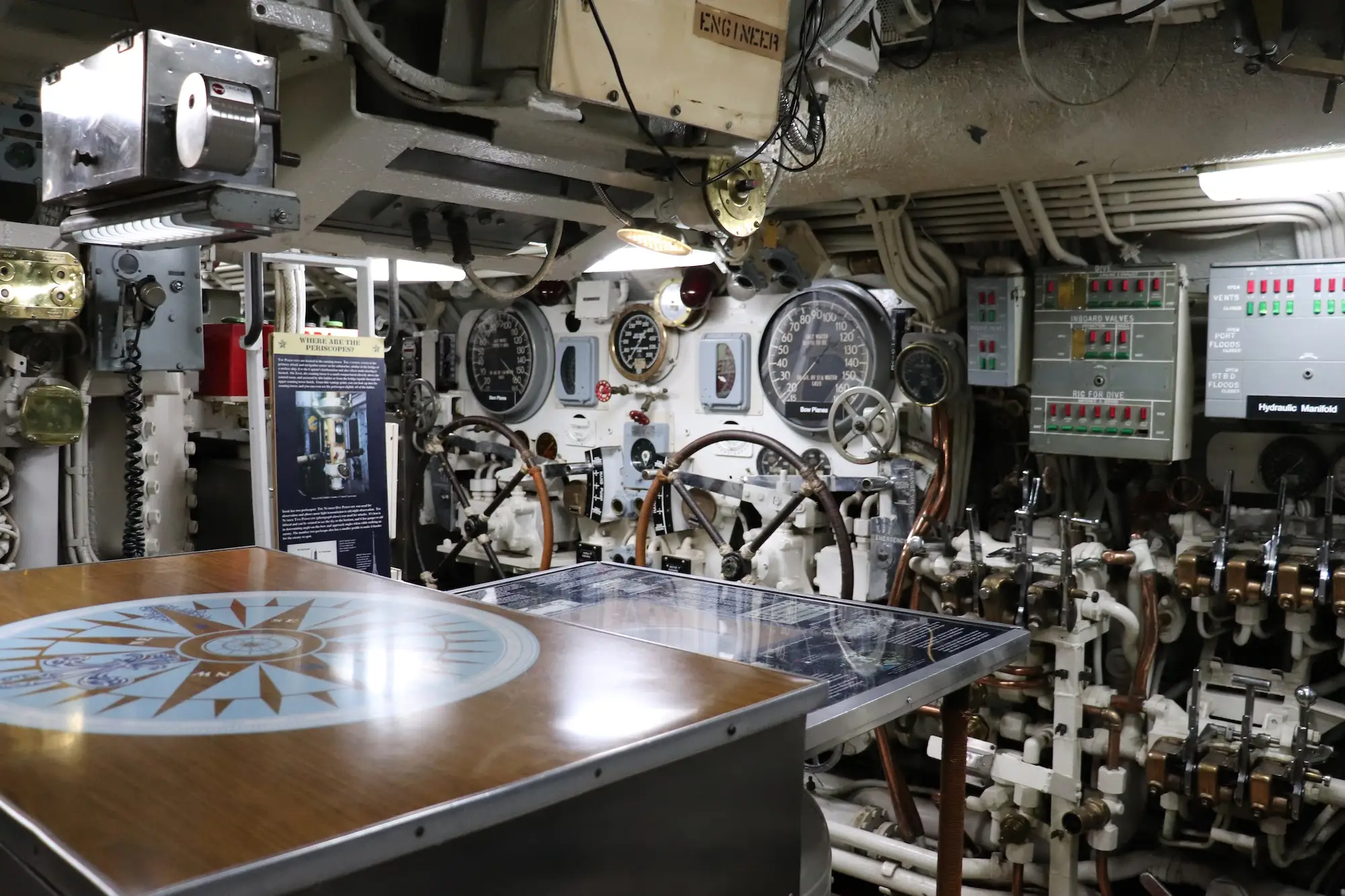
The control room also featured navigational equipment and a hydraulic manifold nicknamed the “Christmas tree” for its green and red lights indicating open or closed hatches.
A depth gauge provided a clue as to how deep Torsk could go, but its exact capabilities remain classified.
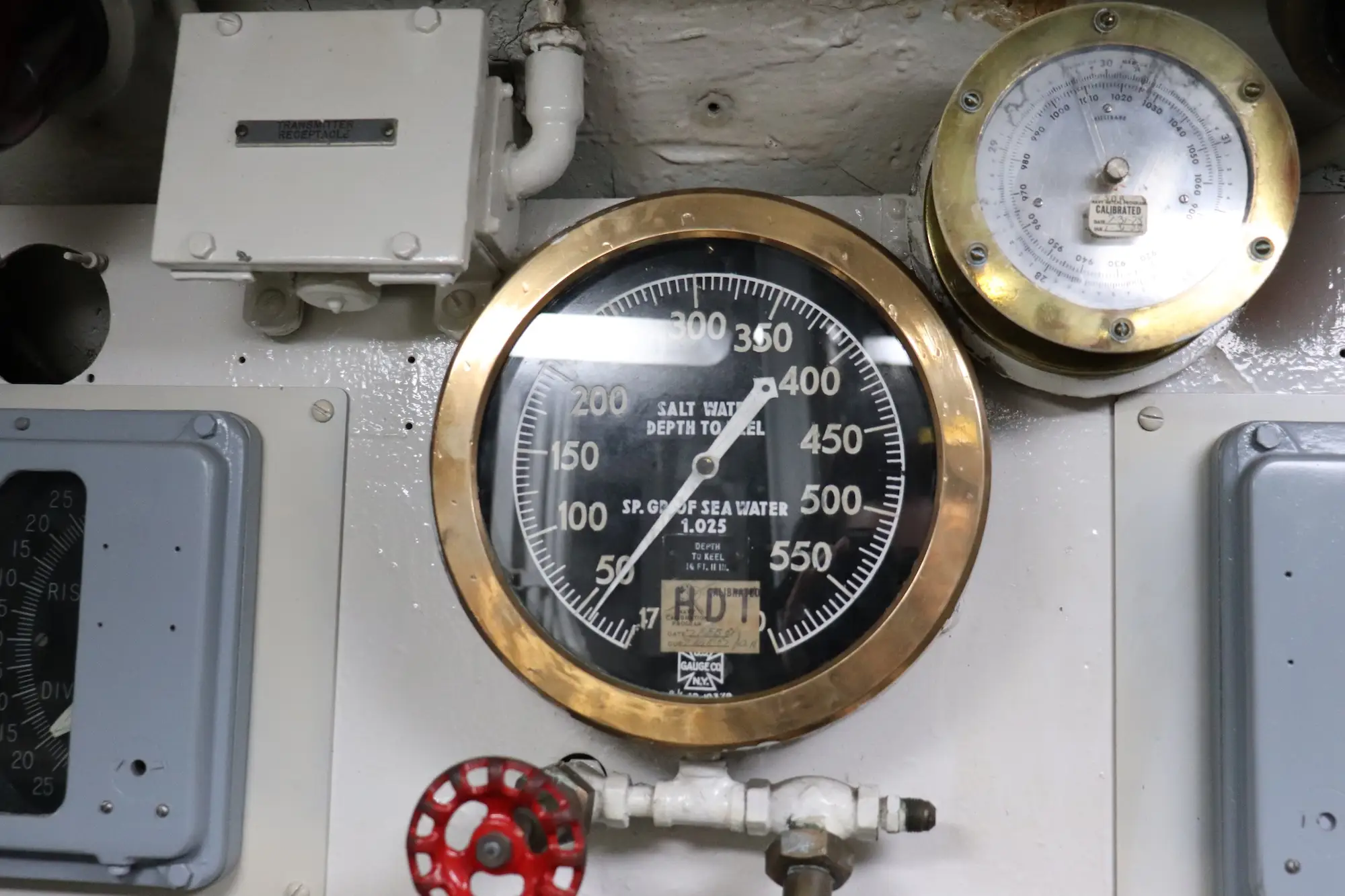
Typically, Auer said, Torsk’s normal operational depth was around 160 to 165 feet deep.
The conning tower, where the commanding officer commanded the submarine during combat, isn’t normally open to the public.
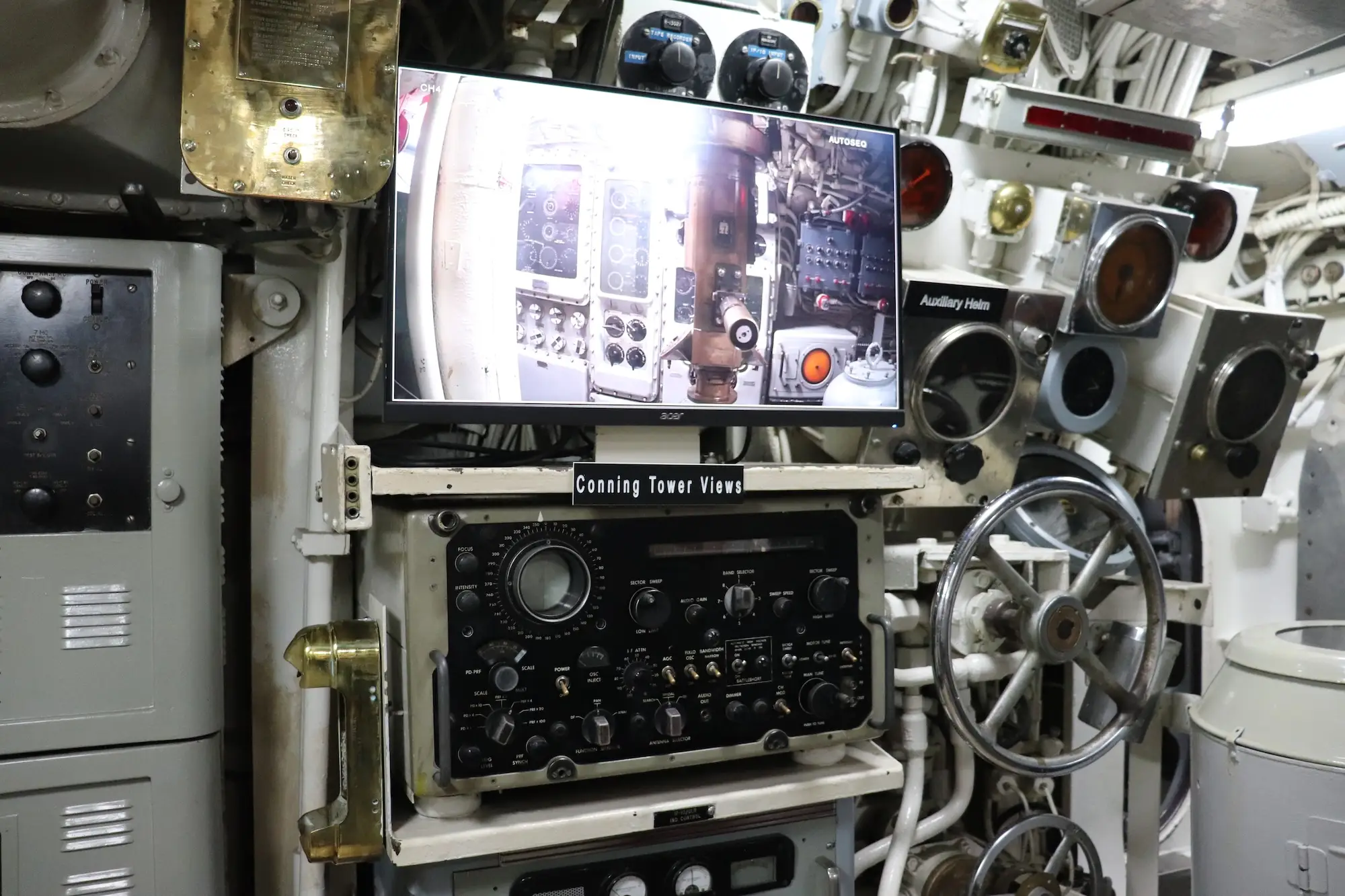
A screen displayed live shots of the conning tower rather than granting visitors access to the small space above the control room.
However, Auer made an exception for Business Insider’s visit. Up to the conning tower we go!
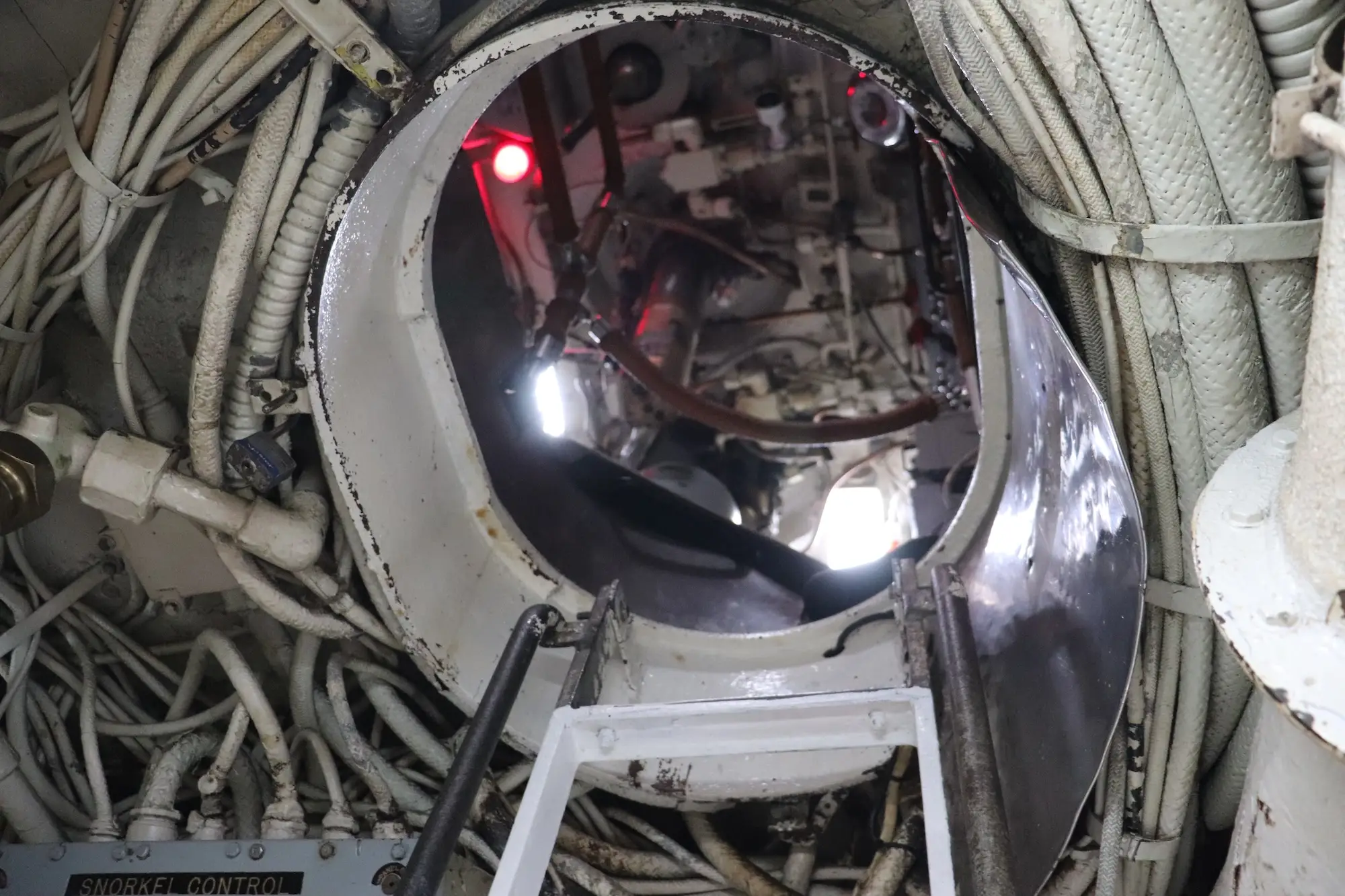
The conning tower is accessed by climbing a ladder and through a narrow hatch, which is usually kept locked.
In the conning tower, I got to look through one of Torsk’s periscopes.
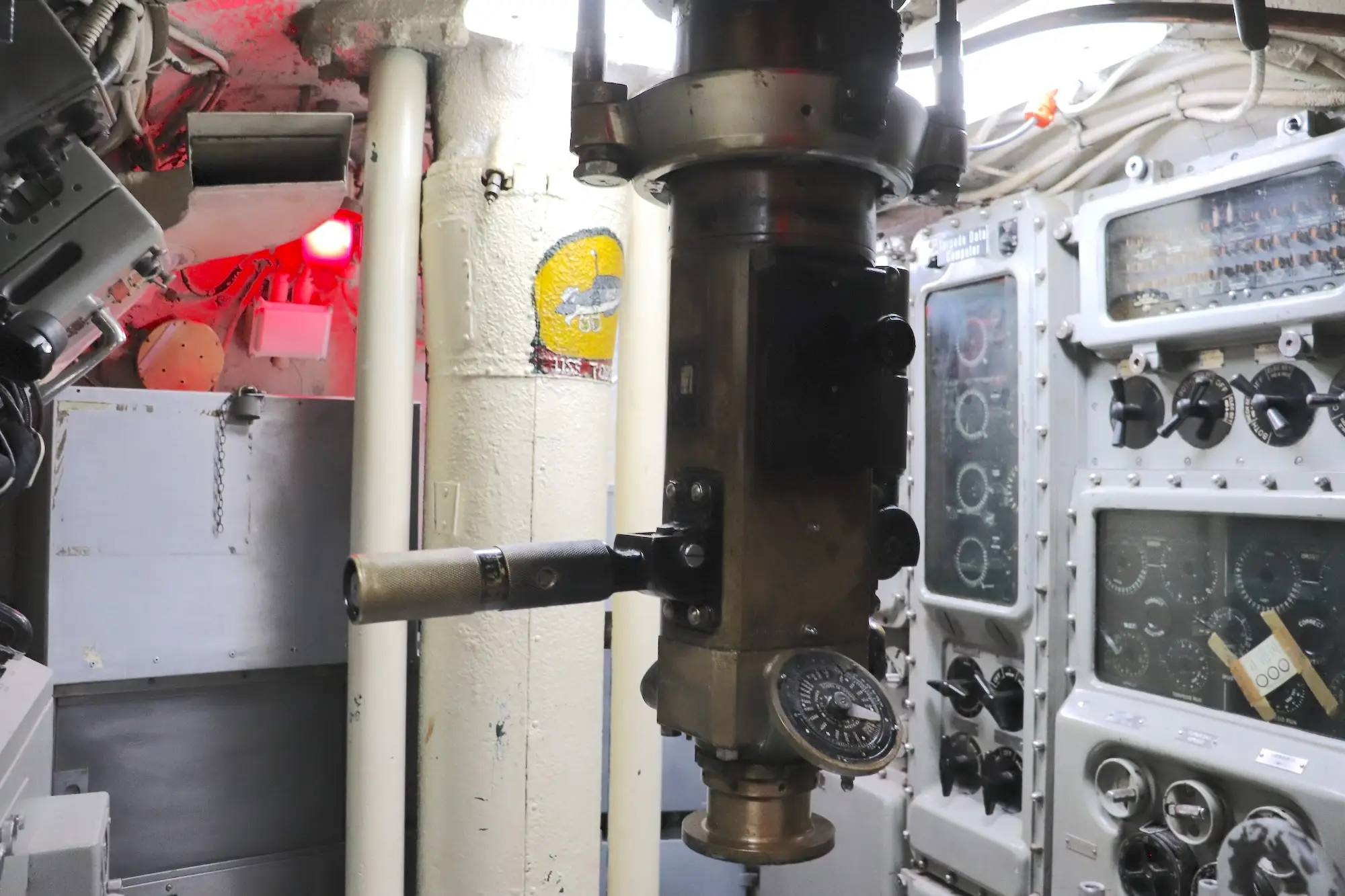
I saw tourists walking on the sidewalk alongside the submarine and paddling boats in the Baltimore Inner Harbor where we were docked.
The conning tower housed torpedo fire control, from which the torpedo tubes were fired.
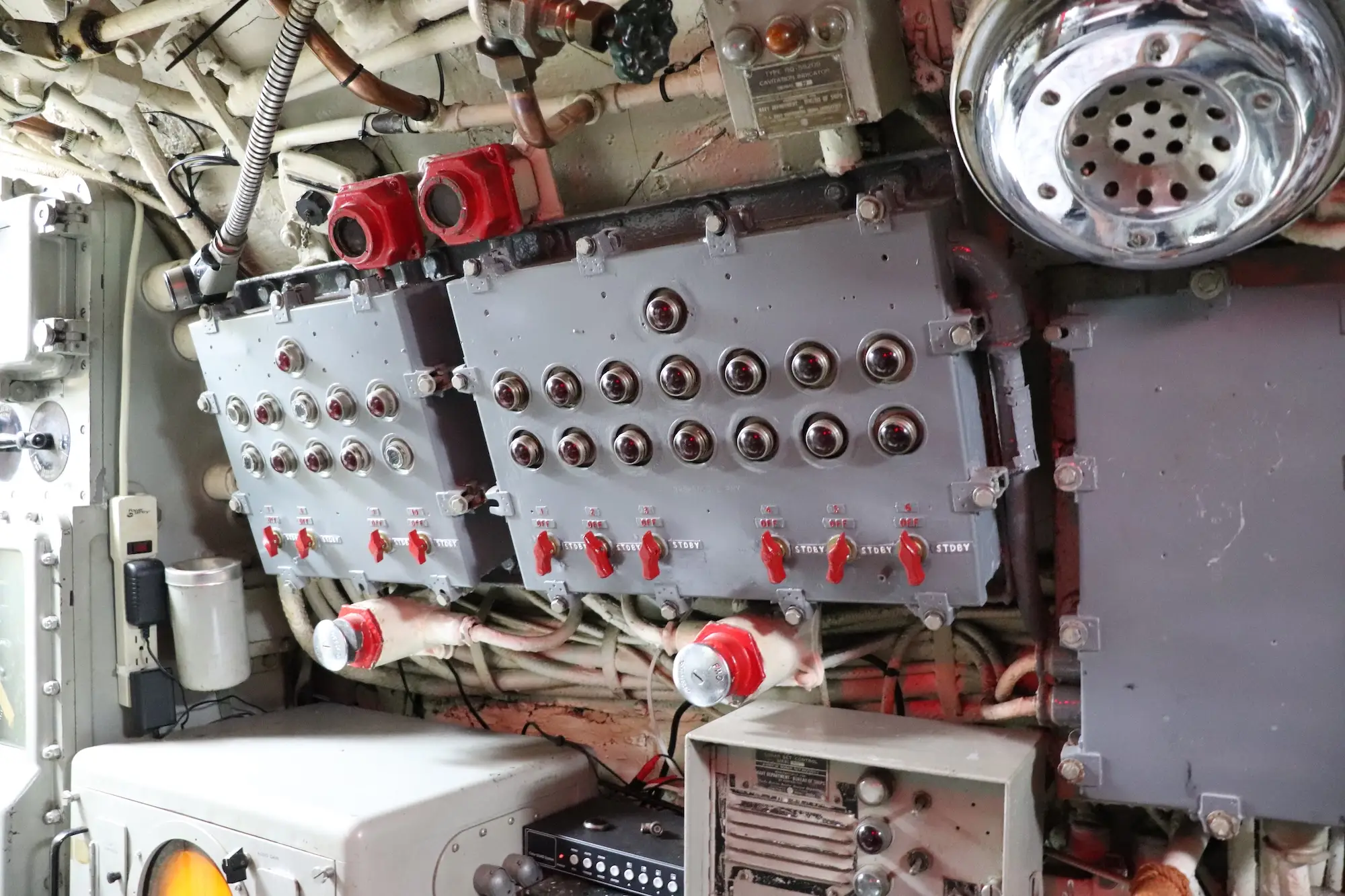
Torpedomen in the forward and after torpedo rooms loaded the torpedoes into the tubes and activated the standby light signaling that they were ready to fire. The buttons to actually launch the torpedoes were located in the conning tower.
The main helm, or steering wheel, was also located in the conning tower.
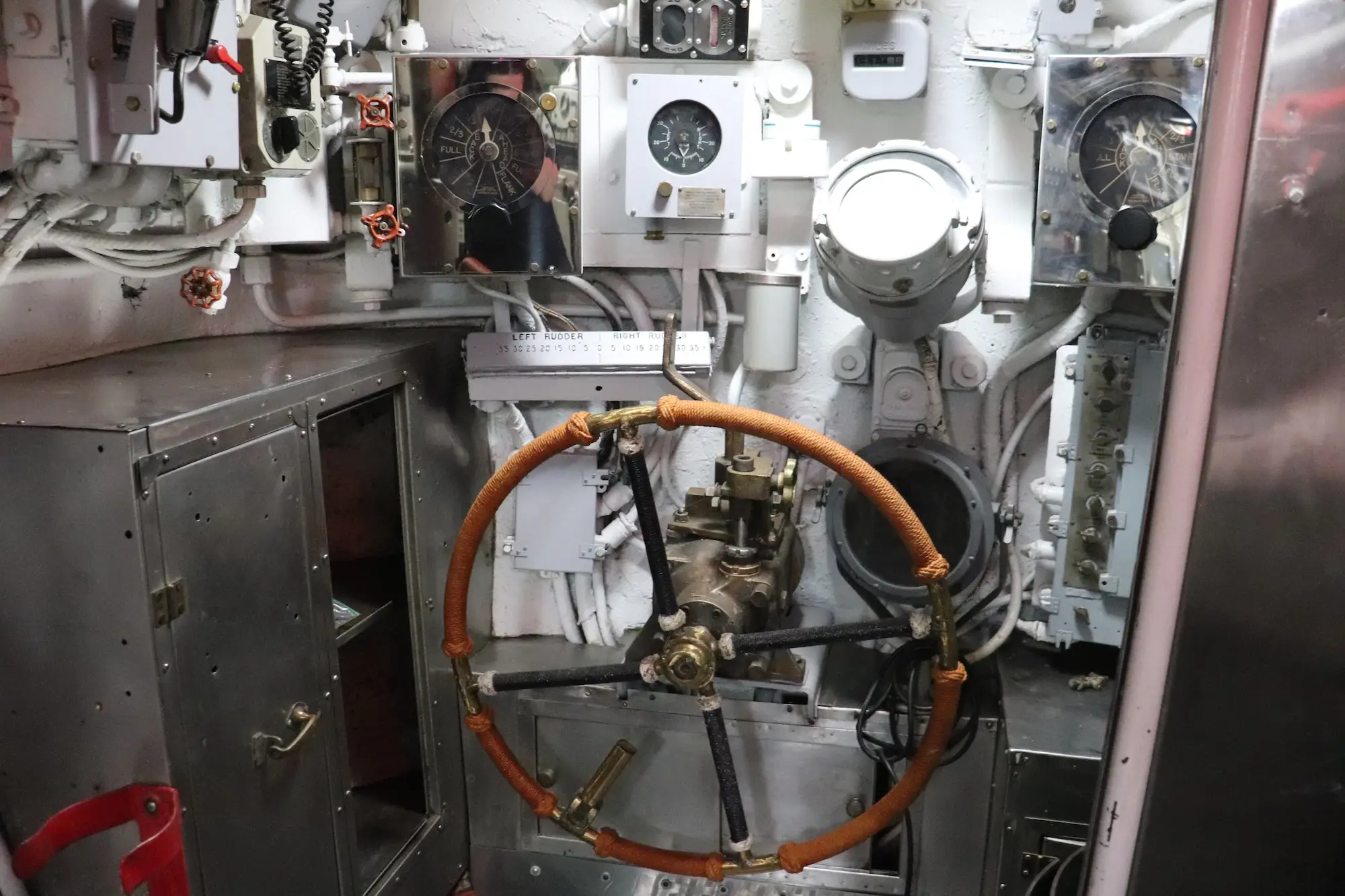
The control room below featured an auxiliary helm, or backup steering wheel, in case the conning tower was damaged or flooded.
After climbing back down the ladder, we encountered the yeoman’s shack.
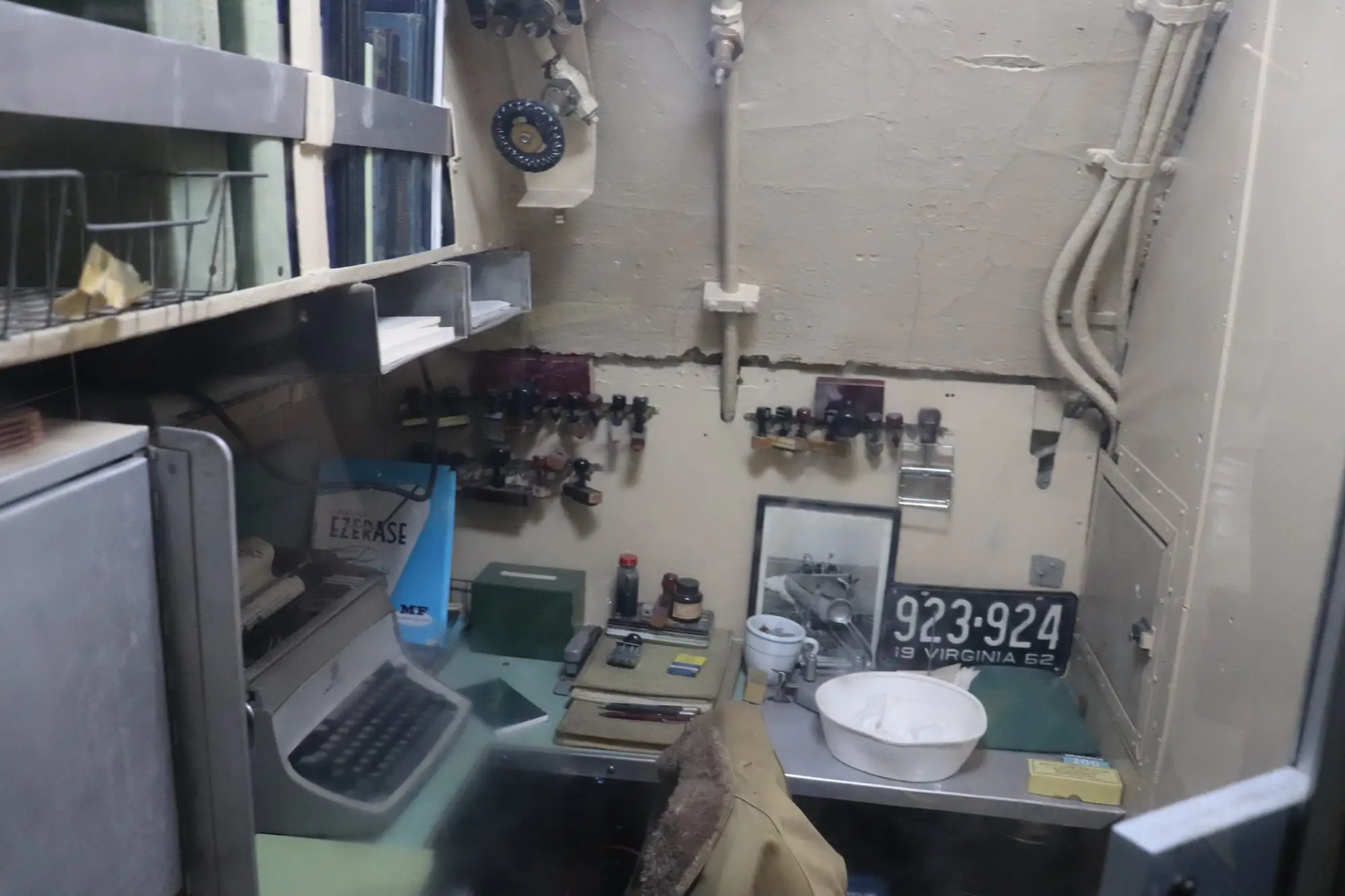
The yeoman was in charge of all of the ship’s paperwork, including personnel files and supply orders.
Next came the officers’ areas of the submarine, known as officers’ country.
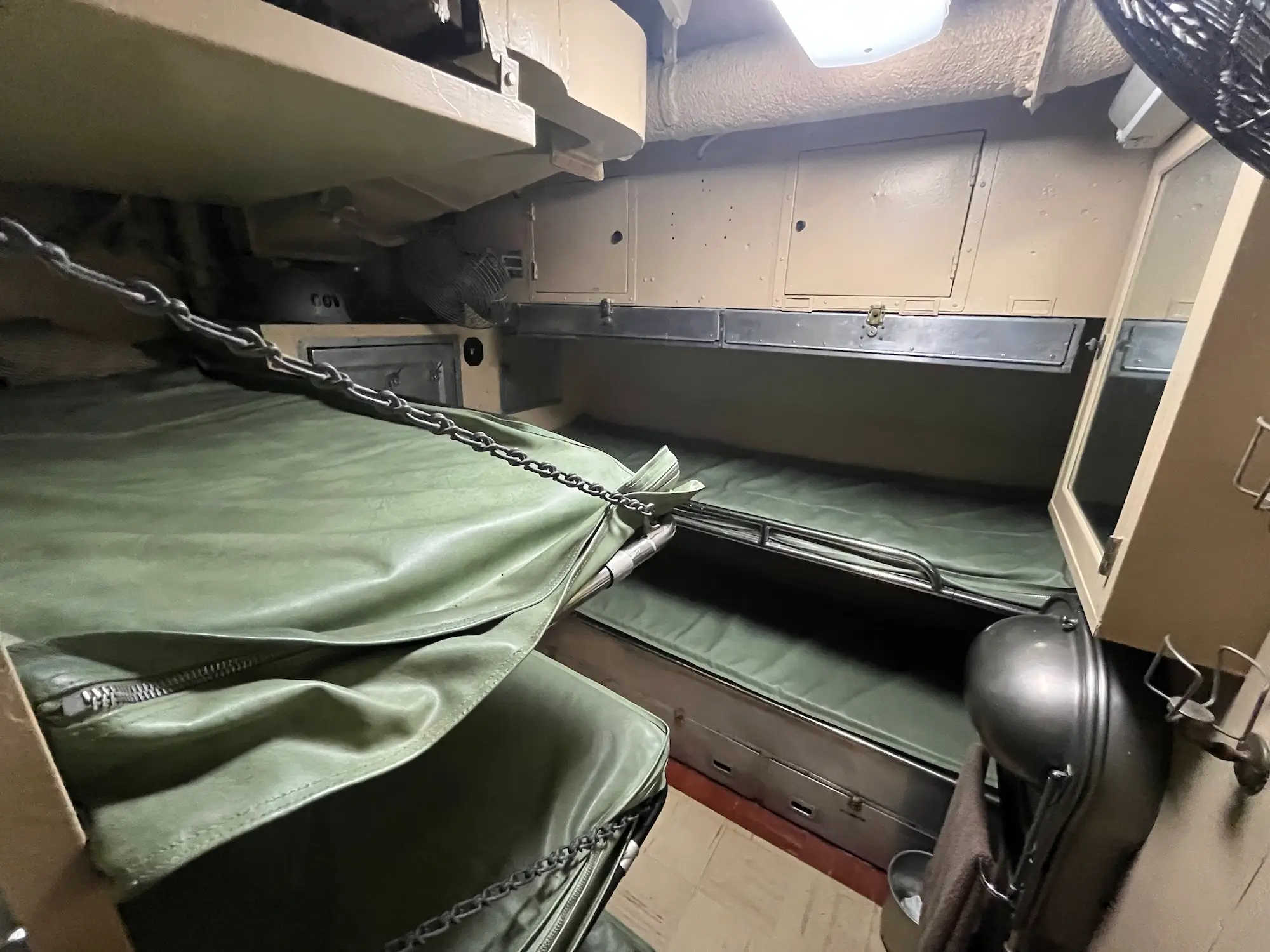
The chief petty officers, who slept in this five-bunk room, acted as liaisons between the officers and the enlisted men.
Junior officers had their own stateroom with four bunks.
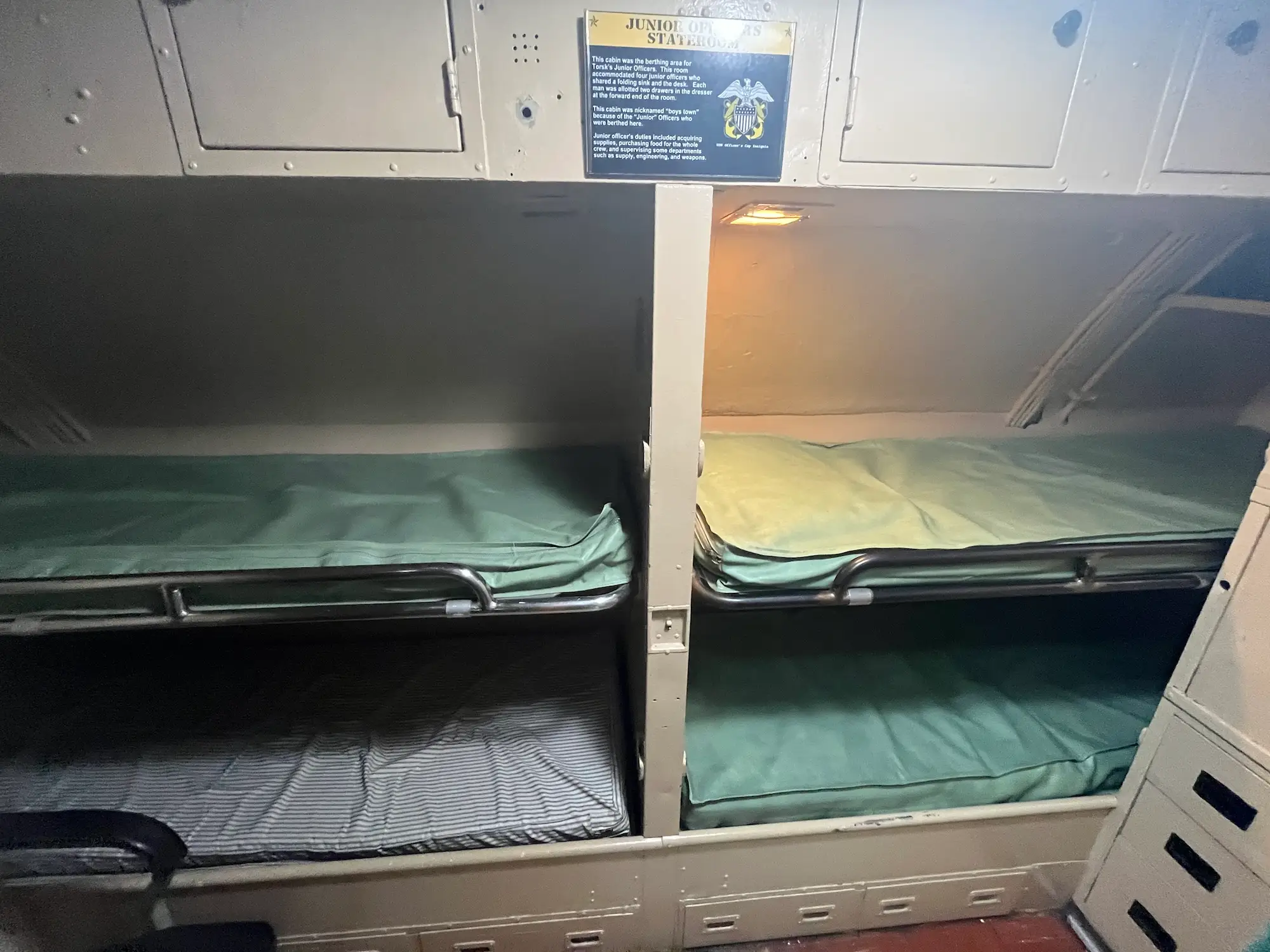
The room featured a folding desk and sink, and each officer received two drawers for their personal items.
Two senior officers and the executive officer shared this room.
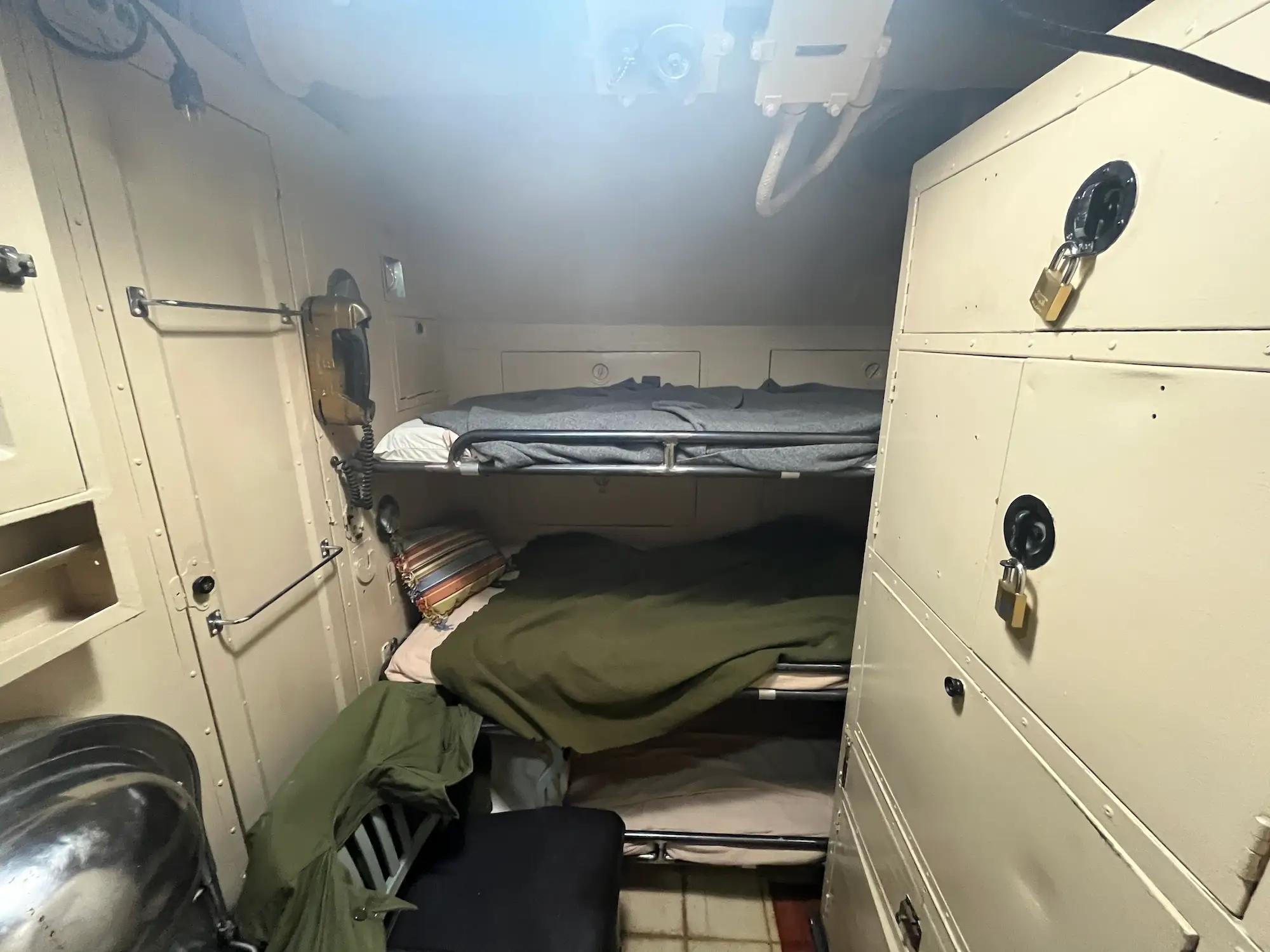
The executive officer, known as the “XO,” was the submarine’s second-in-command.
The more senior an officer was, the fewer roommates he had on board.
The commanding officer had the submarine’s only private stateroom.
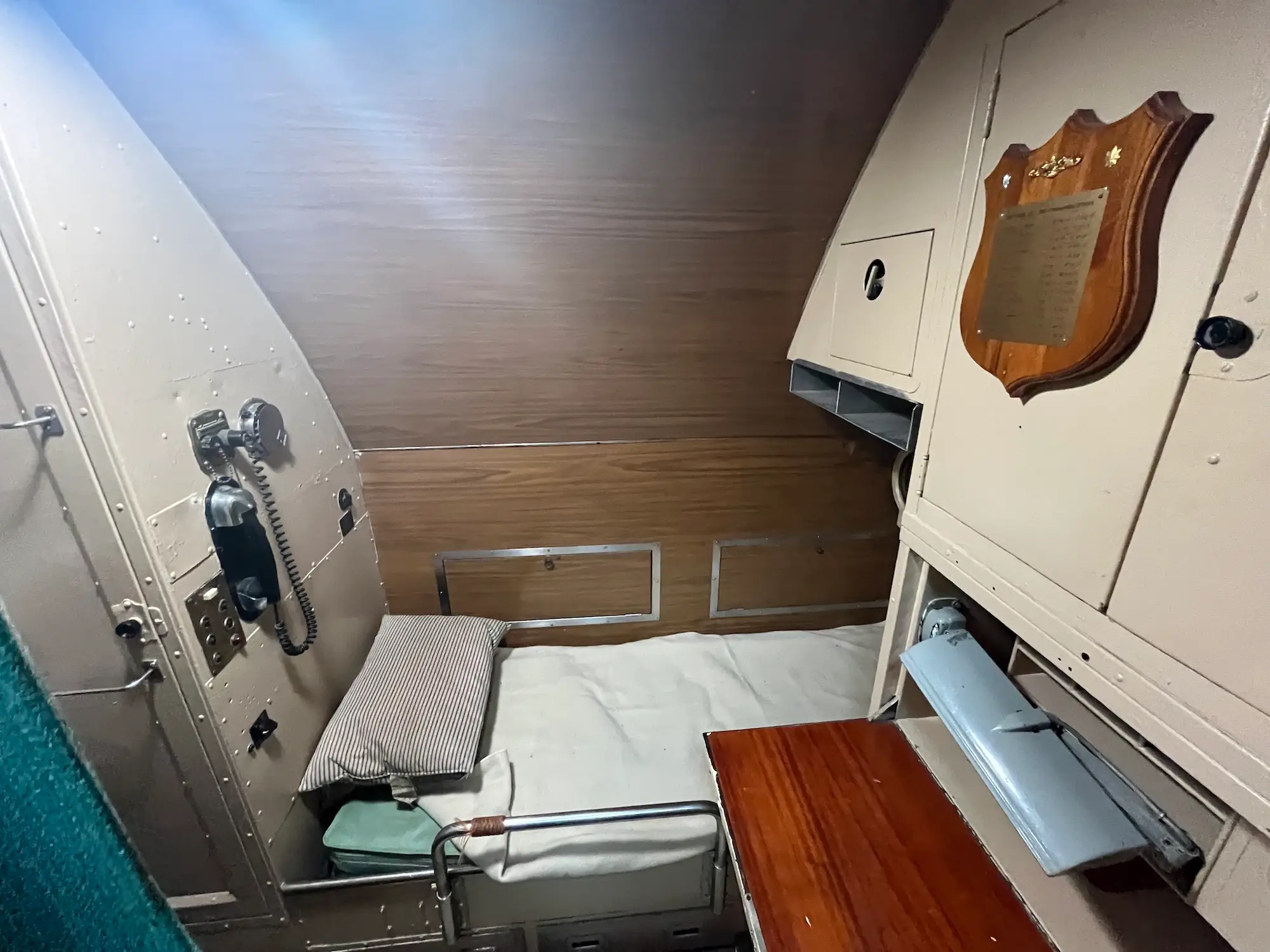
In his room, the commanding officer had a phone, call buttons, a gyrocompass repeater, and a depth gauge so he could continue to monitor the ship from there.
In the wardroom, officers ate their meals on Navy china.
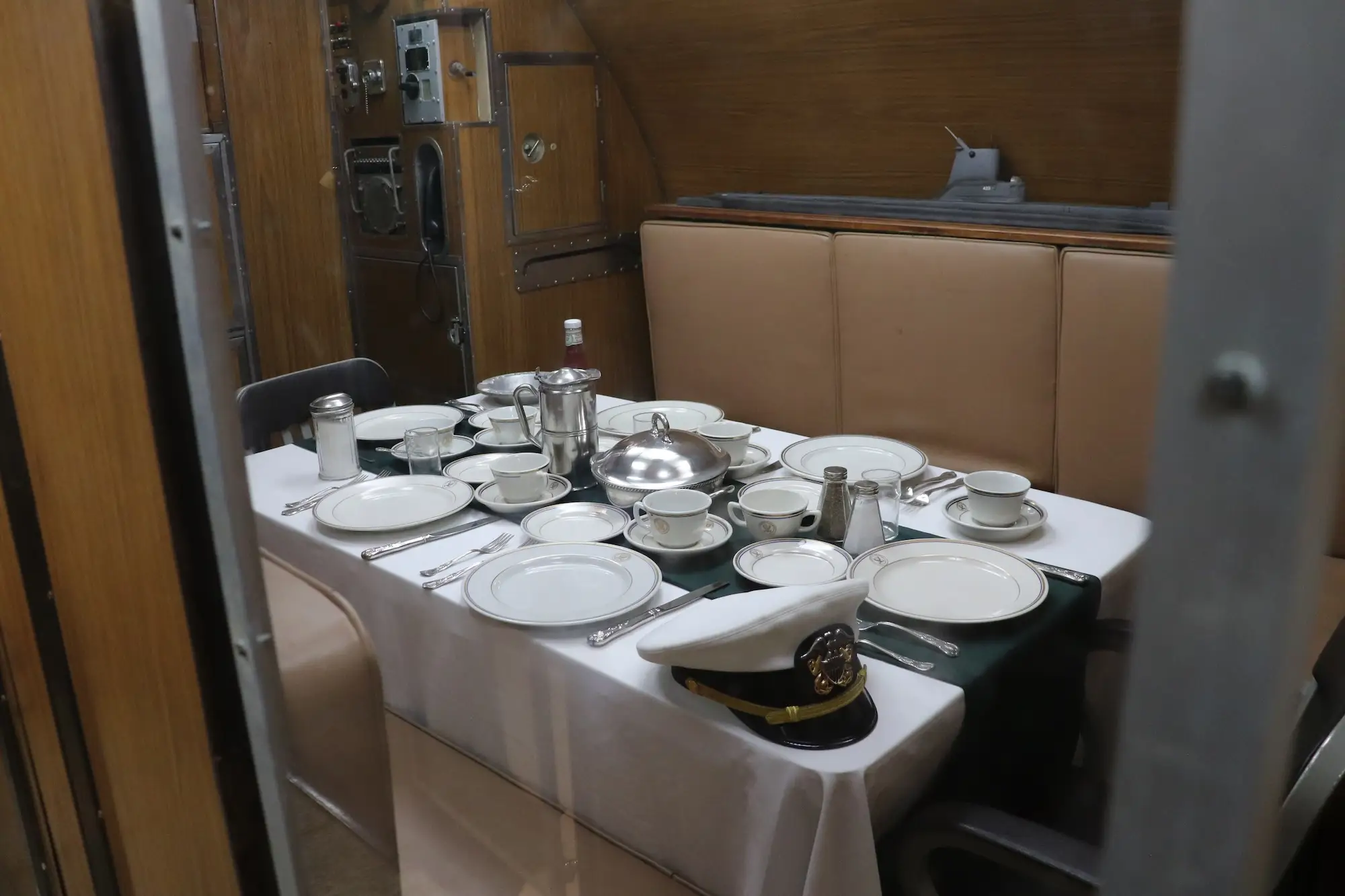
The wardroom also served as a lounge and workspace for officers.
Officers’ meals were plated and reheated in the officers’ pantry next to the wardroom.
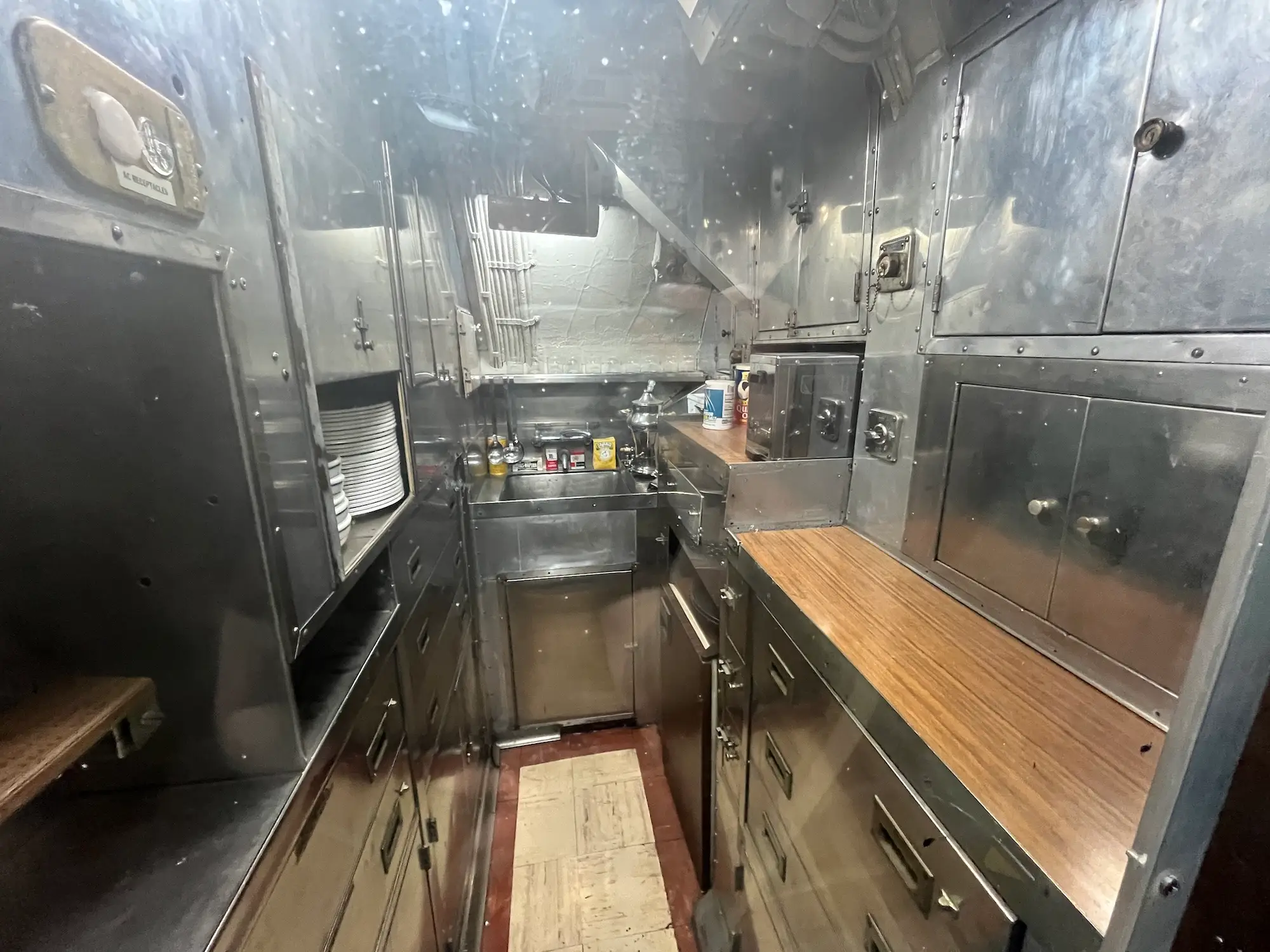
Officers ate the same meals as the rest of the crew, but they were plated and presented in a more elevated way.
The last stop on the tour was the forward torpedo room, which featured an oxygen breathing apparatus on display.
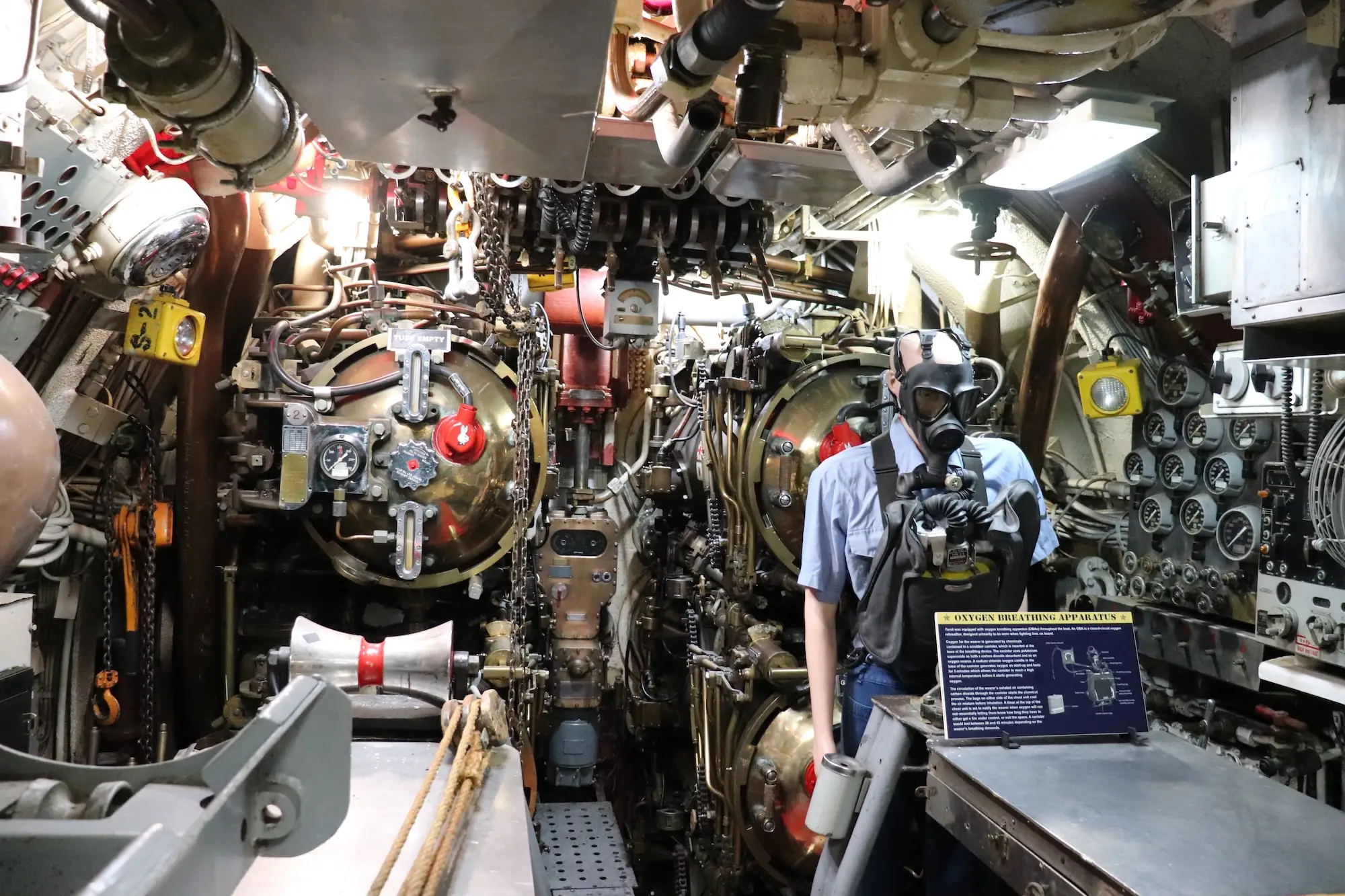
The oxygen breathing apparatus was designed for use in the event of a fire on board the submarine.
Even though Torsk is over 80 years old, it remains a prime example of the crucial role submarines play in America’s dominance at sea.
Torsk may seem like an outdated museum relic, and for the US Navy, it is. For other countries with less advanced naval forces, however, it would still be a powerful asset.
Take, for instance, Torsk’s sister ship, the USS Cutlass, which was commissioned in 1945. While Torsk became a museum in 1972, Cutlass was sold to Taiwan in 1973 and is still operational in the Republic of China Navy.
“This is still a relatively state-of-the-art piece of equipment relative to the world — not compared to our Navy, but compared to, say, the Iranian navy, this is very state-of-the-art,” Auer said, standing in Torsk’s after torpedo room. “The Iranians don’t have anything like this.”
Read the original article on Business Insider
The post The USS Torsk was the last US Navy submarine to sink an enemy warship until the war with Iran. Take a look inside. appeared first on Business Insider.