Anthropic’s chief executive met with White House officials on Friday for discussions that both sides described as “productive,” as the Trump administration works to forge a compromise that would bring the artificial intelligence company’s technology back into the government, according to U.S. officials and others briefed on the matter.
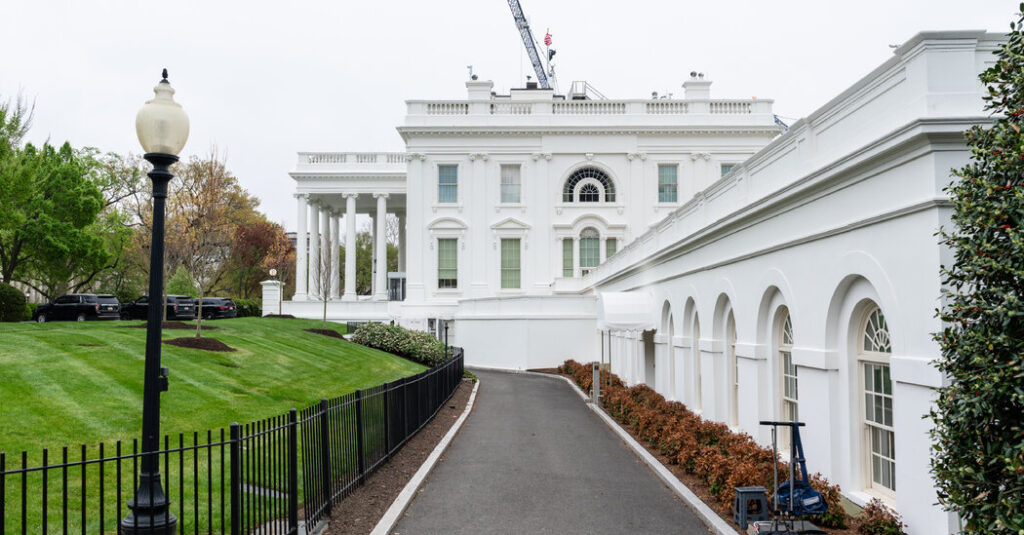
Dario Amodei, Anthropic’s chief executive, met with the White House chief of staff, Susie Wiles, Treasury Secretary Scott Bessent and others at the White House, the people said.
The meeting was “both productive and constructive,” the White House said in a statement, with conversations about how to collaborate and address the challenges of A.I. while exploring “the balance between advancing innovation and ensuring safety.” Anthropic said in a statement that the discussions touched on “key shared priorities” such as cybersecurity and A.I. safety.
Anthropic had been effectively cut off from working with the federal government after battling with the Pentagon earlier this year. The two sides had disagreed in negotiations over a $200 million contract about the use of A.I. in warfare, with the Pentagon later designating Anthropic a “supply chain risk.”
Friday’s meeting was a potential first step to a deal. If officials reach a compromise with the company, it would likely exclude the Pentagon, two officials said.
Some White House officials have argued that a fight with Anthropic is counterproductive and denies the United States some of the most powerful tech tools, officials said. This follows Anthropic’s unveiling on April 7 of a powerful new A.I. model, Mythos, which is capable of identifying security vulnerabilities in software. Officials believe it is critical to access the model — which Anthropic has made available only on a limited basis — to help protect government networks from cyberattacks.
Some White House officials were also frustrated that other officials failed to find a way to de-escalate the contract fight with Anthropic, especially given the potential for Mythos to wreak havoc on computer systems, officials said.
“We look forward to continuing this dialogue and will host similar discussions with other leading A.I. companies,” the White House said in its statement.
Anthropic added that the meeting reflected its “ongoing commitment to engaging with the U.S. government on the development of responsible A.I.” and that it was “looking forward to continuing these discussions.
The White House meeting was earlier reported by Axios.
Neither the Pentagon nor Anthropic had shown much willingness to settle their dispute. During contract negotiations, Anthropic had sought assurances that its powerful A.I. models — which until recently were the only ones allowed on classified computers at the Defense Department — would not be used for commanding autonomous lethal weapons or surveilling Americans. In response, the Pentagon said no private contractor could tell it how to use the technology.
The fight came to a head on March 5, when Secretary of Defense Pete Hegseth labeled Anthropic a supply chain risk. The designation was previously used only for foreign companies that the government believed posed a risk to national security. Anthropic later sued the U.S. government over the designation in courts in California and Washington, D.C.
Since then, Anthropic has told government officials that it is willing to provide access to Mythos to help agencies use the tool to find and fix potential vulnerabilities in software and computer networks.
At the Pentagon, engineers who work with Anthropic are petitioning the department to keep using the company’s technology, according to two officials who have participated in meetings about A.I. technology this month. While the engineers were not averse to using new A.I. models from other companies, they did not want to be cut off from Anthropic’s technology, which is used to analyze intelligence and handle sensitive data.
The engineers also urged the Pentagon to update to the newest Anthropic models available, the two officials said. Because the models are held on systems housed within the Pentagon, Anthropic cannot update them unless given access by defense officials, they said.
Senior Pentagon officials declined to talk about Anthropic, citing the ongoing lawsuits. The department is using an older version of Anthropic’s Opus A.I. model than it would have had the dispute not occurred, current and former defense officials said.
Other officials said they were pressing ahead with bringing models from OpenAI and Google to Pentagon computers, including a more advanced version of Google’s Gemini that will be online for military use in the coming days.
After Anthropic sued the U.S. government over the “supply chain risk” label, a judge in the U.S. District Court for the Northern District of California temporarily stopped the Pentagon from enforcing the designation in late March. In a separate ruling in the U.S. Court of Appeals for the District of Columbia Circuit on April 8, the judge denied Anthropic’s request to stop the Pentagon from labeling the company a supply chain risk.
Julian E. Barnes covers the U.S. intelligence agencies and international security matters for The Times. He has written about security issues for more than two decades.
The post White House and Anthropic Hold ‘Productive’ Meeting, Aiming for a Compromise appeared first on New York Times.