President Trump on Thursday announced a 10-day cease-fire between Israel and Lebanon, a pause in fighting that has the potential to remove a major hurdle in the broader peace talks between Iran and the United States.
Mr. Trump said that he had spoken to the leaders of both countries and that he would invite them to the White House for “meaningful talks.” Prime Minister Benjamin Netanyahu confirmed the agreement, and Prime Minister Nawaf Salam of Lebanon said his country welcomed the cease-fire.
At an impromptu news conference later in the day, Mr. Trump said he was optimistic that he could reach a separate peace agreement with Iran, which has called for Lebanon to be part of any long-term deal to end the war there. He said he might travel to Pakistan if a deal was signed there.
Mr. Trump also said he would consider extending the cease-fire now in effect with Iran if a broader agreement appeared near.
But with the fate of both cease-fires intertwined, the outlook for the one in Lebanon remained shrouded in uncertainty.
The talks that led to the agreement between Israel and Lebanon’s governments did not involve Hezbollah, the Iranian-backed militant group that Israel is fighting. Although Hezbollah has signaled that it will abide by the truce, Lebanon’s government has little control over the group, which it has accused of operating at Tehran’s behest.
Rocket fire and drone launches toward northern Israel continued up until the final minutes before the cease-fire came into effect at midnight local time, and the Israeli military said it was striking launchers from which the rockets were fired. In the previous 24 hours, the military struck what it described as more than 380 Hezbollah targets in southern Lebanon, it said. But in the minutes after midnight, the fighting appeared to have stopped.
The cease-fire deal came after a long day of negotiating. At one point before it was announced, according to one Lebanese official, Lebanon’s president, Joseph Aoun, rebuffed attempts by the Trump administration to agree to a phone call with Mr. Netanyahu.
Mr. Trump provided the time frame of the truce — 10 days — but little clarity on the terms, or what is expected of the two sides.
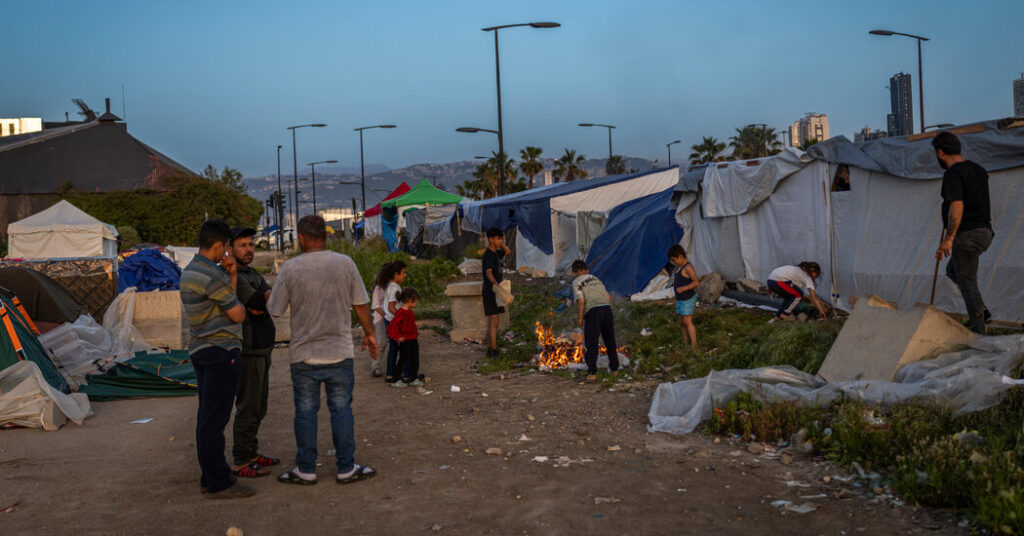
Last month, after coming under fire from Hezbollah, Israel invaded a broad area of southern Lebanon, which it still controls. Hundreds of thousands of Lebanese have been expelled from their homes, and a major question is when — or if — they will be able to return.
Mr. Netanyahu said Israeli troops would remain in Lebanon in an “expanded security zone,” in southern Lebanon. “This is where we are located,” he said. “We are not leaving.”
Hezbollah’s media office said in a statement that a cease-fire “must be comprehensive across all Lebanese territory” and that it would not allow Israeli forces “any freedom of movement.” It said that the group’s actions would be “based on how developments unfold.”
A cease-fire in the war against Iran that the United States and Israel launched in late February took effect last week, but expires on April 21. Pakistani mediators are seeking to restart direct talks between Washington and Tehran and on Thursday met with Iran’s top negotiator and speaker of its Parliament, Mohammad Bagher Ghalibaf.
The United States, which has sought to pressure Iran in the negotiations by blockading Iranian ports, depriving Tehran of crucial oil revenues, signaled a broadening of the blockade on Thursday.
Gen. Dan Caine, the chairman of the Joint Chiefs of Staff, said U.S. military commanders elsewhere in the world, including in the Indo-Pacific region, “will actively pursue any Iranian flagged vessel or any vessel attempting to provide material support to Iran.”
Closer to Iran, U.S. Central Command said Thursday that 14 vessels had turned around at the direction of U.S. forces to comply with the blockade.
General Caine made the comments during a Pentagon briefing in which Defense Secretary Pete Hegseth seemed to be directly trying to persuade Iran’s leaders that their best option was to agree to a deal. He renewed the Trump administration’s threat to attack Iran’s electrical infrastructure and said that the U.S. military was “maximally postured to restart combat operations.”
“While you are digging out, we are only getting stronger,” Mr. Hegseth said. “You can move things around, but you can’t actually rebuild.”
But the Trump administration is under pressures of its own, including domestically. The average price of gasoline remains $1 higher per gallon than before the war, and economists are warning of a return of higher inflation as November’s midterm elections approach.
The war, which has been unpopular from the start among the American public, is facing increased scrutiny in Congress. The White House budget director, Russell T. Vought, came under sharp questioning on Thursday by Senate Democrats over its cost. House Republicans on Thursday narrowly blocked a challenge to Mr. Trump’s authority to continue combat operations in Iran.
Internationally, the war is threatening to slow economic growth as the blockage of energy exports from the Gulf causes acute shortages of oil and gas. Airlines in Europe and Asia have warned of shortages of jet fuel and have cut hundreds of flights from their schedules.
A resumption of Gulf oil supplies to the global market appears far from imminent.
In the three days since the United States imposed its blockade on Iranian ports, the U.S. Navy has made clear that the movement restrictions do not apply to vessels not connected with Iran. Yet overall traffic in the Strait of Hormuz remains very limited, according to Kpler, a maritime data firm. The security threat level in the strait remains “critical,” according to an advisory note from the U.K. Maritime Trade Operations Center, which is administered by the British Royal Navy.
America’s allies in Europe have declined to take part in the U.S. blockade on Iran, and have been sharply critical of the human toll in the war in Lebanon that broke out shortly after the U.S.-Israeli attacks on Iran began. More than 2,000 people have been killed in Lebanon since fighting there resumed, the Lebanese authorities say.
The State Department said in a statement Thursday that the 10-day period in the Israeli-Lebanon truce could be extended by the mutual consent of the two countries, provided that “Lebanon effectively demonstrates its ability to assert its sovereignty.”
The department did not make the metrics for success on that front clear: Lebanon’s government has long struggled to curb Hezbollah, a group considered to be more powerful than the country’s own military.
Israel will preserve its right to “self-defense” against planned attacks, the statement said, but will not carry out any “offensive operations” against Lebanese targets by land, air and sea.
The truce has many detractors inside Israel.
Avigdor Lieberman, a right-wing opposition party leader, called it a “betrayal of the residents” of northern Israel in a post on social media.
Yair Lapid, the centrist parliamentary opposition leader, said the cease-fire announcement was “not the first time this government’s promises have been shattered by reality.”
The prime minister also faced criticism over the cease-fire from within his own conservative Likud party. Hanoch Milwidsky, a Likud lawmaker, wrote on social media: “I thought we’d already freed ourselves from the fiction of the ‘State of Lebanon.’ Apparently not.”
Mr. Netanyahu also listed some of the challenges of reaching a peace deal in the conflict. He noted that Hezbollah still retained rockets in its arsenal.
“We will have to deal with that, too,” he said,
Reporting was contributed by Tyler Pager, John Ismay, Elian Peltier, Pranav Baskar, Johnatan Reiss, Megan Mineiro, Tony Romm, Robert Jimison and Jenny Gross.
Euan Ward is a Times reporter covering Lebanon and Syria. He is based in Beirut.
The post Israel and Lebanon Reach Deal on a 10-Day Cease-Fire appeared first on New York Times.