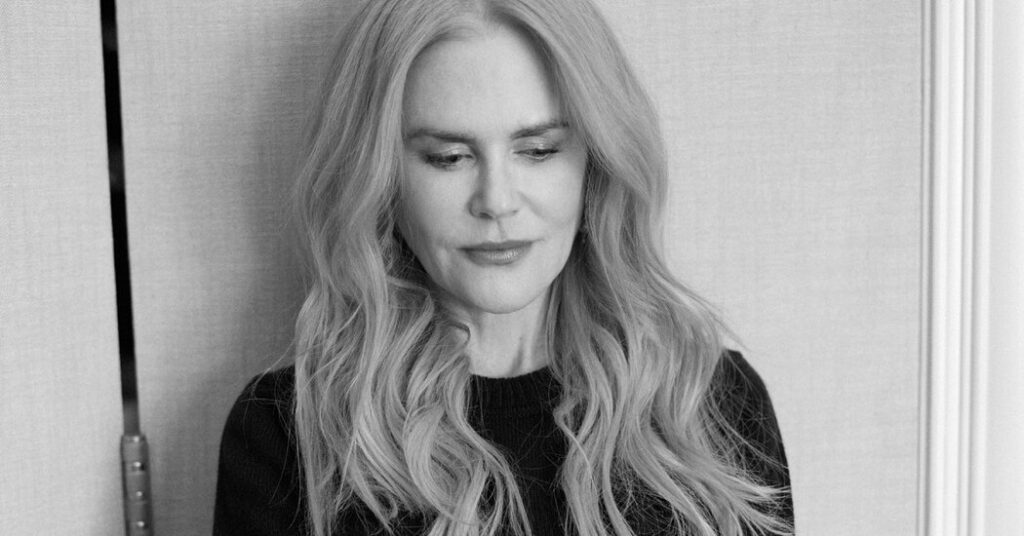
When Nicole Kidman’s mother was dying, there was only so much that the actress and her family could do to ease her loneliness. Ms. Kidman found herself wishing that there was someone whose job it was to “just provide solace and care.”
She recently shared that the experience inspired her interest in becoming a death doula, whose role it is to provide compassionate support to people who are dying or facing the death of a loved one.
“Loneliness is a big part of our world now, particularly for people in that stage of life,” the actress told an audience at the University of San Francisco on Saturday. “I want to be there,” she added.
Many death doulas find their way into the work while grieving a loss, said Ken Breniman, a death doula in Oakland, Calif., whose mother died when he was a teenager.
Death doulas like Mr. Breniman offer companionship to their clients and help them navigate fear and uncertainty about death and what might come after it. They also encourage people to express their wishes for end-of-life care and to have meaningful conversations with their families.
A death doula’s role depends largely on their clients’ needs and values, Mr. Breniman said. Sometimes the job is pragmatic, such as helping with wills or advanced directives.
But people nearing death can become too preoccupied with practicalities, Mr. Breniman said. In those cases, the job can be more about helping someone see the bigger picture. He recently helped a frugal 80-year-old woman recognize that she could — and should — spend the money to live the rest of her life at home, which she deeply wanted, instead of staying in a nursing home.
Other times, death doulas help their clients with more whimsical tasks. Years ago, a visually impaired man told Mr. Breniman that his dying wish was to go on a bike ride. Mr. Breniman rented a tandem bike and rode around a park with him. The end of life can be an opportunity, he said, to help people “suck the marrow out of life.”
The work can be emotionally draining, said Alua Arthur, a death doula whose organization, Going with Grace, has trained more than 3,000 end-of-life doulas around the world. Ms. Arthur said she encourages the people she trains to set boundaries and seek support and community from others in the field. “I call them the death-y besties — people who are also in death care who understand exactly what it is that we’re dealing with,” she said.
But the work can also be deeply meaningful.
Stephanie Firestone, a death doula in Denver, recently helped organize a ceremony for an elderly woman who could no longer speak. Her family members shared mementos that reflected her life and spirit. “The light in her eyes and smile that was on her face almost the entire time — I honestly felt such an extreme amount of love in that small room with her and her four children,” Ms. Firestone said.
Cari Rogers, a death doula in Chicago, said she finds it rewarding to help her clients accept their fear of death, so that it “does not have such a strong hold.”
“To hear someone say, ‘I didn’t realize death could be so beautiful’ — I think that’s been the most touching and meaningful thing,” Ms. Rogers said.
The post How Death Doulas Support the Living appeared first on New York Times.