First came the thunderous boom. Then the air billowed with thick black smoke. Fires were “everywhere,” survivors said. Scores of people lay dead.
The Nigerian military, with whom the U.S. military is fighting a growing Islamist threat, initially declared the attack on a weekend market in the remote desert village of Jilli a successful strike “on a known terrorist enclave.” But eyewitnesses describe a starkly different scene: The more than 100 people killed, they say, were traders and other members of the community, and included women and children.
Alimi Gabchiya, a grain trader at the market, lost two sons in the strike Saturday evening. They were also traders, he said. “I want the government to understand that we are innocent,” he told The Washington Post. “I didn’t even get to see their corpses.”
It was the latest in what villagers, health workers and human rights monitors say is a pattern of reckless attacks by Nigerian forces in their U.S.-supported fight against Boko Haram and its Islamic State-affiliated offshoot to kill civilians.
As President Donald Trump sends thousands more sailors and Marines to the Middle East, a smaller contingent of U.S. troops is confronting terrorism in northeastern Nigeria — and questions about its partnership with the country’s Nigerian military.
Before Venezuela, before Iran, Trump last year focused briefly on what he labeled, without evidence, a “Christian genocide” in Africa’s most populous nation and ordered U.S. 200 troops there. But since they arrived in February, violence by Boko Haram and the Islamic State West Africa Province, or ISWAP, has escalated to the deadliest levels since the militant group rampaged in 2015.
“We should all be concerned,” said Vincent Foucher, a Nigeria specialist at the French National Center for Scientific Research. “The jihadists are more settled and grounded than they were before. They are much smarter, and they have developed taxation and governance tactics.”
In the north, analysts say, hundreds of thousands of civilians live in areas controlled by militants. The corner of Borno State where the market was struck, analysts and locals say, is known to be ruled by ISWAP.
Isa Sanusi, Amnesty International’s director for Nigeria, said civilians were at the market when fighter jets appeared and fires burst out “everywhere.” Sanusi said more than 100 people, including a 13-year-old, were killed in one of the deadliest strikes on civilians by the Nigerian military in years.
The incident demonstrated the risks posed by partnering with Nigeria’s military, Foucher said, including “being associated with human rights abuses and war crimes.”
The White House referred requests for comment to the U.S. Africa Command, which is overseeing the U.S. mission in Nigeria. A spokesperson for U.S. Africa Command said U.S. forces “were not involved in the planning, intelligence sharing, or execution of this operation.”
James Barnett, a Nigeria specialist at the Hudson Institute, said the United States now faces a challenge of perception. Because neither government has provided much information about the strike, he said, U.S. Africa Command “is going to find itself receiving blame.”
“Whether or not the U.S. was involved, it’s going to fuel narratives by the jihadists and could even be something they use in propaganda,” he said. “There has been very little transparency.”
On Sunday, Nigerian authorities said the “precision airstrike,” based on “intensified overhead surveillance and intelligence gathering across the area,” killed “scores of terrorists.” On Monday, Ehimen Ejodame, a spokesman for Nigeria’s air force, told The Post that the strike was being investigated and that allegations of civilian casualties would be treated with the “utmost seriousness and empathy.”
Sanusi said the attack fit a “pattern” in which “civilians are killed for the military’s recklessness and lack of due diligence.”
Abubakar Goni, a 40-year-old father, said the market is “made up of people from different villages.” He was buying ingredients for dinner when the military attacked.
“We all know one another,” he said. “The terrorists don’t come into the community. They are very far from us.”
Goniram Alimi was buying utensils when the explosion tore through the area. The trader was killed instantly, she said. Two brothers also died and her father was injured.
“We don’t have terrorists close to us,” she said. “The government should acknowledge that and what was done and issue an apology.”
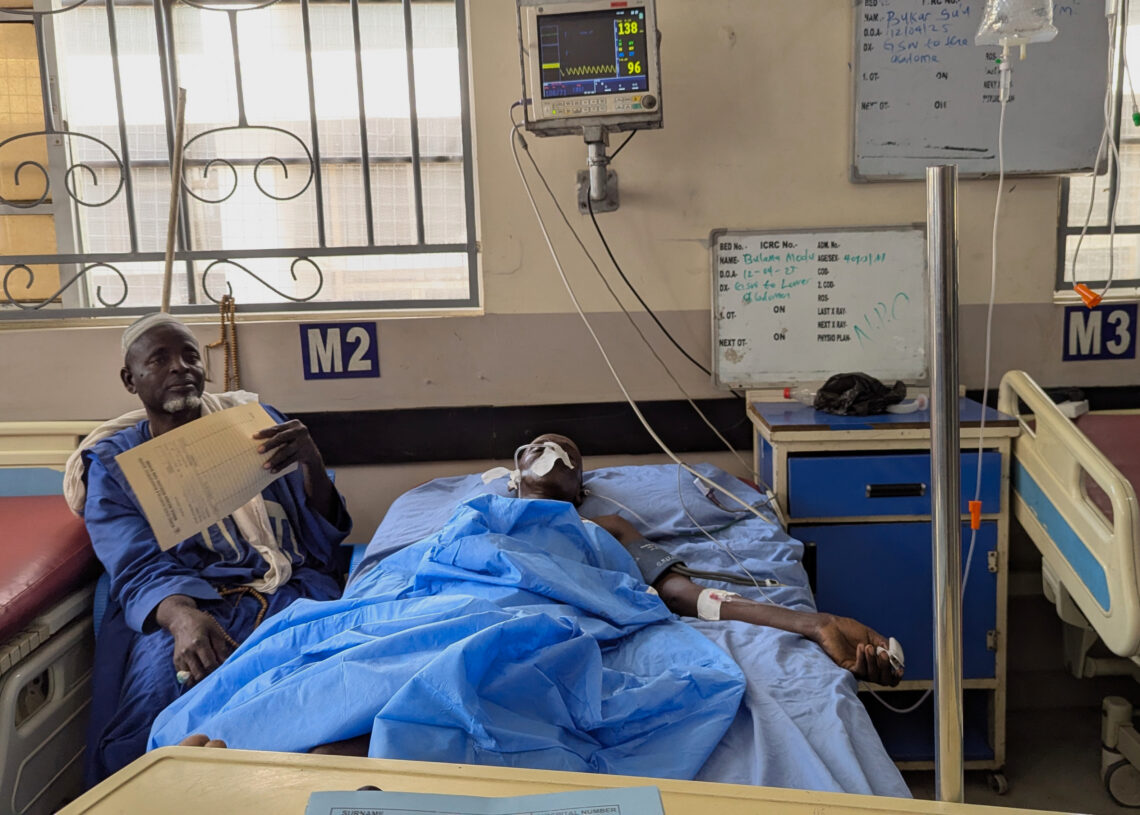
Health care workers said victims suffered severe head injuries, extreme burns and broken limbs. “We have had these kind of attacks in the region, but this is one of the worst so far,” said Audu Goni, a health worker at MCH Magumeri Hospital. “Many more are still missing.”
Trump in November threatened to go into Nigeria “guns-a-blazing” if the government did not do more to protect the country’s Christians. Analysts said the threat distorted the nature of the conflict. Muslims make up roughly half the population in the nation of 240 million. While violence has sometimes targeted Christians, it has also deeply affected Muslims, according to Nigerian and Western analysts.
The Nigerian government rejected Trump’s framing but said it welcomed U.S. support to confront a growing challenge.
On Christmas, at the request of the Nigerian government, U.S. ships in the Gulf of Guinea fired 16 Tomahawk missiles at targets in the country’s northwest, the stronghold of the Islamic State Sahel Province. Nigerian and U.S. officials are increasingly concerned that Islamic State Sahel in the northwest and ISWAP in the northeast are sharing intelligence and coordinating logistics, cooperation that could destabilize vast stretches of the north, home to an estimated 130 million people.
A spokesperson for U.S. Africa Command said the troops who arrived in February are “strictly positioned in Nigeria in a technical and advisory role,” providing intelligence support and training. “Our collaboration helps improve situational awareness, strengthens Nigeria’s ability to identify terrorist networks, and supports more effective and timely operations led by Nigerian forces,” the spokesperson said in a statement.
Violence by Boko Haram and ISWAP last year reached its highest levels since the peak of the crisis in 2015, according to the conflict monitoring group ACLED. In the first three months of 2026, attacks grew by an additional 25 percent, according to Ladd Serwat, ACLED’s Africa senior analyst, outpacing those of 2015.
Strikes by the Nigerian military have mostly targeted militant groups, Serwat said, but about 4 percent in the last five years have hit only civilians, killing more than 320 before Saturday’s attack.
Some people in Nigeria now believe the United States is fomenting violence, said Daniel Bwala, an adviser to Nigerian President Bola Tinubu. But he said the government believes intelligence-sharing “has been useful over time.”
“We work based on data, not conspiracy theories, and we support the partnership with the U.S.,” Bwala said. “Our cooperation with the U.S. is very helpful, and Donald Trump has been kind.”
The post Airstrike by Nigeria, a U.S. ally against Islamist militants, kills scores appeared first on Washington Post.