Many scientists have contended that humans have evolved very little over the past 10,000 years.
A few hundred generations was just a blink of the evolutionary eye, it seemed. Besides, our cultural evolution — our technology, agriculture and the rest — must have overwhelmed our biological evolution by now.
A vast study, published on Wednesday in the journal Nature, suggests the opposite. Examining DNA from 15,836 ancient human remains, scientists found 479 genetic variants that appeared to have been favored by natural selection in just the past 10,000 years.
The researchers also concluded that thousands of additional genetic variants have probably experienced natural selection. Before the new study, scientists had identified only a few dozen variants.
“There are so many of them that it’s hard to wrap one’s mind around them,” said David Reich, a geneticist at Harvard Medical School and an author of the new study.
He and his colleagues found that a mutation that is a major risk factor for celiac disease, for example, appeared just 4,000 years ago, meaning the condition may be younger than the Egyptian pyramids.
The mutation became ever more common. Today, an estimated 80 million people worldwide have celiac disease, in which the immune system attacks gluten and damages the intestines.
The steady rise of the mutation came about through natural selection, the scientists argue. For some reason, people with the mutation had more descendants than people without it — even though it put them at risk of an autoimmune disorder.
Other findings are even more puzzling. The researchers found that genetic variants that raise the odds of a smoking habit have been getting steadily rarer in Europe for the past 10,000 years.
Something is working against those variants — but it can’t be the harm from smoking. Europeans have been smoking tobacco for only about 460 years.
The scientists can’t see from their research so far what forces might be making these variants more or less common. “My short answer is, I don’t know,” said Ali Akbari, a senior staff scientist at Harvard and an author of the study.
The study is making a stir among evolutionary biologists. Experts generally agreed that at least some of the genetic variants Dr. Akbari, Dr. Reich and their colleagues had found would turn out to be have been influenced by natural selection.
“The scale of what Reich’s research team has accomplished with more than 15,000 genomes of ancient people is just astounding,” said John Hawks, a paleoanthropologist at the University of Wisconsin.
But some were cautious about the full scale of natural selection the team is claiming to have found. Sasha Gusev, a geneticist at Harvard Medical School who was not involved in the new study, has qualms about their statistical methods.
“The findings still require a leap of faith,” he said.
In the past few years, scientists have managed to find a few cases of recent human evolution. When some societies in Africa, Asia and Europe domesticated cattle and other livestock, for example, they began to drink milk and consume other dairy products.
A mutation spread that helped people digest these foods in adulthood. It may have helped them survive famines in the Bronze Age.
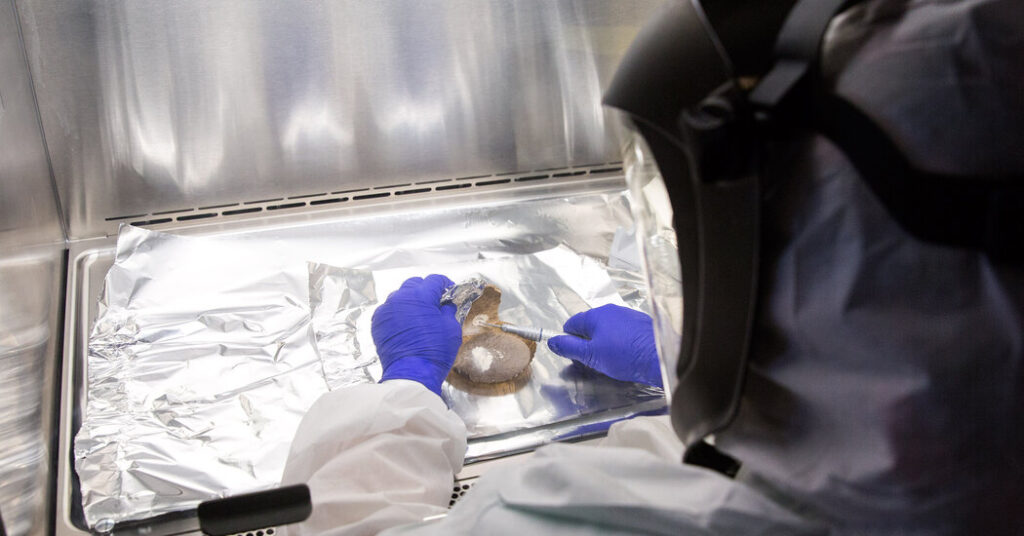
In the early 2000s, Dr. Reich and other researchers pioneered a new way to reconstruct human evolution: They began extracting DNA from ancient bones. In 2015, scientists in Dr. Reich’s lab carried out a survey of ancient DNA in search of natural selection.
They found 12 variants that had been subject to natural selection, including a variant that can help people digest milk as adults. Subsequent studies raised the total to only 21 variants.
Dr. Reich’s team went on to amass thousands of new samples of ancient DNA, while Dr. Akbari developed new methods to analyze them. He was shocked to find so many new variants that had been evolving in the past 10,000 years.
“It took about two years to convince myself this was real,” Dr. Akbari said.
Along with the celiac gene, the list of 479 variants includes a mutation in the gene for blood types. Depending on which variants of the gene people inherit, they have Type A, B or O.
The variant for Type B was very rare in Europe and neighboring regions until about 6,000 years ago, the new study found. But the mutation then took off, and is now carried by 10 percent of the people in that part of the world.
Sometimes, the researchers found, natural selection reversed course.
A variant of an immune system gene called TYK2 dramatically raises the risk of tuberculosis. Dr. Akbari and his colleagues found that this variant steadily grew more common from 9,000 years ago to 3,000 years ago.
But then it started getting rarer. What had been an advantage, it seems, had become a disadvantage. The scientists aren’t sure why.
It’s possible that the major changes that agriculture brought to human diets caused some of the evolutionary shifts Dr. Akbari and his colleagues have uncovered.
The past 10,000 years also brought the rise of many new diseases in humans, and they may have fueled natural selection — genes that conferred resistance helped some humans survive.
Dr. Hawks speculated that diseases might explain the recent rise of the celiac mutation, which might have made the immune system more aggressive against some new pathogen. “My guess would be intestinal, but that’s just a guess,” he said.
Dr. Akbari and his colleagues found thousands of additional genetic variants that showed smaller — but still striking — increases over the past 10,000 years. Even if just half of those variants were being affected by natural selection, that would mean about 3,800 were subject to evolutionary change.
But “that’s where the evidence starts to get weaker,” said Graham Coop, a geneticist at the University of California, Davis. He thinks it’s possible that many of those variants increased in the human population thanks to changes that had nothing to do with natural selection.
In another line of research, the scientists looked at traits in living people that are modestly influenced by dozens or hundreds of genes. These traits include everything from cigarette smoking to diabetes to the years that people spend in school.
Of 563 traits the scientists studied, 44 showed signs of natural selection in related genes, a process known as polygenic selection.
Variants linked to a risk for Type 2 diabetes have gotten rarer, for example. So have variants linked to a wider waist and a high percentage of body fat.
Farming might be responsible for those trends. Hunter-gatherers benefited from turning food to fat as a way to survive times of scarcity. But this strategy may have become harmful when farmers ate a steady diet of wheat and other carbohydrate-rich food.
It’s much harder to make sense of changes in other traits. The scientists concluded that natural selection had favored genetic variants linked to the number of years people spend in school.
Currently, scientists are debating what sort of biology allows genes to influence how long people stay in school, which itself is a modern institution. “What it meant to the past was a very different thing,” Dr. Reich said.
But Iain Mathieson, a geneticist at the University of Pennsylvania who led Dr. Reich’s 2015 study, said the findings about traits like smoking and schooling are less compelling than the 479 variants tied to conditions like celiac disease. “I’m less convinced by the evidence for polygenic selection,” he said.
Dr. Reich and his colleagues limited their study to Europe and neighboring countries partly because most samples of ancient DNA have come from these regions. “The reason we didn’t do it in other parts of the world is because we don’t have enough data to be able to answer this question,” Dr. Akbari said.
But scientists are now widening their scope. In a study that has yet to be published, Dr. Akbari and his colleagues analyzed 1,862 ancient DNA samples from China and neighboring countries.
They have discovered that natural selection favored some of the same variants in East Asia as in Europe. In a separate study, Dr. Mathieson has also found hints of the same patterns on other continents.
Nandita Garud, a geneticist at the University of California, Los Angeles, who was not involved in the new study, said that unearthing natural selection over the past 10,000 years could do more than just illuminate our deep history.
Scientists still don’t know much about how genetic variations influence our health. When they find a link between a genetic variant and a disease, Dr. Garud said, it will be important to see whether it has been favored by natural selection.
“That might give you a clue that this is important,” she said.
Carl Zimmer covers news about science for The Times and writes the Origins column.
The post Nature Is Still Molding Human Genes, Study Finds appeared first on New York Times.