Let’s analyze the world’s latest church-and-empire fracas, the open conflict between President Trump and Pope Leo XIV, in terms of three concentric circles, bringing us from the general realities of Catholic politics to the intense specifics of this case.
At the general level, there is nothing about a conflict between a secular authority and the Roman pontiff that should have Catholics reaching for the smelling salts. Nothing in Catholic teaching says that popes are free from error about public policy, and the historical record offers copious proof that they make profound mistakes. As such, when popes engage in politicking, it’s not impious for politicians to disagree with them, and such beefs are not inherently liberal and secular and modern. If anything, they’re medieval and extremely “trad.”
In the current zone of controversy — the arguments pitting the pope or the Vatican or leading cardinals against nationalist conservatism — the conservatives often have reasonable complaints. Catholic social teaching in its ideal form challenges right and left alike, but that tightrope is hard to walk, and the church’s leaders often tend to challenge one side more sharply while offering “accompaniment” to the other. Under Pope John Paul II, more politically liberal Catholics reasonably felt that the Vatican was accompanying the right more than the left, but under Pope Francis the dynamic was reversed. Even though Francis was against abortion and euthanasia and other progressive shibboleths, he clearly prioritized economic and environmental issues and even more clearly just personally disliked conservatives, especially American conservatives, relative to liberals.
Leo has brought greater stability to the church in part by simply showing conservatives a more paternal face and taking their concerns about ritual and doctrinal clarity more seriously, even as he still sounds like Francis when he’s talking about issues like immigration or climate change. In response, you’ve seen a clear separation between very-online right-wing Catholics who want to be angry about the papacy all the time and a broader conservative constituency that’s content to have a pope who sounds left-leaning notes as long as he doesn’t seem intent on doctrinal disruption.
But the Vatican’s leftward tilt in today’s political debates can still show failures of charity or clarity. The charitable failing shows up especially when church leaders talk about immigration: It should be possible to defend migrants from mistreatment while also recognizing the legitimate reasons American Catholics might regard Joe Biden’s border policy as a travesty, or why European Catholics might worry about the religious transformation of their nations by Muslim immigration. The Vatican clearly feels more comfortable working with Joe Biden or Emmanuel Macron than with Mr. Trump or Marine Le Pen. But it lacks a spirit of understanding when it comes to why much of its own flock prefers the populists.
The failing of clarity, meanwhile, is a consistent problem for church rhetoric on issues from wealth and poverty to war and peace. There is an understandable clerical hesitance to be too concrete on these kinds of questions, lest the pope or bishops seem to be dictating tax rates or treaty details. But the result is that just as papal commentary on economic policy can sound not just left-wing but vaporous, its position on foreign policy can drift toward a blithe pacifism that isn’t true to the Catholic tradition. And if you are, let’s say, a Catholic appointee in the Pentagon, it could be entirely reasonable to press the Vatican to acknowledge that military power sometimes has an entirely moral role to play.
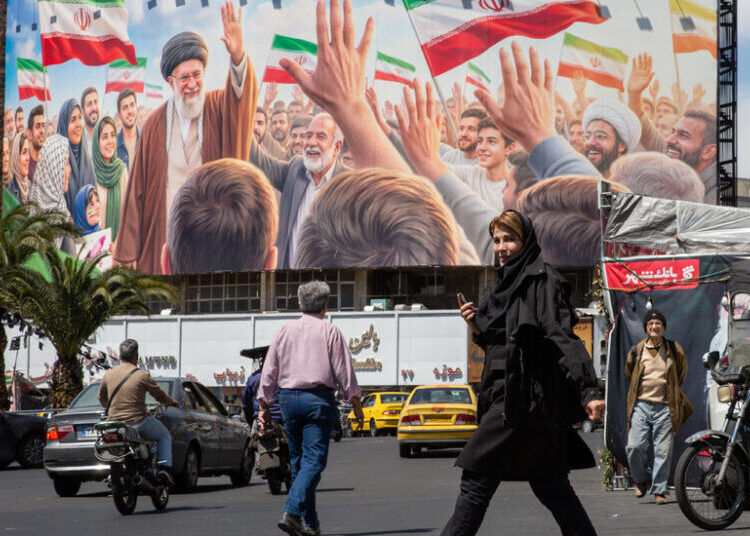
These are the general points that might be made in defense of conservative-Catholic disagreement with Rome. They begin to break down, however, as we move into the second circle, the specific debate about the Iran war, which is the issue that has brought the conflict between the church and the Trump administration to a boil.
Here it’s not the papacy that struggles with the concrete question; it’s the administration’s arguments that waver and wobble and evaporate. You’ll find Trump supporters complaining that the papal condemnation of the war is too sweeping, or that the messengers — like the three liberal-leaning American cardinals who appeared on “60 Minutes” over the weekend — are too partisan, or that we don’t hear enough from the Vatican about the evils of the Iranian regime. But these complaints are secondary to the core question: Is the war just or is it not? And the administration simply has not made a coherent and consistent case for the justice of the conflict.
For instance, one could argue that the war is just because it’s trying to remove a wicked government. Except that at present Mr. Trump wants to say that it isn’t a war for regime change, that he’s happy to cut a deal that wouldn’t require the clerical elite to give up power, let alone face justice for their crimes.
Or one could say that the war is just because it’s a limited intervention focused on forestalling an Iranian military threat. But Mr. Trump and his secretary of defense have repeatedly threatened a more sweeping campaign, with back-to-the-stone-age bombing and civilizational destruction, which no just war theory could countenance.
Or one could say that the American war is just because it’s focused on military targets, which is separate from the more morally questionable Israeli campaign of assassination. But come on — they’re the same war!
Right now the best reporting we have suggests that the administration entered into this war without a clear strategic objective or a consistent moral justification, without sufficient regard for the traps that might be sprung — and despite the opposition of the president’s (Catholic) vice president and the doubts of his (Catholic) secretary of state. That doesn’t mean that a decent outcome can’t be salvaged. But it’s a situation in which the leader of the Catholic Church has every reason to say, This seems like an unjust war.
And the president’s response to that critique — and here we reach the innermost circle of the story — emphatically does not belong to a normal push and pull between church and state, pope and empire. Nor is it even a normal kind of Trumpian abnormality. Instead we have outright profanation and sacrilege, in a pattern that began with his social media post on Easter Sunday, cursing and threatening violence and sarcastically praising Allah, and then escalated through a post attacking Leo and finally a post of A.I. slop depicting himself as Jesus Christ.
To the extent that Mr. Trump has Christian defenders, they tend to separate the final outrage from its predecessors, suggesting that it’s OK for the president to be profane about Islamist theocrats, acceptable for him to argue angrily with the bishop of Rome (who hath no authority in this realm of America …), leaving the Trump-as-Christ meme as the only real offense.
But the core issue from a religious perspective isn’t whether Muslims or Catholics or evangelicals should be personally offended by the specifics of any given presidential foray. It’s that there’s a consistent thread linking profane Easter Sunday threats, a rant against the world’s most famous Christian leader and the depiction of yourself as the Second Person of the Trinity. The compounding offense isn’t against religious identity or papal dignity. It’s a violation of the first and second commandments, where the offended party is Almighty God.
If you are a secular observer who assumes that blasphemy is a sin without a real object, that escalation matters mostly as a window into the president’s second-term state of mind.
If you’re a believer, though, then Mr. Trump’s entire political career — his catalyzing role in liberalism’s crisis, his movement from power to exile to power once again — exists under providential power. In which case a turn to presidential blasphemy is a warning for his religious supporters about potential conclusions to the story, and the spiritual peril of simply sticking with him till the end.
Breviary
Julia Yost on Catholic conversions under digital conditions.
Matthew Walther on the Antichrist question.
Timothy Lavin on Artemis II as boondoggle and triumph.
Tyler Cowen on the art of the cross-country drive.
Kathryn Hughes on the Stephen King archives.
Freddie DeBoer writes pundit Y.A. fiction.
The post Trump’s Blasphemy Is a Warning appeared first on New York Times.