Bruce Pearl is a college basketball analyst for TNT and CBS Sports, and the former head coach of the Auburn Tigers. He is also a senior fellow at the America First Policy Institute.
The madness of March came and went and brought glory in April. After nearly five decades of coaching, I’m glad to say that the sport and spectaclenever get old. They do, however, change, as they have dramatically in recent years. Now that the college basketball offseason is here, it’s worth contemplating how to preserve the game that has transformed the lives of countless young athletes.
To hear the press tell it, college sports is a “chaotic mess” in “crisis,” lost beyond repair. Don’t buy it. The university system and its athletic programs — including the devotion we maintain to our alma maters and state institutions — are unique to this country. They make America exceptional. The opportunity to learn, compete and launch careers is at the heart of our tradition. The institution isn’t irreparably broken — it’s still wonderful.
Yet college athletics do need reform. The National Collegiate Athletic Association lacks the authority to address what ails it — a consequence of NCAA v. Alston (2021), in which the Supreme Court ruled that the association’s restrictions on education-related benefits for student-athletes violated federal antitrust laws. The decision established that the NCAA is on precarious legal standing, so much so that it’s unclear if the association can even enforce its own rules without violating antitrust laws. While Alston in effect rightly allowed men and women to cash in on their talents, it also opened the door to a Wild West in which student-athletes are perennial free agents, eligible to play into their mid-20s. Legal challenges have since proliferated any time the NCAA attempts to enforce a commonsense rule.
Thankfully, the White House appreciates how serious this issue has become. President Donald Trump earlier this month signed an executive order that recognizes the central role college athletics play in American civic life and considers how to compensate athletes while placing guardrails around eligibility, transfers and the like. Perhaps the document’s most important insight, though, is that the president alone can’t fix it. He needs Congress to “expeditiously pass legislation.”
Enter the SCORE Act, written to address “student compensation and opportunity through rights and endorsement.” Originally proposed in the House last summer, and now championed by Speaker Mike Johnson (R-Louisiana), it has the potential to codify the White House’s recommendations and grant the NCAA antitrust exemptions. Its central provision would allow the institution to designate its own governing body that would make and enforce rules on the aforementioned issues.
Regrettably, some in Washington have misconstrued the bill as an effort to allow big schools to collude and suppress wages. Sen. Chris Murphy (D-Connecticut) has suggested it “would just diminish the experience for everyone.” He considers it a “fig leaf.”
The senator has it backward. The bill would allow the NCAA to ensure fair compensation for athletes while encouraging them to earn their degrees on a standard four-year timeline. The SCORE Act would also encourage players to stay at their institutions, restoring sanity to the transfer portal, bolstering the student-athlete experience and giving continuity to fan bases. The proposed guardrails, moreover, would benefit schools left by the wayside as blue-blood programs assemble topflight rosters costing tens of millions of dollars.
This is personal to me. I established myself as a Division I head coach in 2005 when I led the University of Wisconsin-Milwaukee Panthers, a mid-major from the Horizon League, to a Sweet 16 appearance. Under the status quo, those programs, devoid of the financial resources to recruit and retain talent, are boxed out. Consider that only high-majors — schools from the “Power” conferences — advanced to the second weekend of this year’s tournament.
Barring reforms, even schools with smaller athletics budgets in the Power conferences are at a competitive disadvantage. Such schools as Ohio State University and the University of Texas will continue to lead in the arms race for the best athletes. I struggle to see how the Minnesota Golden Gophers or even the Rutgers Scarlet Knights — flagship state institutions represented by Democratic senators — will keep up with aggressive spenders in Division I.
Granting a legislative carve-out to the NCAA would help address the cost burdens plaguing states’ academic institutions. Doing so would also allow the association to take up several issues, including transfers and eligibility, and compensation to protect Olympic and women’s sports. Here’s how it might go about each.
On transfers: I believe in a one-time transfer rule by which a student-athlete is immediately eligible to play at his next school. Yet there needs to be a requirement that he spends at least two years at an institution before exercising that option. Otherwise he ought to sit out of athletics for a year, as was previously standard. Another transfer can be granted following graduation. Student-athletes fail to set themselves up for future career success when constantly bouncing from one institution to another.
On compensation: The NCAA was late to provide athlete compensation and for too long mistreated student-athletes. It is now correcting those wrongs. But name, image and likeness deals have distorted the playing field by creating a bidding war for talent without limitations. Implement compensation guidelines applied at the program level within each division and conference, and you restore competitive balance.
On this item, I also support revenue sharing between universities and student-athletes at a fair market value. I like the annuity model — the longer you stay, the larger that annuity becomes, much like a retirement or vesting plan. Doing so would also create cost savings for athletic departments that could be allocated to invest in the women’s and Olympic sports that are suffering under the weight of football and men’s basketball.
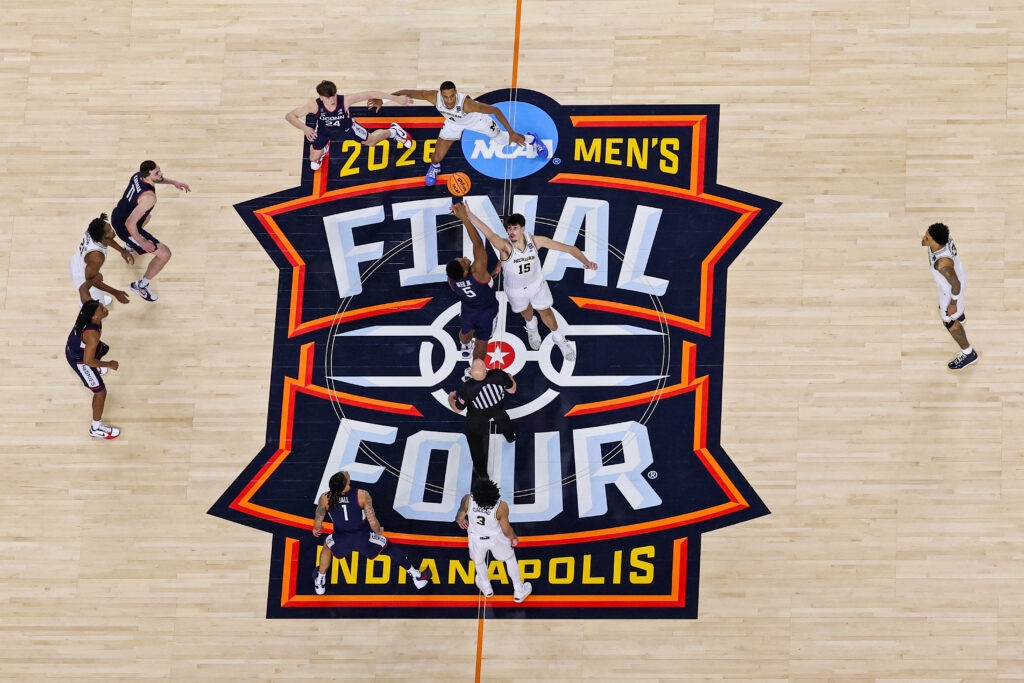
March Madness is evidence that college athletics still have a soul. Viewership for this year’s tournament approached record highs, as fans were captivated by the product on the court. Yet only hours after coach Dusty May and the champion Michigan Wolverines cut down the nets in Indianapolis, more than 1,500 players entered the transfer portal. Annual free agency is unsustainable, and the refs at the NCAA need to be granted the authority to make and enforce rules to support players and fans.
The president has taken the courageous lead and tossed the ball into Congress’s court. It would be derelict not to take the shot.
The post Trump can’t save college sports. But Congress can. appeared first on Washington Post.