President Donald Trump has maintained that increased U.S. pressure on Iran, including a blockade of its oil exports through the Strait of Hormuz, will eventually force the regime to give in to his demand that it will “never have a nuclear weapon.”
Calling Tehran’s refusal to make that promise the sticking point that led to failure at last weekend’s negotiations in Islamabad, Trump told reporters at the White House on Monday that he was confident he would prevail. “We agreed to a lot of things, but they didn’t agree to that,” he said of the nuclear pledge. “I think they will agree to it. I’m almost sure of it. In fact, I am sure of it.”
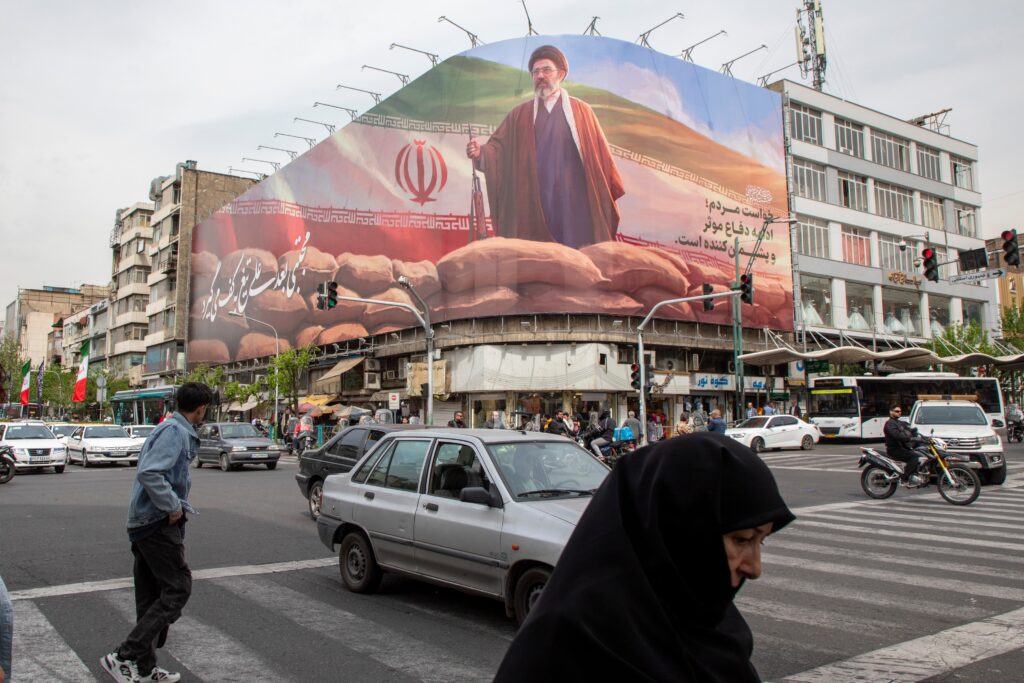
Tehran has long said it has no intention of producing a nuclear weapon — Ayatollah Ali Khamenei, the supreme leader killed in an Israeli airstrike at the war’s outset, long ago issued a fatwa, or ruling, against it — and the country’s current leaders appear prepared to repeat the decree as many times as necessary in efforts aimed at ending the conflict.
But what Trump is really talking about is his demand that Tehran give up all elements of a nuclear program that would enable it to build a bomb if it ever changed its mind, including the capability to enrich its own uranium and the sophisticated centrifuges that allow it to do so.
In the weekend talks, Vice President JD Vance, head of the U.S. negotiating team, offered a 20-year moratorium on all Iranian enrichment, according to two people familiar with the matter who spoke on the condition of anonymity to discuss the sensitive talks. Iran offered three to five years. Each refused the other’s offer.
If relinquishing its nuclear program is Trump’s red line, keeping it is Iran’s. Tehran maintains that its membership in the nuclear Non-Proliferation Treaty allows it to enrich. Although the treaty does not spell out such a right, it does not expressly prohibit it.
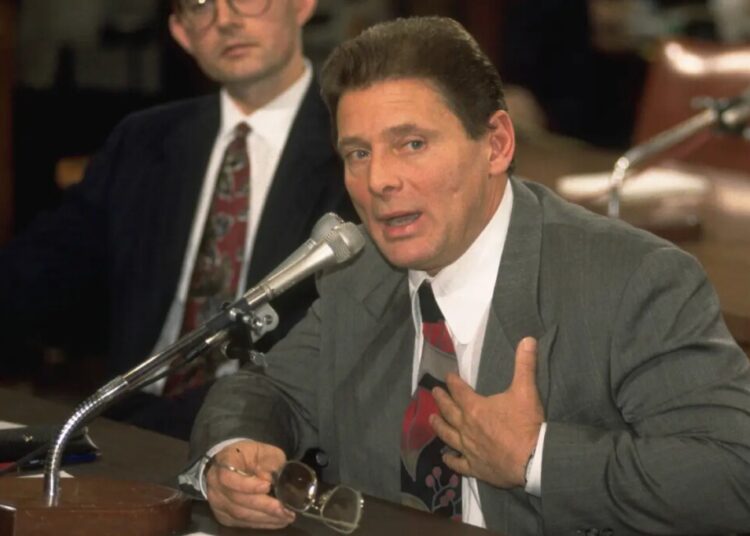
“A big challenge for the administration is that for the Iranians, their nuclear [enrichment] program has been so central to their cause for so many years,” said Christine Wormuth, a former secretary of the U.S. Army who now heads the Nuclear Threat Initiative. “It’s part of the whole regime identification, a source of national pride, and it’s been held up as one of the reasons why the public has to endure [economic] privations.”
“The concern I’ve had since the latest war began,” she said, is that administration pressure will convince the Iranians “of the necessity to rush for a bomb.” And while Trump may believe he can pressure them into submission, most of the current leadership are survivors of the brutal, eight-year Iran-Iraq war fought decades ago and “they seem to have a very high pain tolerance,” Wormuth said.
The administration has falsely said that Iran is the only country in the world without a nuclear weapon that has its own enrichment capability. Brazil, Argentina, Japan and a European consortium operate civil enrichment facilities.
Iran, however, is the only one that has developed and used advanced centrifuges to enrich to near weapons-grade uranium that has no civilian purpose.
According to the International Atomic Energy Agency, Iran has stockpiled about 970 pounds of uranium hexafluoride gas, highly enriched to 60 percent. The material is now believed to be buried in canisters beneath the rubble of underground storage facilities bombed by the U.S. last June, before the current war. Many nuclear experts estimate it could take up to a year for Iran to convert fissile material into a warhead, while others have said it could be done — provided Iran has the know-how — in a matter of weeks.
Days before the weekend negotiations in Pakistan, Trump said in a social media post that “there will be no enrichment of Uranium … and the United States will, working with Iran, dig up and remove all of the deeply buried … ‘Dust,’” a term he has used to describe the highly-enriched uranium.
Despite Trump’s assertion that Iran must end all enrichment forever, Vance offered the 20-year moratorium “with all kinds of other restrictions,” the people familiar with it said. The offer was first reported by Axios.
That offer, rejected by Iran, was reminiscent of the 15-year moratorium that was part of the nuclear deal negotiated by the Obama administration, Britain, France and Germany signed with Tehran in 2015. Trump withdrew the U.S. from the agreement, known as the Joint Comprehensive Plan of Action, during his first term in office and vowed he would negotiate a better one.
Neither the highly enriched uranium nor the centrifuges that produced it existed at the time of the JCPOA, and the agreement, with intrusive IAEA verification, prohibited them. Under the Obama-era deal, Iran was allowed to continue enriching uranium up to 3.67 percent in limited amounts for research and medical purposes. Any it already processed above that level, or in excess of the limited quantity, was to be diluted and stored or shipped out of the country.
Obama and European negotiators purposefully addressed only the nuclear issue, anticipating that an agreement would lower the temperature between the U.S. and Iran, and allow for the country’s missile program, support for regional proxies and other issues to be dealt with at a later date.
Within three years of Trump’s 2018 withdrawal from the deal, Iran began violating its terms.
When a U.S. negotiating team headed by White House special envoy Steve Witkoff and Trump son-in-law Jared Kushner met with Iranian negotiators in Geneva in February, Iran first proposed an enrichment moratorium of three to five years and said it would dilute its stockpile of highly enriched uranium to a lower level. Those negotiations, which Witkoff termed “not serious,” ended abruptly with the Feb. 28 U.S. and Israeli attacks that began the current war.
“The Iranians in Geneva had already agreed to something I would claim was superior to the JCPOA,” said Robert Malley, a senior official on Middle East affairs and Iran negotiator under the last two Democratic administrations. “What they put on the table was a multiyear freeze of their enrichment program.”
There was still a gap, Malley said, with Iran saying it wanted to enrich up to 20 percent for its research reactor, significantly beyond what was allowed under the JCPOA.
“Whether that was their final offer or not,” he said, “who knows?”
John Hudson contributed to this report.
The post Peace with Iran hinges on one side bowing to the other’s nuclear demands appeared first on Washington Post.