If a planned meeting between officials from Lebanon and Israel comes off on Tuesday in Washington, the direct talks will be the first between the two Middle East neighbors since 1983. In the decades since then, Israel has more typically dealt directly, in the form of military action, with the Iran-backed Hezbollah terrorist militia that feckless Lebanese governments have been unable or unwilling to disarm.
Hezbollah’s rocket attacks on Israel starting last month, in support of Iran in its war with Israel and the United States, prompted a fierce Israeli cross-border response. Maybe now — as Israel’s counteroffensive against Hezbollah has included strikes beyond the militia’s usual turf in the south and in southern Beirut — the Lebanese government will finally stand up for itself and for its people.
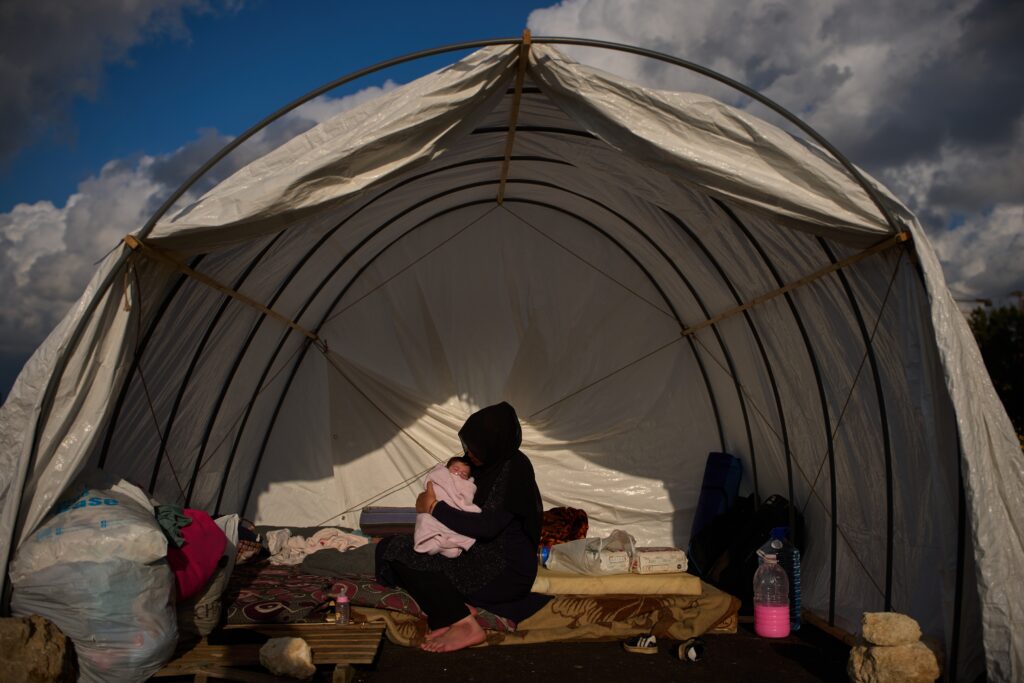
With the leadership of Hezbollah’s Iranian sponsors in disarray, Lebanon may never get a better chance to reclaim its sovereignty. Watching the suffering of an innocent population in the land of my ancestors has been difficult. Missiles have hit neighborhoods I recognize from summer visits. In the south, fellow Lebanese Christians refuse to leave their ancient villages, even under missile fire. The Shiites, many of whom support Hezbollah, have been forced to evacuate the region as the Israelis continue their operation. More than a million Lebanese have been displaced.
“The Lebanese people understood that they were lied to by the government,” Vincent Gelot told me. Gelot works for a nongovernmental organization that supports Lebanese Christians, bringing aid to those who have remained in the area south of the Litani River. Israel is staking out that area as a buffer zone, fed up with Hezbollah’s latest use of it as a launching ground for its attacks on the Jewish state. The Lebanese government maintained until recently that it had more or less gained control of the south in the aftermath of the clashes with Israel followed Hamas’s Oct. 7, 2023, terrorist attack from Gaza.
If the direct contact between Israel and Lebanon proceeds on Tuesday despite the deteriorating state of the peace efforts between the U.S. and Iran, the Lebanese government still has an opportunity to take a historic step. It would entail finally committing to forcefully reject Hezbollah’s armed presence anywhere in the country and blocking all interference by Iran with the nation’s sovereignty.
Even if the Lebanese are frustrated with Israel striking their country, “there’s a reason why these Israeli rockets are falling on us,” Makram Rabah, an assistant history professor at the American University of Beirut, told me. The Israelis have been clear with the Lebanese: They won’t accept an armed Hezbollah, and if Beirut won’t act, they will.
Just as Iran’s leadership and military have been devastated by the combined U.S. and Israeli offensive, so too is Hezbollah in much weakened state compared with where it stood before the Oct. 7 attack. Israel decapitated the terrorist group’s leadership during more than a year of conflict; then a U.S.-brokered ceasefire reaffirmed U.N. Security Council resolution 1701 — which already called for the “disarmament of all armed groups in Lebanon.”
There was a period of hope that the Lebanese government would step. During my visit to Beirut last August, the cabinet announced its intentions to disarm the group. In September, President Joseph Aoun said achieving a government monopoly on arms would restore “the world’s confidence in us” and “the ability of the state to maintain its security in the face of Israeli aggressions.” The government vowed that Hezbollah would be disarmed in the south by year’s end.
“The fact that the cabinet decision took place was good,” Hagar Hajjar Chemali, a former Lebanon and Syria director at the National Security Council, told me. But what followed, she said, was “a lot of talk and no action.”
Aside from its sectarian dysfunction, the Lebanese state faced two major obstacles in confronting Hezbollah. The first was that Hezbollah was rebuilding, despite ongoing disarmament efforts by the Lebanese army and Israeli strikes. The second was psychological. The Lebanese are still gripped by the trauma of civil war. Confronting a group so deeply embedded in the country’s social and political fabric could be a costly and bloody endeavor.
The government moved too gingerly, giving Hezbollah a chance to set off another deadly conflict. This caused enough frustration for the state to declare the Iranian ambassador “persona non grata” — but not enough for the government to actually kick him out when he dug in his heels. Lebanese Prime Minister Nawaf Salam also announced a ban on Hezbollah’s “military activities” and called on the military to “prevent any attacks originating from Lebanese territory.” But recent reporting suggeststhat Gen. Rodolphe Haykal, the Lebanese army commander, isn’t willing to confront the group.
There are rarely do-overs in diplomacy, but the scheduled talks between Israel and Lebanon in Washington will present a second chance for the Lebanese. The Israelis and Americans have heard enough talk — it’s time for action. The Lebanese can take some small steps toward legitimacy: Kick out the Iranian ambassador, who is reportedly still in the country, and actually confront armed Hezbollah thugs in Beirut. Coordinate with Israel in disarming the militia in the south. Until the government gets over its fear of confrontation, its chooses de facto Iranian occupation — and all the destruction that comes with it.
The post Lebanon gets a second chance to do the right thing appeared first on Washington Post.