The war in Iran is taking a double-barreled toll on the global economy, slowing growth and fueling inflation, while raising the specter of a major energy crisis that could cause even more damage, the International Monetary Fund said Tuesday.
The global economy now is expected to grow this year at an annual rate of 3.1 percent, 0.2 percentage points lower than before the war, the fund said, describing what it called its reference forecast. That estimate assumes an early end to the fighting and falling oil prices in the second half of the year.
“The global outlook has abruptly darkened following the outbreak of war in the Middle East,” Pierre-Olivier Gourinchas, the fund’s chief economist, wrote in a foreword to the outlook.
Fallout from the war will vary, with low-income nations, energy importers and those directly affected by the conflict suffering the most.
The U.S. economy is likely to grow at a 2.3 percent rate, just a tenth of a percentage point lower than the fund projected in January, while Saudi Arabia, which has absorbed Iranian missile attacks on its energy facilities, is seen expanding by 3.1 percent, down from a 4.5 percent pre-war estimate.
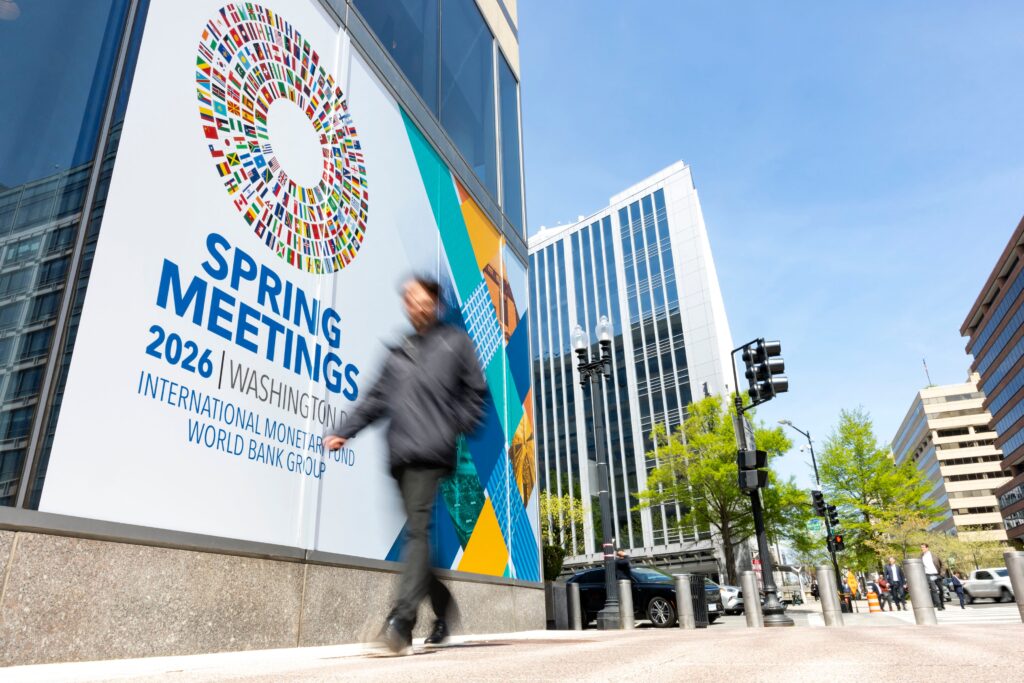
The fund’s latest World Economic Outlook was released today as finance ministers and central bank chiefs gathered in Washington, D.C., for the annual spring meetings of the IMF and World Bank.
With so much uncertainty clouding the outlook, the fund also released two additional scenarios to guide policymakers in preparing for the economic consequences of a lengthier conflict.
Global growth would slump to an annual rate of 2.5 percent if the war continues for several months, keeping oil prices high. If military operations continue into 2027, and energy markets remain disrupted, the global economy would expand by just 2 percent, a rate it’s touched just four times since 1980.
Global inflation is expected to hit 4.4 percent under the fund’s reference forecast, up from 4.1 percent last year. But a longer conflict would see prices rise at an annual rate of 5.4 percent while fighting that lingers into next year pushes inflation above 6 percent, the fund said.
Until the U.S.-Israeli attack on Iran on Feb. 28, the global economy was distinguished by its resilience amid months of uncertainty over President Donald Trump’s campaign to remake global trade. The outbreak of fighting in the Middle East caused the fund to abandon plans to upgrade its forecast of global growth this year to 3.4 percent, Kristalina Georgieva, the IMF’s managing director, said last week.
Iran responded to the U.S.-Israeli assault by closing the Strait of Hormuz and attacking oil fields, refineries and natural gas plants throughout the Persian Gulf. The price of oil and related products like gasoline and jet fuel soared, straining economies around the world.
The economic costs will be greater if the sharp increase in commodity price prompts consumers to demand higher wages to offset expectations of higher inflation in coming years, the fund said.
As more expensive energy pushes up prices throughout the economy, central bank officials can afford to mostly stand pat – unless the public’s inflation expectations break sharply with recent experience, the fund said. In that event, monetary authorities would need to raise interest rates until inflation is under control.
Even an early end to the fighting, however, will not deliver a swift return to economic normalcy.
“Beyond its human toll, war imposes large, persistent economic costs and difficult trade-offs,” Gourinchas wrote in an IMF blog post.
The post Iran war already taking a toll on the global economy, IMF says in new forecast appeared first on Washington Post.