When General Stanley McChrystal took command of the war in Afghanistan in 2009, he concluded that U.S. forces’ tactics were causing unnecessary civilian deaths and would lead to America’s defeat. McChrystal issued a directive calling for more restraint in the use of force so as not to alienate locals. What was required, he told troops, was a “clear-eyed recognition that loss of popular support will be decisive to either side.”
McChrystal was no softy. As the head of the military’s Joint Special Operations Command, he had overseen some of the most aggressive operations of the Iraq War. His troops had killed or captured thousands of militants in high-risk raids. But in Afghanistan, McChrystal made a different calculation: By showing what became known as “courageous restraint,” U.S. forces would claim the moral high ground, starve the Taliban of popular support, and win the war. In a counterinsurgent fight, hearts and minds were more important than bombs and bullets.
McChrystal’s mandate was widely resented by frontline troops who believed that the new rules put them in greater danger. Commanders safely ensconced on bases, they complained, were reluctant to order air support for troops in the field out of fear of derailing their careers by ordering attacks that came with a high potential for collateral damage. Service members had to approach militant positions on foot instead of by launching artillery strikes, exposing themselves to increased enemy fire. Some veterans came to see rules like McChrystal’s as a defining failure of the post-9/11 wars in Afghanistan and Iraq: The United States lost, they believed, because the military pulled its punches.
Pentagon chief Pete Hegseth, a former National Guardsman, is among those critics. He has promised to unleash the American military in ways that haven’t been done in decades. He has fired military lawyers and empowered low-level commanders. “No stupid rules of engagement,” he declared after President Trump launched his war with Iran in late February.
This war—now subject to a two-week cease-fire and U.S.-Iranian standoff in the Strait of Hormuz—is America’s first major conflict of the post-counterinsurgent era, one that poses a test of how the U.S. military will perform in conflicts among states that are expected to dominate the future. What consideration will be given to hearts and minds in those wars? Initially, the president appeared stirred to action by Iranians’ protests against the regime; he promised protestors support as they demanded greater freedom. But Trump’s aspirations for ending the Islamic Republic’s repressive rule didn’t last. His focus became defeating Iran’s military, preventing its nuclear-weapons development, degrading its missile capabilities, and potentially taking its oil. As for Iran’s people, Trump proposed leaving them without electricity, drinking water, and the ability to travel. Then he threatened to wipe them out entirely, saying that “a whole civilization will die tonight” unless Tehran opened the Strait of Hormuz. It was a wild overcorrection from the “hearts and minds” ethos of days past.
Experts in military and international law told me that Trump’s threats to destroy power plants and bridges could be permissible under the laws of war if officials determined that the military value of their destruction outweighed the cost to civilians. But that doesn’t mean that the United States should go ahead. “If you want to establish a lasting peace,” Todd Huntley, a retired Navy lawyer who advised Special Operations units and now teaches at Georgetown University Law Center, told me, “you still need to be concerned about hearts and minds.”
So how should the U.S. military fight its wars?
In 2021, the Army’s top lawyer, Lieutenant General Charles Pede, warned of a looming crisis for America’s military. After two decades of counterinsurgent, or COIN, wars, troops had internalized restrictions like those McChrystal decreed for Afghanistan. Although sensible for that conflict, the rules would prove dangerous in a large, conventional-combat operation in which troops were attacking a foreign military from afar rather than fighting insurgents dispersed among a population. To succeed in a war against Iran, China, or Russia, he warned, Pentagon leaders needed to close the gap between the requirements of the laws of war and the stricter rules that U.S. leaders had layered on top. They needed to cure what Pede and his co-author, Colonel Peter Hayden, writing in a military journal, described as the “COIN hangover.”
Over the years, the authors noted, the COIN-era rules of engagement were embraced by civil-society groups and legal commentators who wanted the new principles codified. These advocates urged military leaders to use precision bombs exclusively and to forswear the use of explosive weapons in crowded urban areas. More worrying, in Pede and Hayden’s view, an entire generation of troops now confused those elevated COIN guidelines with the laws of war. (A lieutenant who had led a platoon in the early days of the Iraq War might now be a colonel.) In a war against a major modern military, units couldn’t always afford to verify whether civilians were nearby before returning enemy artillery fire. Neither could troops expend the time to ask the chain of command for permission to use more potent munitions, they wrote. And commanders might no longer have the luxury of observing an adversary for hours to ensure his identity and rule out the potential for causing collateral damage before striking.
Troops “must always be mindful of their legal and moral obligation to minimize suffering of civilians and to avoid unnecessary damage of civilian objects,” the co-authors wrote. “But they are not required to discard considerations of military necessity or to forget their mandate to accomplish their mission.”
Their observations resonated. In simulations of large-scale conventional operations in 2023, one officer wrote about his experience with the “hangover.” Brigade combat teams exercising in Germany regularly lost most of their combat power because of concern about causing civilian casualties. Troops hesitated to fire on an enemy force in a civilian area because of their mistaken belief that any civilian casualty was unlawful, Major Jason Young, a coach and observer at the Hohenfels training center, wrote. Staff officers, confusing a maneuver’s potential impact on civilians with its legality, sometimes wouldn’t even present a potential target to a commander if striking it might result in noncombatant deaths. “Mistaking old policies for law has had disastrous consequences” in preparations for those future battles, he wrote.
The Pede and Hayden concept of a COIN hangover is circulating at the Pentagon as Hegseth pushes for greater lethality and a reversal of what some troops describe as the “feminization” of the military. Leadership is emphasizing that “the military is for killing people and crushing things,” one person familiar with the issue told me.
In his 2024 book, The War on Warriors, Hegseth wrote about telling his platoon in Iraq to disregard the rules of engagement briefed to them by a military lawyer, known as a judge advocate general, who had told them that they couldn’t shoot at a militant holding a grenade launcher until he aimed at them. (Several former JAGs told me that such guidance, if Hegseth’s account is correct, constituted bad legal advice.) Hegseth routinely uses aggressive language to make his point. “Our war fighters have maximum authorities granted personally by the president and yours truly. Our rules of engagement are bold, precise, and designed to unleash American power, not shackle it,” Hegseth told reporters recently. “We are punching them while they’re down, which is exactly how it should be.”
[Read: The Pentagon’s lawyers are now under review]
For Hegseth and other veterans, the effort to win hearts and minds is entangled with the military quagmires of Afghanistan and Iraq, the failures of nation building, and what they saw as an exaggerated sensitivity toward civilian populations at the cost of U.S. lives. “Restrictive ROE increase the likelihood of American deaths,” one senior Pentagon official told me, using a shorthand to refer to rules of engagement. “We do see both sides of the argument, but we come at it from backing the war fighter on the ground and making sure they come home alive.”
The official cited America’s history of “total war” in World War II, including the scorched-earth tactics used in Dresden and Hiroshima. Hegseth and some other veterans like to invoke that era’s battlefield victories, when they believe that men were men, the rules of engagement were loose, and the U.S. was indisputably the good guy.
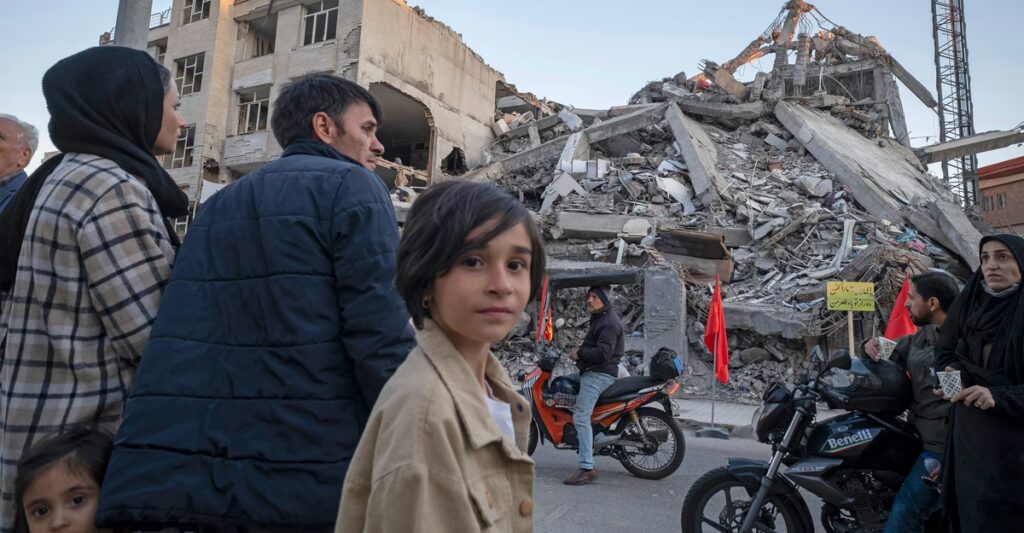
In this century’s counterinsurgent conflicts, the United States has targeted some civilian sites—including banks and oil trucks commandeered by the Islamic State—but sparingly and after extensive internal debate. Despite those precautions, the military killed thousands of civilians in its air war against ISIS. The record of that conflict, which I covered in detail as a reporter covering the military, produced new safeguards for civilians. (The Trump administration rolled back some of those restrictions, but others remain.) The widespread destruction of bridges, power plants, and drinking-water facilities in Iran, if carried out, would represent a departure from recent military practice but may be legally permissible. This defines the gap that Pede, Hayden, and other military theorists argue must be closed.
But the argument that military leaders need to either be so cautious as to endanger American troops or else jettison all concerns about civilian lives presents a false choice and is probably strategically unsound. If hospitals can’t function and drinking water is unavailable, civilians may rally around the regime you are trying to weaken. And some national-security experts question just how severe the COIN hangover is.
Scott Anderson, a lawyer who formerly worked at the U.S. embassy in Baghdad and who is now a fellow at the Brookings Institution, pointed to strikes that killed scores of civilians during the close of the war against ISIS, before the COIN era ended. A secretive Special Operations unit with its own rules of engagement conducted those attacks. “My concern still is that it’s all too human and natural to pivot to something much more barbaric when a person is under threat,” Anderson told me. “That’s why we need laws of war in the first place, to constrain that impulse.”
When the U.S. enters into conflicts alongside allies, these questions become even more complicated. Israel and the United States have conducted parallel (but not joint) operations against Iran. I have spent weeks trying to disentangle which nation bombed what targets, and what legal and operational limits each country has set, because they have released only limited information. The Pentagon under Hegseth has denied journalists the access they had in previous wars. Human-rights groups estimate that at least 1,700 Iranian civilians have been killed since the conflict began.
[Read: The real intelligence failure in Iran]
For most of the conflict, the U.S. and Israel have maintained a clear division of labor, suggesting that their militaries are operating under different rules of engagement. The U.S. struck military targets, including missile launchers and weapons depots, along with drone factories. Israel struck military sites but also targeted nonmilitary infrastructure, including steel plants, power facilities, and banks. And Israel assassinated senior Iranian leaders, including Ayatollah Ali Khamenei, National Security Council Chief Ali Larijani, and multiple Islamic Revolutionary Guard Corps leaders.
I asked an Israeli military official about images of damaged and smoking apartment blocs that were apparent targets. The official told me that the IRGC embedded workshops or other facilities in or under residences. She added that the Israel Defense Forces attempt to use precision weapons to minimize damage. “If an armed organization uses a building, it doesn’t matter what that building is; it automatically turns into a military subject,” she said.
U.S. and Israeli officials told me that the two countries worked closely together, deconflicting flights, sharing intelligence, holding daily video conferences, and coordinating on a target list. Israeli liaison officers are stationed at Central Command headquarters, in Tampa, and vice versa. But a U.S. official emphasized that each military has its own operation—Epic Fury for the U.S. and Roaring Lion for Israel. At times, Israel has struck targets beyond those on which it briefed the U.S., one U.S. military official told me. (The IDF declined comment.) Several weeks into the war, Trump rebuked Israel for a strike on an Iranian natural-gas site on territory that extends into Qatar that prompted Iran to hit back at a Qatari energy facility.
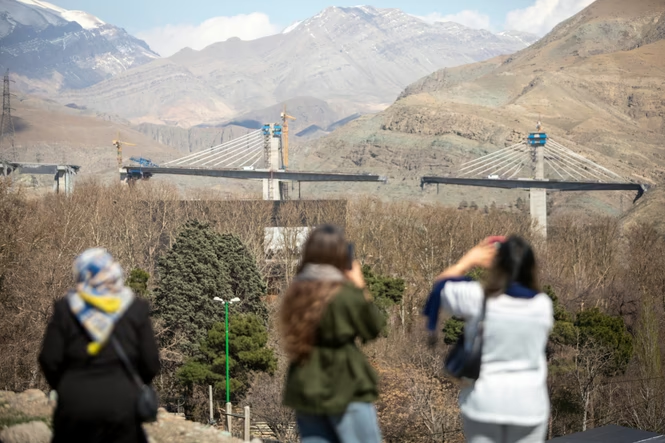
But that was before the Pentagon, in the week leading up to the cease-fire, also hit a bridge and a gathering of Iranian officials. (The U.S. has provided few details about those strikes.) Then Trump threatened to destroy Iran’s core infrastructure and erase its civilization. The president had clearly left the struggle for hearts and minds behind.
While critics believe that the restrained COIN approach diminished America’s chances of victory in the wars of the past, Trump’s and Hegseth’s more bare-knuckled rules haven’t resulted in success in this war either. And the moral posture that McChrystal advocated for in Afghanistan is among the conflict’s many casualties.
The post How Should the U.S. Military Fight? appeared first on The Atlantic.