The Justice Department on Tuesday released a long-awaited report arguing that the Biden administration had egregiously weaponized a law that has historically been used to prosecute people who physically block women from entering abortion clinics.
The 882-page report contends that Attorney General Merrick Garland used improperly aggressive tactics to bring cases against antiabortion activists while only charging a few abortion rights activists with blocking pregnancy crisis centers, which are intended to provide alternatives to abortions.
The report downplays the fact that these cases were generally successful, as judges declined to dismiss them and juries often delivered guilty verdicts. And despite its assertion of widespread prosecutorial misconduct, the report cites few episodes that would meet that definition.
The report focuses on the Biden administration’s use of the Freedom of Access to Clinic Entrances Act, a 1994 law intended to protect women’s ability to visit reproductive health care facilities. The law is not aimed at peaceful protesters, but rather at those who physically block entrances or assault women trying to obtain abortions.
The law also includes provisions protecting pregnancy centers and religious sites, but the report contends that Garland’s team largely ignored that part of the statute.
“Though the FACE Act was supposed to protect both pro-choice and pro-life activities, Biden DOJ senior leadership and Task Force Members provided extensive support to abortion clinics, yet the Biden DOJ often ignored and downplayed vandalism and attacks against pregnancy resource centers or houses of worship,” the report says.
The report cites prosecutors who worked on these cases by name, highlighting their internal communications as they gathered evidence. It suggests that the Justice Department intentionally built faulty cases against these activists, working with abortion rights groups to selectively find cases to prosecute.
The sweeping report is the first completed project of the Trump Justice Department’s “Weaponization Working Group,” which then-Attorney General Pam Bondi said she created to investigate the misuse of law enforcement during past administrations. Its release is one of the first acts of acting attorney general Todd Blanche, whom President Donald Trump has signaled he wants to carry out his political agenda more aggressively than did Bondi, whom he fired earlier this month.
“No Department should conduct selective prosecution based on beliefs,” Blanche said in a statement. “The weaponization that happened under the Biden Administration will not happen again, as we restore integrity to our prosecutorial system.”
The Trump Justice Department has itself been widely accused of weaponizing the legal process by targeting Trump’s political adversaries, including former FBI director James B. Comey and New York Attorney General Letitia James.
Tuesday’s report highlights a long-running battle between abortion rights advocates and antiabortion activists, as the two sides clash over who are the aggressors and who are the victims. Antiabortion activists have long complained that they are targeted merely for protesting at abortion clinics, while abortion rights advocates say their opponents’ tactics regularly escalate into harassment and physical intimidation.
Even before the report was released, the Trump administration had fired multiple prosecutors named in the report who worked on Face Act cases during the Biden administration. The prosecutors — many of them veteran career Justice Department employees — had not been publicly accused of any wrongdoing or received admonishments from judges.
In the report, Justice Department officials said those lawyers could now face criminal prosecution or referrals to local bar associations for disciplinary proceedings “where appropriate.” Officials also posted on social media Monday night that “DOJ has terminated the employment of personnel responsible for weaponizing the FACE Act who still remained at the department.”
After the Supreme Court overturned Roe v. Wade in 2022, restricting abortion access across the country, Garland vowed to use the Justice Department to protect abortion access. Among the tools he relied on was the Face Act.
In all, the department under Garland brought more than 25 cases involving more than 50 defendants accused of Face Act-related violations between 2021 and 2024, according to court records. Conservative groups and members of Congress criticized those prosecutions, saying the defendants were being targeted people because of their antiabortion views.
Three of those Garland-era prosecutions involved allegations of vandalism or destruction of property at crisis pregnancy centers, facilities that offer services to people with unexpected pregnancies and that typically counsel against abortion. The first Trump administration did not bring cases against people who blocked access to pregnancy crisis centers, according to public records, though the Justice Department brought a handful of cases under the Face Act against people who blocked access to abortion facilities.
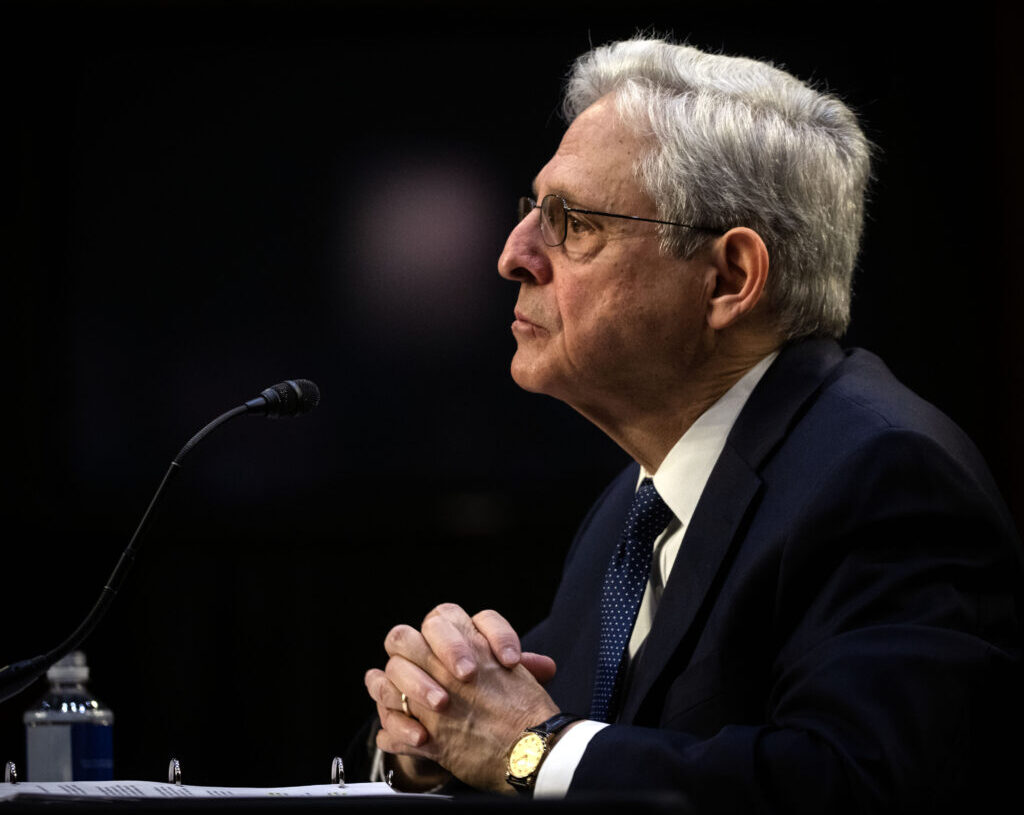
Garland, who did not immediately respond to a request for comment Tuesday, has previously defended his prosecutions under the Face Act, saying he also dedicated resources to pursuing cases against people who blocked access to pregnancy crisis centers.
“There are many more prosecutions with respect to the blocking of the abortion centers, but that is generally because those actions are taken with photography at the time during the daylight, and seeing the person who did it is quite easy,” Garland said at a Senate hearing in 2023. “Those who are attacking the pregnancy resource centers, which is a horrid thing to do, are doing this at night in the dark. We have put full resources on this. We have put rewards out for this.”
Kristin Clarke, the head of the Justice Department’s Civil Rights Division under Garland, defended her division’s investigations, saying its lawyers worked closely with antiabortion and abortion rights groups to bring appropriate cases. “We enforced the law even-handedly and put public safety at the center of this work,” Clarke said in a statement.
Soon after Trump was sworn in as president, political appointees in the Justice Department instructed the department’s Civil Rights Division to curtail all Face Act prosecutions and civil actions except those involving “extraordinary circumstances” or aggravating factors such as a death or serious injury. They also moved to dismiss three pending actions the department had brought in federal courts in Ohio, Tennessee and Pennsylvania.
Trump, meanwhile, pardoned 23 people convicted of violating the Face Act, including several convicted in federal court in D.C. after they were found to have pushed their way into a clinic near George Washington University’s campus in 2020, injuring a nurse and hounding patients.
“They should not have been prosecuted,” the president said at the time.
During the Trump administration, the Justice Department’s Civil Rights Division under Harmeet K. Dhillon has attempted to change the way the Face Act is used, deploying it against people who have allegedly blocked churches rather than abortion clinics.
Earlier this year, the Justice Department charged 39 people — including former CNN anchor Don Lemon — with Fact Act violations stemming from their involvement in a protest against immigration enforcement efforts that interrupted services at a church in St. Paul, Minnesota.
The case is ongoing, but legal experts say the unusual application of the law could face significant challenges in court.
Throughout the report, the Trump administration uses the case against antiabortion activist Mark Houck as one of its chief examples of how it believes Garland corruptly wielded the Face Act.
Houck, a Catholic father of seven children, was indicted for assaulting a volunteer outside a Planned Parenthood abortion facility in Philadelphia while he was protesting abortion access with his son.
A jury acquitted Houck, finding him not guilty of the charges. The report says law enforcement officers were unnecessarily aggressive in arresting Houck, instead of allowing him to surrender. And it suggests that prosecutors pushed to charge Houck even after some supervisors within the Justice Department questioned whether he had violated the law.
“The Biden DOJ used the FACE Act to prosecute a father whose minor son was attacked by an abortion clinic worker—and DOJ lost,” the report states. “In United States v. Houck (Eastern District of Pennsylvania), prosecutors considered and declined a request for the defendant to self-surrender. Rather, 16 FBI agents arrested the defendant at his home.”
Houck later sued the government for damages. A judge dismissed that lawsuit, and Houck was in the process of appealing that decision when the Trump administration settled with him for more than $1 million.
“I’m glad that everything has come to light,” Houck said in an interview Tuesday. “It’s important that we reflect on what happened as a nation.”
The post DOJ accuses Biden administration of weaponizing abortion access law appeared first on Washington Post.