Josh Freed is senior vice president for climate and energy at Third Way.
In February, the White House was touting record liquefied natural gas exports, celebrating withdrawals from international agreements, and bragging about propping up coal and nixing clean energy technologies. These actions, it said, would save families thousands of dollars and reflected an “unwavering commitment to energy independence, economic prosperity, and putting America First.”
“American energy dominance is back,” it declared.
But four days later, global energy markets were upended as President Donald Trump started a war with Iran. American consumers, meanwhile, were left to foot the bill as energy prices soared.
The United States is the world’s top oil producer, generating over 13 million barrels of oil per day. It is also the top exporter of liquefied natural gas. But that status makes it easy to mislead voters into thinking that the U.S. can be entirely energy self-sufficient.
While the U.S. produces mostly light, sweet crude from shale, which can be refined at some facilities in Texas and the Midwest, 70 percent of domestic refining capacity is optimized for heavier, sour crude grades.
Most of this grade oil comes from foreign sources, primarily Canada, followed by Mexico and Saudi Arabia. Last year, the U.S. imported 6.2 million barrels a day of crude, 8 percent of it from the Middle East, making the country’s energy sector inherently reliant on foreign production and vulnerable to Iran’s closure of the Strait of Hormuz, which has stranded about 20 percent of the world’s oil.
To alleviate supply constraints, the Trump administration has lifted sanctions on Iranian and Russian oil, handing billions of dollars in revenue to two adversaries and, ironically, funding the Iranian war effort.
But this supply shock may have also heightened the risk of increased inflation, exposed the lack of independence of the American energy sector and risked a recession.
In February, the president said that “when you cut the cost of energy … you just cut the cost of everything.” The opposite is also true.
Crude prices have fluctuated wildly, rising last month above $100 a barrel and pushing the national average for a gallon of gas to more than $4. Jet fuel prices at one point increased by more than 80 percent, raising the cost of airfare. Fossil fuels account for 80 percent of fertilizer production costs, driving up the price of food. And as diesel prices surge, higher shipping expenses will be passed on to consumers as well, bringing economic pain to families already struggling to pay their bills.
Unsurprisingly, inflation in March rose at the highest rate in four years.
China has weathered this global disruption better, thanks to years of preparation. Billions of dollars of investments in power grid infrastructure, fast-charging stations for electric vehicles and more new nuclear reactors are paying off.
In the U.S., the conversation about clean energy largely revolves around the politics of the energy transition — are you in favor or opposed? The war in Iran has shown these arguments are almost entirely irrelevant.
Neither political party has produced the policy framework the U.S. needs: an energy competitiveness agenda rooted in a diversity of sources and building domestic industry. This would reduce exposure to volatile global commodity markets, bolster domestic manufacturing and strengthen supply chains.
This approach comes with some sticker shock, and moving quickly will be difficult, thanks to lost industrial capacity and an overwrought permitting and regulatory process.
Both parties will have to make concessions. The left must accept new pipelines and the strategic necessity of natural gas. The right must stop its campaign against clean energy, which has escalated to paying a company $1 billion not to build a wind farm, and repair relationships with allies that no longer believe the U.S. is a reliable trading partner.
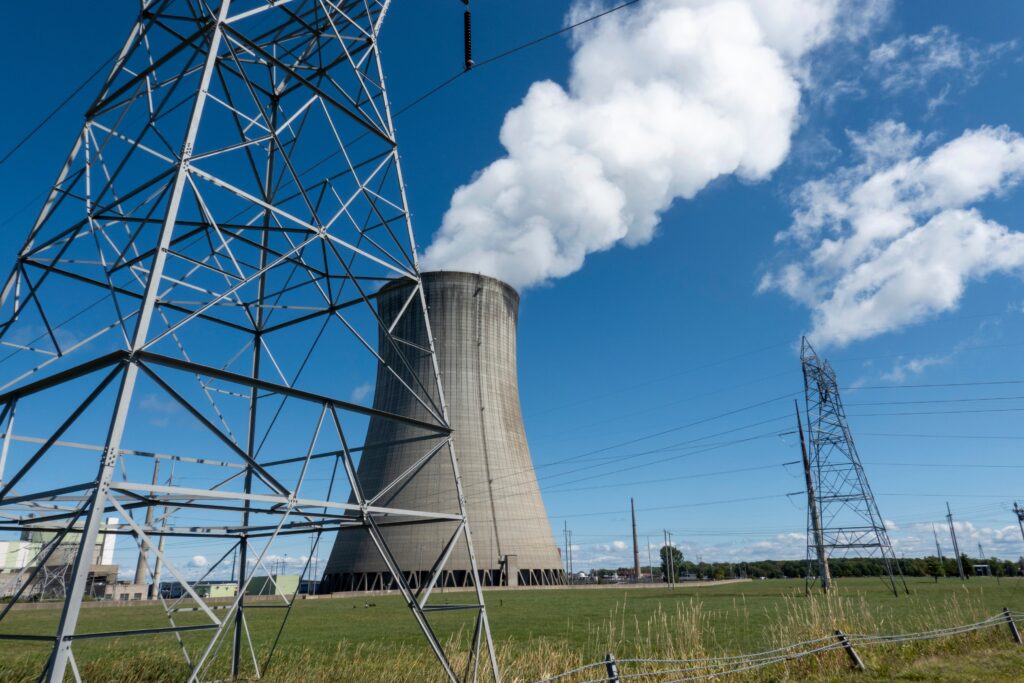
If this sort of unity seems far-fetched, consider how both parties found a path forward on nuclear energy.
U.S. nuclear development had become expensive and slow due to regulatory complexity, inconsistent policy, lack of standardized designs and concern from environmentalists. The partisan divide was equally deep. Democrats opposed the regulatory reforms needed to build nuclear faster, and Republicans refused to spend needed federal dollars on new designs.
But this partisan intransigence has since given way. Both the Biden and Trump administrations announced goals for hundreds of gigawatts in new nuclear energy by 2050, and there is bipartisan support for advanced nuclear projects. Meanwhile, industry is successfully leaning on the international market to deploy domestic designs.
In breaking this partisan divide, Democrats recognized the climate benefits while Republicans saw the national security need. But more than weighing the trade-offs, policymakers got over their hang-ups and responded to reality.
The path forward is not about choosing between fossil fuels and clean energy. It is about building resilience against energy shocks like the one the U.S. is experiencing right now — and positioning America to better compete in the energy markets of the 21st century.
The post The U.S. needs energy from diverse sources to endure supply shocks appeared first on Washington Post.