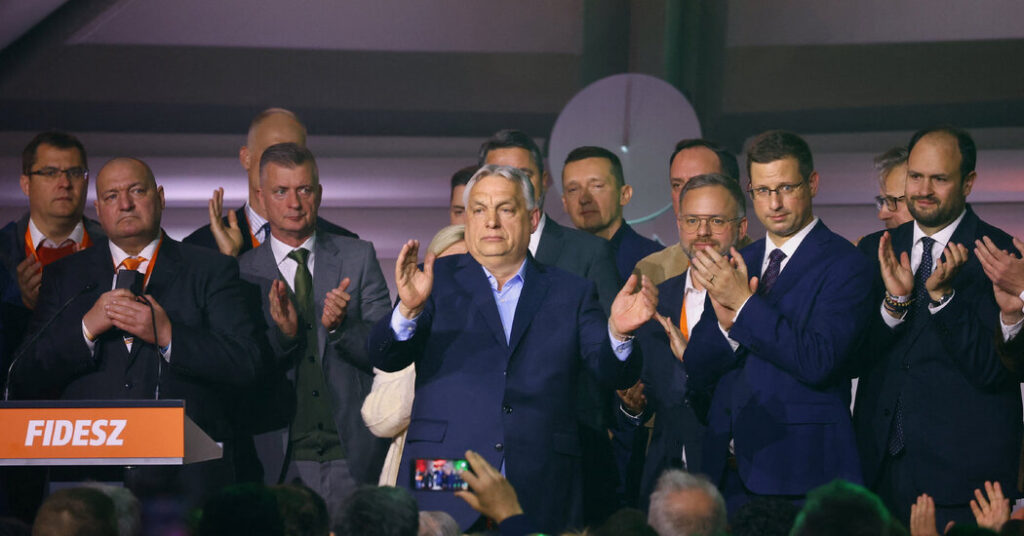
With record turnout in Hungary’s parliamentary elections on Sunday, voters ousted Prime Minister Viktor Orban and his political party, Fidesz, rejecting his nationalist populism after 16 years in power.
Peter Magyar, a conservative and former ally of Mr. Orban who established the breakaway Tisza party, declared victory on Sunday night. “You have empowered us to build a functioning and humane country, for all of us,” Mr. Magyar told cheering crowds in Budapest.
The election was closely watched as a referendum on Mr. Orban’s self-described brand of “illiberal democracy.” He was endorsed by President Trump and other top American officials, as well as by the Kremlin. But Mr. Magyar’s focus on combating a sluggish economy and ending government corruption resonated with voters, despite Mr. Orban’s longstanding efforts to tilt the electoral system in his favor.
Here are four takeaways from the election.
Economics drove the vote.
The Hungarian authorities said that more than 5.9 million registered voters participated in the election, the highest turnout in a Hungarian vote since the collapse of communism in 1989.
With 98 percent of votes counted, Mr. Magyar’s opposition party had won 138 seats. That is just over two-thirds of the total. Mr. Orban’s party, Fidesz, was expected to win just 55 seats.
The results reflected the dissatisfaction of many Hungarians with the country’s weak economy and broken health system, experts said. Unemployment is at its highest level in 10 years and economic growth last year was just 0.4 percent, far behind that of Poland, Bulgaria and Romania.
At least some of the high turnout was expected to be attributed to younger voters who generally opposed Mr. Orban, experts said, echoing Generation Z movements that have toppled governments in Bulgaria, Madagascar and Nepal over the past year.
Tisza’s supporters are “very diverse and probably divided on many issues, but they all long for normalcy, meaning moving away from constant hysteria and toward a governmental focus on everyday issues,” said Gabor Gyori, a political analyst with the Policy Solutions research organization in Budapest. “That is the uniting element.”
An anticorruption message won out.
Much of Tisza’s message focused on fighting government graft.
Since 2010, Mr. Orban has centralized power; favored loyalists; and weakened the judiciary, academic institutions and independent media.
He also spent millions in state funding to back his re-election, including through disinformation campaigns, said Sam van der Staak, director for Europe at the International Institute for Democracy and Electoral Assistance in Stockholm.
The European Union has already withheld billions of euros to Hungary over concerns about a deteriorating rule of law under Mr. Orban and could curb additional assistance if overhauls are not undertaken.
Throughout the campaign, Mr. Magyar pounded those points, offering a populist message of his own to punish criminals and help improve life for ordinary people.
Now, Mr. Magyar will have to come through on those promises. “He’s going to have to show that all those Hungarians that voted for him, because of the signs of mass corruption of the past years, he is able to deliver on change,” Mr. van der Staak said.
In his victory speech, Mr. Magyar included leaders of Hungary’s judiciary and prosecution system as among government “puppets” who, he said, should step down.
“Leave, leave!” Mr. Magyar said. “Do not wait for it.”
Scare tactics on Ukraine didn’t work.
Mr. Orban had long portrayed Ukraine as a threat to Hungary’s economy and security to whip up voter fears. Those accusations accelerated last month when he asserted that Kyiv was limiting Hungary’s energy supply by refusing to fix an oil pipeline in Ukraine that was damaged by a Russian strike.
A recent survey by the European Council on Foreign Relations found that Hungarians were largely divided on that approach.
Although Mr. Magyar will have to navigate that split in voter sentiment, analysts expect that he will unfreeze a 90-billion-euro, about $105 billion, loan to Ukraine and stop Hungary’s stonewalling of European Union and NATO support for the war. He probably will also not oppose Ukraine’s accession to the European Union.
“The new Hungarian government won’t provide military or financial assistance to Kyiv, but they won’t play in a destructive way,” said Daniel Hegedüs, director of Central European policy at the German Marshall Fund of the United States, a nonpartisan research group.
Outside influence didn’t work, either.
The Trump administration last fall gave Hungary a one-year exemption from American sanctions so that it could buy oil from Russia. Last week, to bolster Mr. Orban’s election prospects, the White House listed a range of partnerships between the two governments.
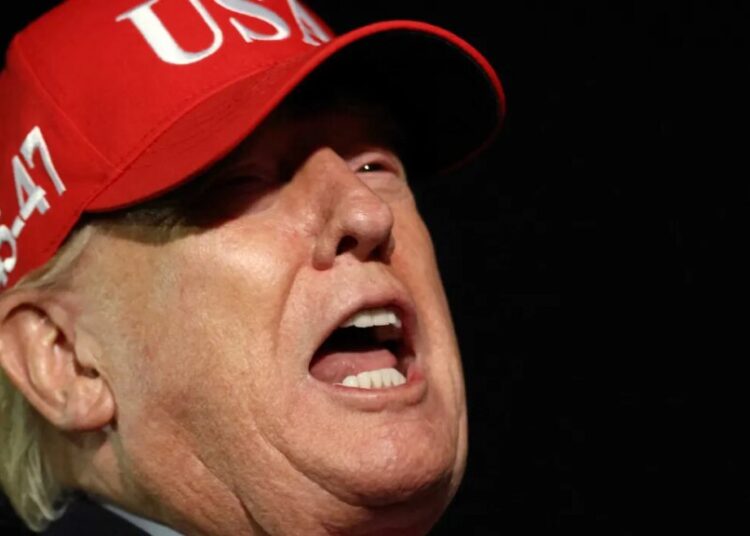
Five days before the election, Vice President JD Vance visited Hungary to stump for Mr. Orban. And Mr. Trump called into a campaign rally in a Budapest stadium full of Fidesz supporters to lavishly praise the Hungarian president.
None of that worked.
Nor did the support that President Vladimir V. Putin of Russia gave Mr. Orban in the waning days before the vote through promises of continued oil deliveries. Additionally, the European Parliament raised concerns last month that the Kremlin may have directed its political advisers to meddle in Hungary’s elections.
Mr. Orban’s defeat “might come with the lesson learned, that what other illiberal, radical-right politicians consider to be a blueprint is not necessarily functioning,” Mr. Hegedüs of the German Marshall Fund said.
Lara Jakes, a Times reporter based in Rome, reports on conflict and diplomacy, with a focus on weapons and the wars in Ukraine and the Middle East. She has been a journalist for more than 30 years.
The post 4 Takeaways From Viktor Orban’s Defeat in Hungary’s Election appeared first on New York Times.